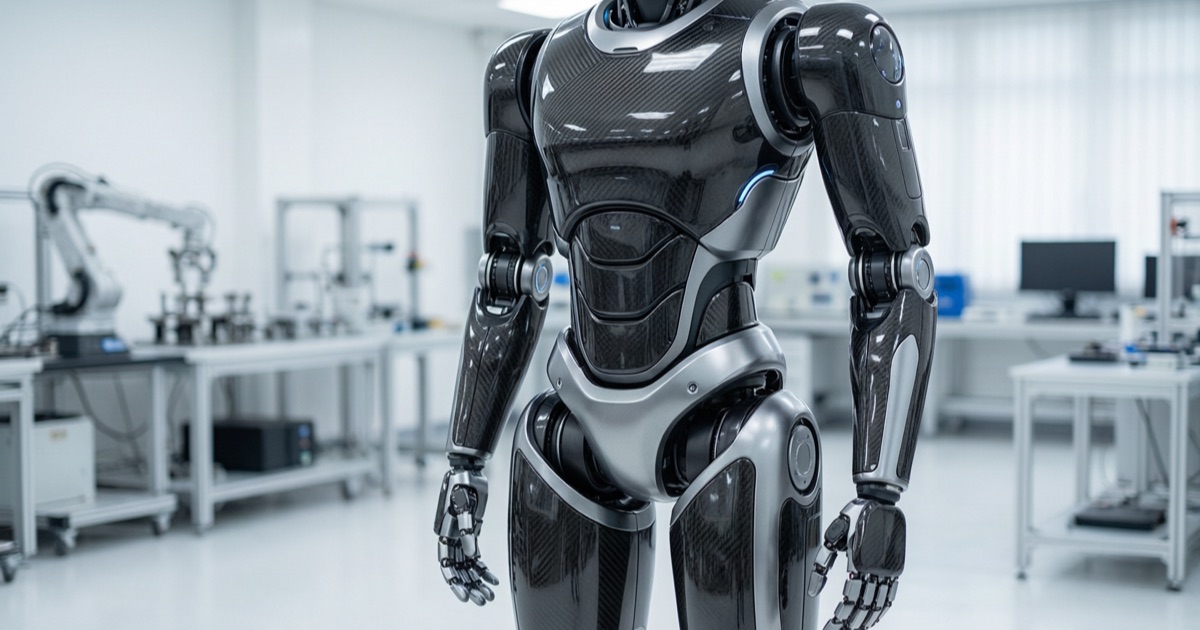
The Unitree H1 is one of the very few full-size humanoid robots you can actually get a price for in 2026 — but the number depends heavily on where you buy and which version you mean, and the H1 has quietly become the most expensive option in Unitree's own lineup. Here is what an H1 really costs, model by model, and the costs that don't appear on the listing.
What the H1 costs
Unitree's own store lists the H1 as "contact us for the real price," routing enterprise buyers through sales rather than a checkout button. That makes third-party resellers the most useful anchor. Across authorized North American and European resellers, the H1 line prices out roughly like this:
| Model | Typical listed price (USD) | What you get |
|---|---|---|
| H1 (standard) | ~$99,900 | Full-size humanoid tuned for locomotion research; sprint-grade dynamics |
| H1-2 | ~$128,900 | Adds 7-degree-of-freedom arms for manipulation research |
The ~$29,000 jump from H1 to H1-2 buys arms, not legs: the standard H1 is a locomotion platform (it held the humanoid sprint record at 3.3 m/s), while the H1-2 adds genuinely useful dexterity for bimanual manipulation work. Treat both figures as reseller list prices rather than a published Unitree MSRP — the official channel is quote-only, and configuration, hands and shipping region all move the final number.
The H1 is now the pricey middle child
The most important context for anyone about to spend six figures on an H1: it is no longer Unitree's flagship, and it is no longer its best value. The lineup around it has changed the math.
| Model | Entry price (USD) | Position |
|---|---|---|
| R1 | ~$4,900+ | Compact/entry humanoid |
| G1 | ~$21,600+ | Mid-size, most popular dev platform |
| H2 | ~$29,900 list | Newer full-size humanoid, more joints |
| H1 | ~$99,900 | Prior-gen full-size, locomotion focus |
| H1-2 | ~$128,900 | H1 with dexterous arms |
The H2, announced at a $29,900 list price, is a newer full-size humanoid that undercuts the H1 by roughly 70% while chasing range of motion rather than raw speed. Unless you specifically need the H1's proven locomotion dynamics or an existing H1-based research stack, the H2 and G1 are where most 2026 buyers should look first. The H1's price today reflects its research pedigree, not a spec-for-dollar advantage.
The costs that aren't on the listing
Three line items routinely surprise first-time humanoid buyers:
- Hands are often extra. Across Unitree's newer full-size machines, functional five-finger hands (the Dex5 family) are paid add-ons sold through distributors, with circulating per-hand prices in the four-to-five-figure range. Confirm exactly which hands your H1 or H1-2 quote includes before comparing prices — a base configuration may ship with placeholder or gripper-style end effectors.
- North American buyers pay a premium. Regional partners consistently list higher than the China-facing figures; expect region, import and support to add meaningfully on top of the base number.
- It's a research platform, not an appliance. The H1 is sold to labs, universities and integrators. Budget for the engineer-hours to program it, a safety enclosure or teleoperation setup, and spares — the robot is the down payment on a project, not the project itself.
Who should buy an H1 in 2026
The H1 makes sense in a narrow band: research groups that need its specific, well-documented locomotion performance, teams already building on an H1 codebase, or buyers who want the H1-2's 7-DoF arms for bimanual manipulation research and value Unitree's mature developer ecosystem. For everyone else — education, general humanoid experimentation, most commercial pilots — the cheaper G1 or the newer H2 will stretch a budget much further.
If you are comparing full-size humanoids across brands before committing, start with the humanoid robot category and price the whole deployment — hands, safety, integration and a year of engineering time — not just the sticker.