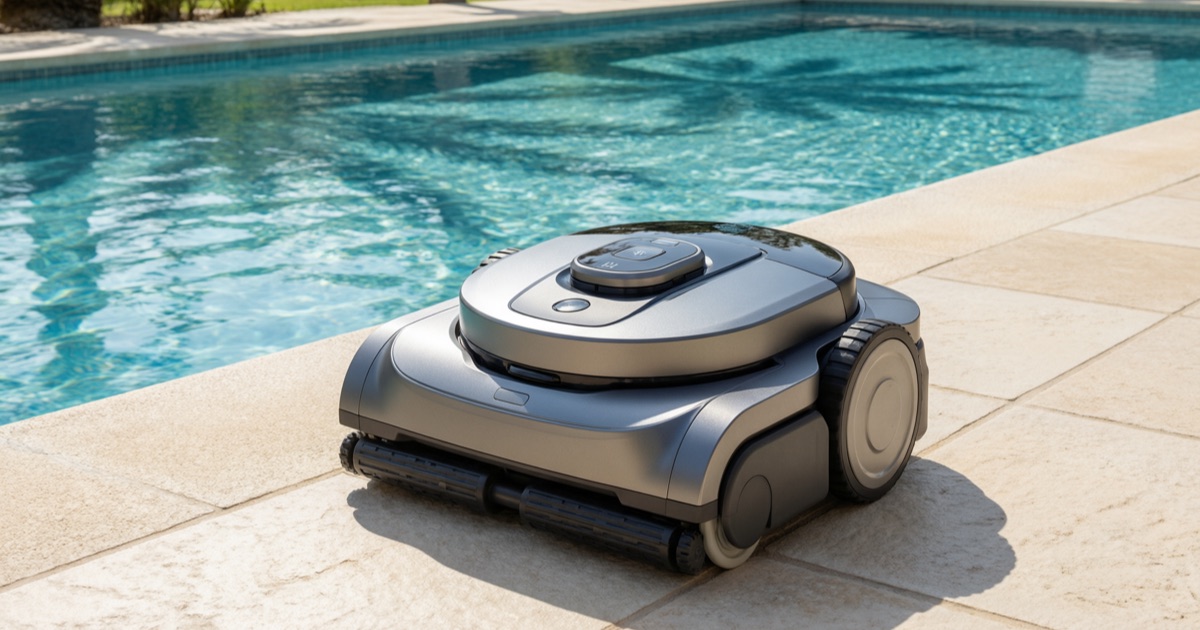
The cordless robotic pool cleaner has become one of the breakout consumer-hardware categories of the decade, and the brands most people recognize — Aiper, Beatbot, Wybot, Degrii — are all Chinese. What fewer buyers realize is that behind those brands sits a deep bench of Shenzhen-region factories that will build the same class of machine under *your* label. If you run a pool-supply retail brand, a regional distributor, or a marketplace private-label line, 2026 is a realistic window to launch your own robotic pool cleaner without engineering one from scratch.
This is a sourcing playbook, not a consumer buying guide — it is about getting a good unit made and imported under your brand.
OEM vs ODM: know which one you actually want
The two models get used interchangeably, but the difference decides your cost, speed and risk:
- ODM (Original Design Manufacturer) — the factory already has a finished, validated pool-robot design. You choose a model, customize the shell color, packaging and app branding, and ship. Fastest path, lowest engineering risk, lowest differentiation.
- OEM (Original Equipment Manufacturer) — you bring specifications or design changes and the factory builds to them. More control and differentiation, but longer timelines, tooling costs, and real validation burden on you.
For a first private-label launch, ODM with cosmetic customization is almost always the right call. You get a field-proven chassis, motor and navigation stack, and you compete on brand, warranty and distribution rather than betting on unproven hardware.
MOQ reality in 2026
Minimum order quantities vary far more than newcomers expect. On the sourcing platforms you will see everything from single-unit sample orders to 1,000+ unit MOQs, and the terms are genuinely negotiable:
- Some agile OEM/ODM suppliers advertise no fixed MOQ for stock designs — useful for a pilot run to test the market before committing capital.
- Custom (non-cosmetic) models typically unlock free customization only past a threshold — commonly around 1,000 units — because that is where tooling and firmware work amortize.
- The 2026 market has a genuine split: mega-factories impose rigid high MOQs and long lead times, while smaller agile OEM partners offer flexibility. For a first run, the agile partner usually beats the big name.
Start with a small pilot batch on a stock ODM design, validate returns and reviews in your market, then scale the reorder. Do not tool a custom chassis on unproven demand.
Certifications are non-negotiable
This is where first-time importers get burned. A pool robot is a battery-powered electrical device submerged in water near people — regulators care. Before you sign, confirm the factory holds and will supply documentation for the marks your destination requires:
- CE (Europe), FCC (US wireless/EMC), UL or ETL (US electrical safety), RoHS (hazardous substances), and increasingly a certified battery/UN38.3 for lithium transport.
- Serious suppliers list ISO quality-management and BSCI social-compliance audits alongside the product marks. The stronger ODM houses run 400-plus-person operations with in-house R&D and full certification suites — those are the partners you want.
Get the actual certificates, not a line on a spec sheet, and verify the certificate number matches the exact model and battery you are importing. A mismatched or expired cert can get an entire container held at customs.
The sourcing checklist
- Sample first, always. Order 1–3 production samples and test them in a real pool — climb, runtime, filtration, app pairing — before any volume commitment.
- Verify the battery and motor. Cordless value lives in the battery and brushless motors. Confirm cell source, real (not marketing) runtime, and whether suction holds as the battery drains.
- Lock the warranty chain. You will own the warranty to your customer. Nail down defect rates, spare-parts supply, and who eats replacement cost before you brand it.
- Pin down IP and app ownership. If the app is the factory's, understand what happens to your branding and user data if you switch suppliers later.
- Model landed cost, not FOB. Freight, duties, battery-shipping surcharges and certification all move the real per-unit number well above the quoted price.
Our pool cleaning robot category page breaks down the machine classes and typical spec tiers, which is a useful reference when you brief a factory on the model you want to private-label.
Bottom line
Launching your own robotic pool cleaner brand in 2026 is genuinely accessible — the Chinese ODM base is mature, MOQs are flexible enough for a real pilot, and the hardware is field-proven. The winners will not out-engineer Aiper or Beatbot; they will pick a solid ODM chassis, get the certifications airtight, own the warranty experience, and compete on brand and distribution. Start with a stock design and a small batch, prove the returns and review data in your market, then scale — and never skip the certificates or the in-pool sample test.