The quadruped robot — the "robot dog" — spent years as a viral demo reel. In 2026 it is a line item in industrial procurement. Component localization in China has pushed past 50%, machine cost has fallen roughly 30% since 2023, and units that once sat in the million-RMB "luxury" bracket now sell in the tens of thousands of RMB for batch orders. That price move is what turned quadrupeds from a novelty into a serious tool for inspection duty in substations, tunnels and plants.
If you are evaluating a quadruped fleet for autonomous inspection, here is where the category actually delivers and what to verify before you import.
Why inspection is the killer application
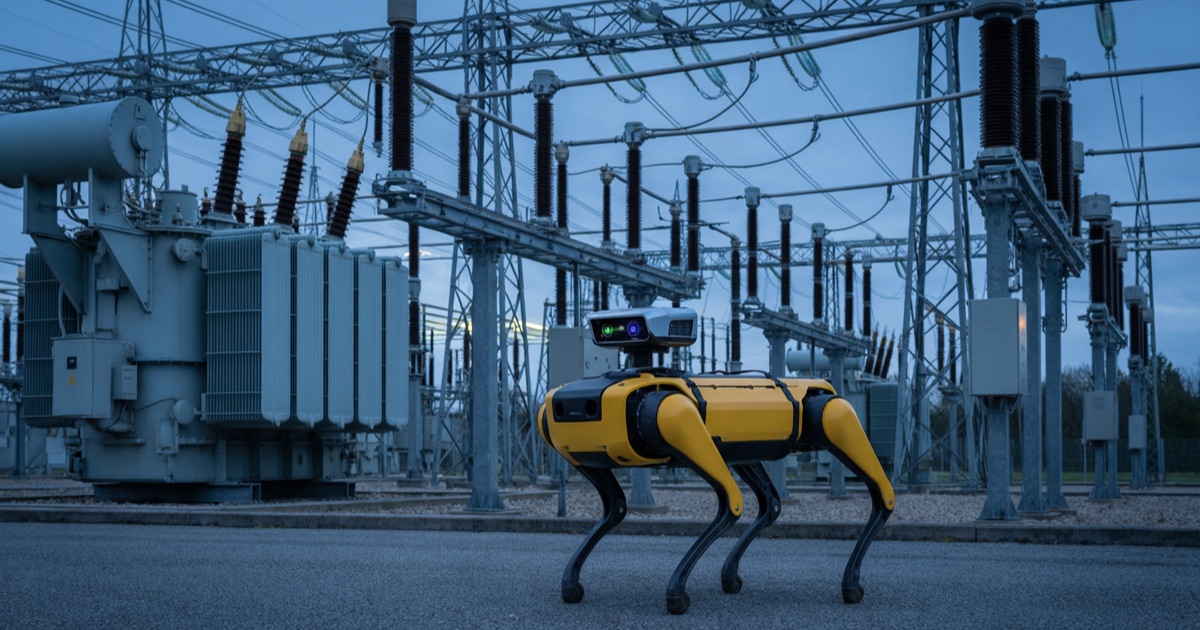
Inspection is repetitive, hazardous, and staffed by people you would rather deploy on judgment work — a near-perfect fit for an autonomous legged platform that can climb stairs, cross cable trays and squeeze through spaces a wheeled AGV cannot. The deployment evidence is now concrete rather than promotional:
- A leading Chinese maker's substation-inspection quadruped reports 96.5% recognition accuracy on gauges and equipment states, with mean time between failures exceeding 1,000 hours — the kind of reliability figure that matters when the robot is your unattended night shift.
- The same platform is credited with China's first fully autonomous quadruped substation inspection, and the vendor claims roughly 85% share of China's power-industry quadruped deployments and about 90% in firefighting.
- One of its units has been deployed in Singapore's ~40 km underground power-transmission cable tunnel, where the vendor reports it saves over 480 hours of manual inspection annually — a clean, quantified overseas case.
The demand signal behind the price drop
The volume that is crushing prices is partly policy-driven. In the first half of 2026 China's State Grid announced a purchase of roughly 8,500 embodied-intelligence devices — including about 5,000 quadruped inspection robots, 500 humanoids for live electrical work, and 3,000 dual-arm units. Orders at that scale pull the entire supply chain's cost down, and that cost decline is exactly what makes the export price attractive to a buyer in Europe, the Middle East or Southeast Asia.
The market has also consolidated enough to make sourcing legible. Two makers lead — one holding around 32% share, the other about 19% — with the second specializing in industrial inspection revenue specifically. That concentration means you are buying from established platforms with real service track records, not garage prototypes. Our robot dog category page compares the platform tiers and payload options if you are still scoping which class fits your site.
Total cost is more than the sticker
A tens-of-thousands-RMB quadruped looks cheap next to a security-guard salary, but the platform is the smallest part of an inspection deployment's real cost:
- The sensor payload often costs more than the dog. Thermal cameras, acoustic partial-discharge sensors, gas detectors and gimbal turrets are where inspection value lives — and where the budget goes. Price the mission payload separately.
- Autonomy software and integration. Autonomous patrol routes, docking/charging stations, and pushing findings into your existing monitoring system all take integration work. The base robot walking is table stakes; the value is in the closed loop.
- Charging and uptime infrastructure. For 24/7 patrol you need auto-charging docks and enough battery headroom that the robot is inspecting, not parked. That >1,000-hour MTBF only matters if the duty cycle is engineered around it.
For sites where the real need is fixed-route monitoring rather than legged mobility, it is worth cross-shopping against wheeled options on our inspection robot category page — a quadruped is worth its premium only where stairs, uneven ground and tight passages genuinely require legs.
Sourcing checklist for overseas buyers
- Match the platform to the terrain. If your inspection route is flat and paved, a wheeled robot is cheaper and more reliable. Reserve the quadruped for genuinely legged environments — stairs, cable trays, rubble, gratings.
- Confirm the payload interface. Verify the robot exposes the mounting, power and data interfaces your specific thermal/gas/acoustic sensors need, and that the vendor supports third-party payloads if you are not buying theirs.
- IP rating and environment. Substations and tunnels are dusty, wet and hot. Check the ingress-protection rating and operating-temperature range against your worst-case site.
- Data and integration. Confirm how inspection data leaves the robot and whether it can feed your existing SCADA or monitoring platform without a custom bridge.
- Service, spares and software updates. MTBF figures assume maintenance. Confirm parts lead times to your region and how firmware/AI-model updates are delivered.
- Export and dual-use compliance. Autonomous robots with sensor payloads can trip export-control and import rules. Clear the classification for your destination early.
Bottom line
Chinese quadruped inspection robots have crossed a real threshold in 2026: prices down about a third since 2023, reliability figures above 1,000 hours MTBF, and quantified overseas deployments like Singapore's cable tunnel. The category is genuinely ready to buy — but the robot is the cheap part. Budget for the sensor payload, autonomy integration and charging infrastructure that turn a walking platform into a working inspection loop, and only pay the legged-mobility premium where your site actually demands legs. Where the route is flat, a wheeled inspection robot will serve you better for less.