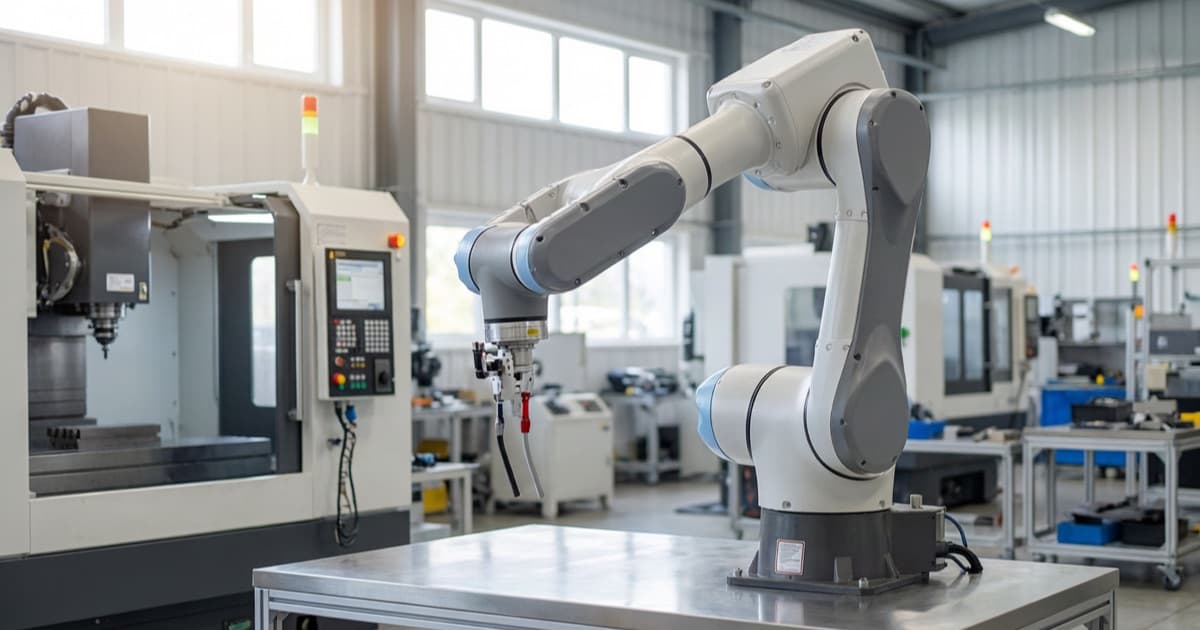
Commercial cooking robots have quietly moved from novelty to infrastructure in China's restaurant industry, and overseas operators — ghost kitchens, campus and hospital caterers, fast-casual chains — are starting to source them the same way they source combi ovens or fryers. If you are evaluating one for a Western kitchen, here is what the market actually looks like and what to check before you sign a purchase order.
A market big enough to have real supply chains
This is not a handful of startups. Industry bodies put China's cooking-robot market at roughly 31.7 billion yuan (about US$4.4 billion) in 2024, with 2025 estimates above 37 billion yuan and longer-range forecasts pointing past 100 billion yuan by 2030. On the deployment side, trade reports cite more than 30,000 restaurants running cooking robots by mid-2025, with projections of 150,000 by 2027.
For a buyer, the practical takeaway is supply-chain maturity: there are multiple serious manufacturers, several backed by large strategic investors (JD.com and major hotpot and food-service groups have all put capital into the category), which means spare parts, firmware updates, and OEM/private-label options actually exist — unlike a one-off prototype vendor.
What the machines really do
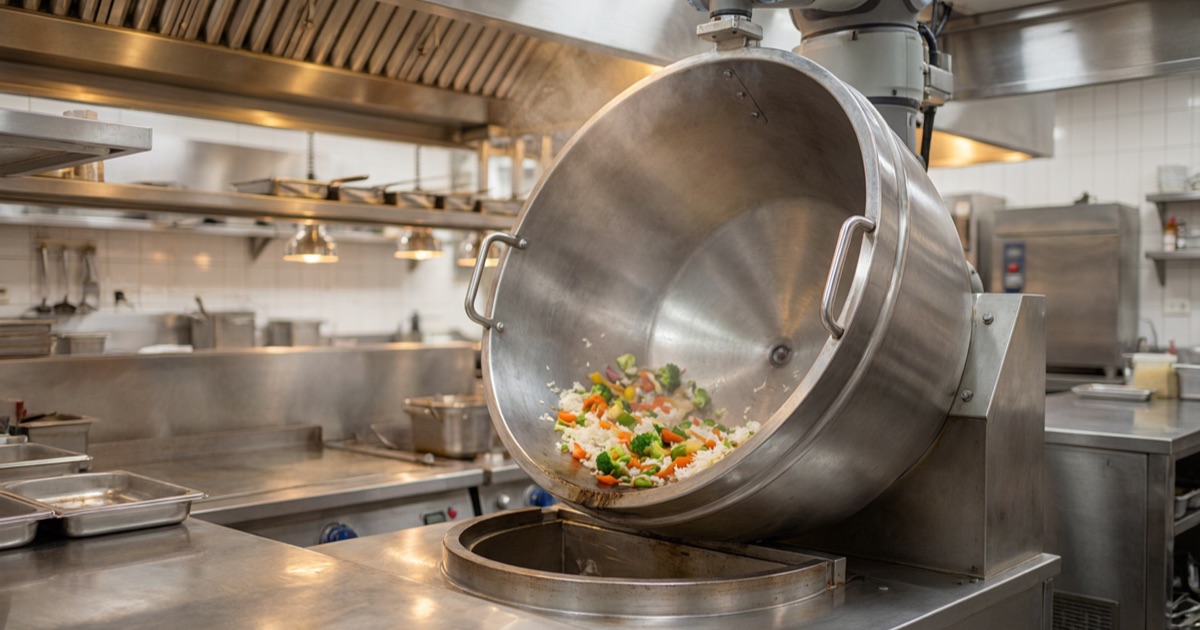
Most commercial units are automated stir-fry (drum-wok) systems rather than humanoid arms. The core engineering is three things: high-heat cooking (many units target 300°C-plus induction "wok hei" heat), a mechanical tossing or rotating drum that mimics wok motion, and closed-loop temperature control. Vendors advertise ingredient dosing accuracy within about 1 gram and in-cook temperature variance under 1%.
The real value is standardization, not speed alone — though speed helps: JD-backed units have been reported to cut per-dish prep from roughly 10 minutes to 3. One vendor's pitch sums up the category: 1,000 robots cooking the same dish, or one robot cooking it 1,000 times, should taste identical. For a multi-location operator, that consistency is the buying argument.
Sourcing checklist for overseas buyers
- Electrical spec. High-heat induction drum-woks pull serious power. Confirm the unit ships in your voltage/phase (many China-market units are 380V three-phase) and that it carries the right certification for your region — CE for the EU/UK, UL/ETL and NSF (food-contact/sanitation) for North America. Do not assume a China-domestic model is drop-in compliant.
- Throughput vs. menu. Ask for cycle time on *your* dishes, not a demo dish. Drum-woks excel at stir-fry, fried rice, and sauced dishes; they are weak on grilling, steaming, and plating. Match the machine to your menu, not the marketing video.
- Recipe programming. Clarify who owns and edits recipes, whether the controller is cloud-locked, and whether you can localize seasoning without a service visit.
- Cleaning and hygiene. Auto-wash between cycles is common but varies; get the daily deep-clean labor estimate in writing.
- Total landed cost. Home units run roughly 2,390–6,990 yuan (about US$330–$960), but those are consumer countertop machines — commercial drum-wok units are a different, higher class. Budget for freight, duties, a transformer if voltages differ, and a spare-parts kit.
If you are also weighing back-of-house delivery, cleaning, or prep automation, our cooking robot category page breaks down the machine types and typical use cases.
Bottom line
The category is mature enough to source seriously, but the compliance and menu-fit gaps are where deals go wrong. Treat a cooking robot like any imported commercial kitchen appliance: verify certification, test it on your real menu, and price the whole landed, installed, serviced cost — not the factory quote.