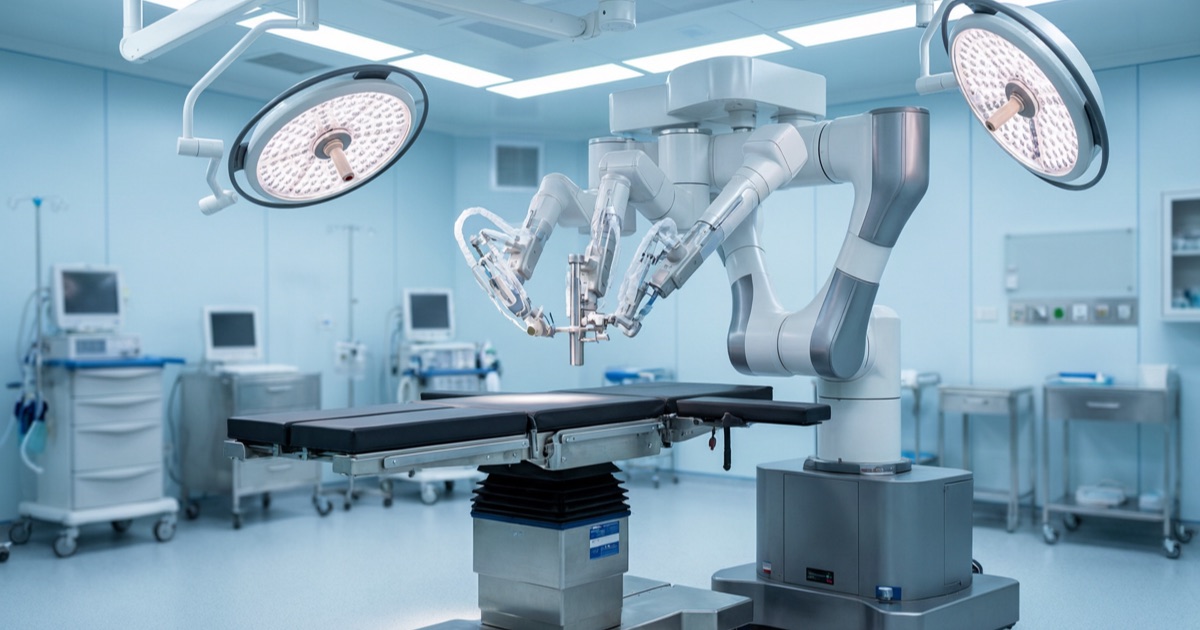
China's medical robotics sector is one of the fastest-moving corners of the country's robot industry. Suppliers report revenue growth well above 100% year over year heading into 2026, and industry financing reportedly reached the scale of several billion yuan in a single year. For buyers — hospitals, distributors, and clinical-equipment importers — that momentum is an opportunity and a warning at the same time. Fast-growing categories attract both serious engineering companies and thinly capitalized newcomers, and medical hardware is the last place you want to guess wrong.
Unlike consumer or warehouse machines, a clinical robot is closer to a regulated pharmaceutical product than to a piece of equipment. Buyers should expect to verify a long list of safety and quality standards — typically well over a dozen — before a unit ever touches a patient. That is the single most important filter when you evaluate a supplier: not the demo video, but the documentation behind it.
Generalist vs. specialist: pick the shape that matches your use case
The clearest strategic split in the market is between generalist platforms, which aim to handle many procedures with one flexible system, and specialist devices built to do one thing extremely well — a specific surgical approach, a rehabilitation task, or a diagnostic workflow. Neither is universally better. A specialist device often clears regulatory review faster and performs more reliably inside its narrow lane, while a generalist platform can spread cost across more procedures but usually demands deeper integration and training.
As a buyer, start from the procedure, not the product. Map the exact clinical workflow you need to automate, then ask each supplier to show validation data for that specific task rather than aggregate marketing claims. If you are also evaluating adjacent categories, our medical robot directory and disinfection robot listings group Chinese suppliers by application so you can compare like with like.
A pre-purchase checklist for Chinese medical robot suppliers
- Regulatory registration. Confirm the device is registered with China's NMPA and, critically, holds valid clearance for your destination market (CE, FDA, or local equivalent). A domestic-only registration does not transfer.
- Clinical validation. Ask for peer-reviewed or hospital-verified outcome data on the exact indication you plan to use — success rates, complication rates, and sample size.
- Track record and runway. Because profitability in clinical robotics typically takes years, favor suppliers with a funded balance sheet and installed base over the cheapest quote. A vendor that folds mid-contract leaves you with orphaned hardware.
- Service and consumables. Clarify calibration, spare-part lead times, software-update policy, and per-procedure consumable costs — these often outweigh the purchase price over a device's life.
- Training and liability. Confirm who certifies your operators and where clinical liability sits once the system is in use.
The bottom line
The capital flowing into Chinese medical robotics means real technology is maturing quickly, and buyers now have genuine choice across surgical, rehabilitation, and service categories. But the same influx guarantees a shakeout, so treat sourcing here as a due-diligence exercise, not a price comparison. Verify certifications first, insist on task-specific validation data, and weight supplier durability heavily. Done carefully, sourcing from China can put clinically capable robots within reach at a fraction of legacy Western pricing — done carelessly, it exposes you to regulatory and patient-safety risk that no discount can offset.
Use the medical robot category to shortlist suppliers, then run every candidate through the checklist above before you request a quote.