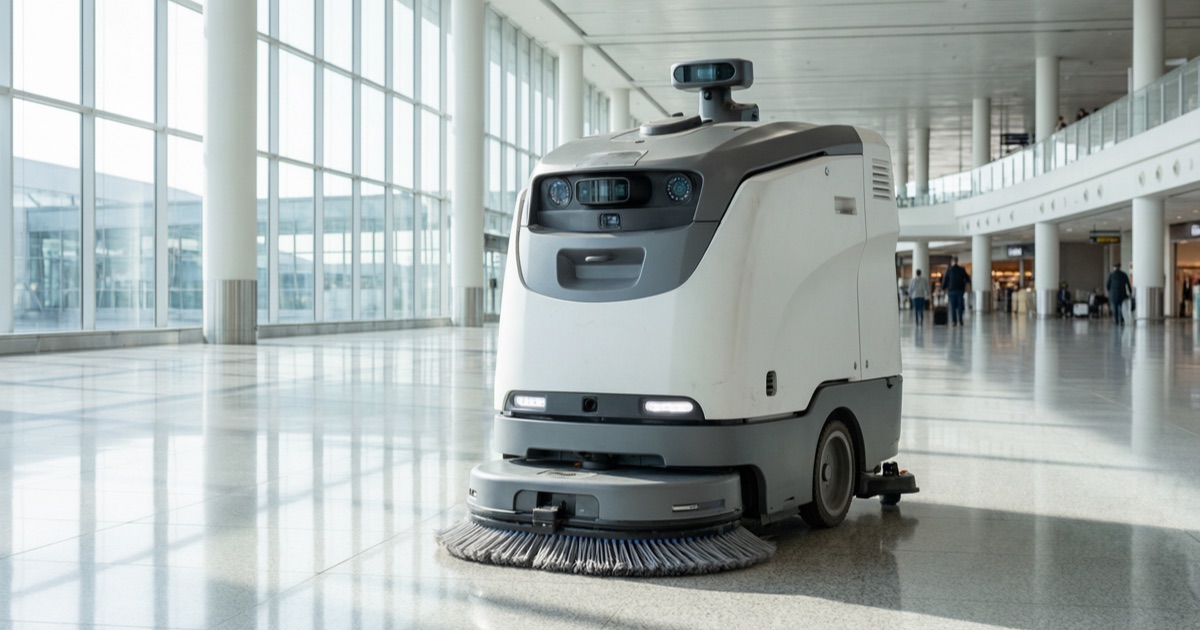
Cleaning robots are one of the largest and most competitive service-robot categories in the world, and China sits at the center of it. Industry analysts put the global cleaning-robot market in the tens of billions of dollars, growing at a compound rate reported north of 20% a year through the late 2020s. Most of that hardware — consumer and commercial alike — is designed and built in China, which is exactly why buyers can find strong value here if they know how to sort the field.
The flip side of a fast-growing, crowded market is that spec sheets have become a battleground. Navigation claims, suction figures, and "AI obstacle avoidance" are marketed aggressively, and not every number survives contact with a real floor. This guide focuses on how to buy well rather than on any single brand.
First, match the platform to the space
Cleaning robots split into a few practical tiers, and choosing the wrong tier is the most common sourcing mistake:
- Consumer floor robots — vacuum-and-mop units for homes and small offices. Mature, inexpensive, and heavily commoditized.
- Commercial scrubbers and sweepers — larger autonomous machines for warehouses, malls, airports, and factories, where runtime, tank capacity, and fleet management matter far more than app features.
- Specialty cleaners — window, facade, and pool cleaning robots built for a single surface. These are a different supply chain from general floor units, so evaluate them separately.
Start from the environment — square footage, floor type, obstacle density, and how many hours a day the machine must run — then let that dictate the tier. A premium home unit will not survive a commercial duty cycle, and a commercial scrubber is wasted overhead in a boutique.
Read the spec sheet like a skeptic
A few numbers separate a genuine performer from a marketing exercise. Navigation quality — how reliably the robot maps and re-routes around real obstacles — matters more than raw suction figures once you are past entry level. For commercial buyers, battery runtime and swap-ability, water and debris tank capacity, and fleet-management software determine actual throughput. Ask for cleaning coverage per hour under load, not the best-case lab figure, and confirm edge and corner performance, which is where cheaper units quietly fail.
When you shortlist, our cleaning robot directory lets you filter Chinese suppliers by application so you compare commercial scrubbers against scrubbers rather than against consumer vacuums.
Source from the right supplier tier
The leading Chinese cleaning-robot makers are established, export-ready companies with real R&D and after-sales networks — the safer choice for commercial volume. Below them sits a long tail of smaller OEM and white-label suppliers offering aggressive pricing, which can work for consumer resale but carries more risk on durability and parts support. For any commercial deployment, weight after-sales heavily: confirm spare-part availability, battery-replacement cost, software-update policy, and warranty terms in your market before price enters the conversation.
The bottom line
China's cleaning-robot sector gives buyers unusually deep choice at every price point, and the category's continued double-digit growth means capability keeps improving while prices stay competitive. Win by being disciplined: pick the tier that matches your space, treat spec sheets skeptically and demand under-load numbers, and buy from a supplier whose after-sales support you have actually verified. Get those three right and a Chinese cleaning robot is one of the highest-ROI automation purchases available in 2026.
Browse current options in the cleaning robot category to build your shortlist.