JAKA Robotics is one of the fastest-growing Chinese collaborative-robot makers, and it has built its export business on a simple pitch: match Universal Robots on specs, undercut them on price. If you're scoping a cobot cell for palletizing, machine tending, or light assembly, JAKA is almost always on the shortlist. Here's what its arms actually cost in 2026 and how to read the number.
A note on the figures below: cobot pricing is quote-driven, so these are indicative arm-only prices based on distributor quotes and published guides, not fixed list prices. Region, integrator margin, and configuration all move the final number. Use them to budget, then get a real quote.
The Zu series by payload
JAKA's core line is the Zu series, named roughly by payload. As with every cobot brand, price scales with payload and reach.
| Model | Payload | Reach | Indicative price (arm only) |
|---|---|---|---|
| JAKA Zu 3 | 3 kg | 626 mm | ~$15,000 |
| JAKA Zu 7 | 7 kg | ~800 mm | $12,000–$18,000 |
| JAKA Zu 12 | 12 kg | 1,327 mm | ~$28,000 |
Across the full catalog, JAKA's indicative pricing runs roughly $12,000 to $36,000 depending on model and payload class — placing it at the lower end of the mid-tier cobot market. Note that some regional resellers list configured prices higher (one US listing puts the Zu 3 near $19,500), which typically reflects bundled tooling, controller options, or import margin rather than the bare arm.
How JAKA prices against the field
The headline reason buyers look at JAKA is the gap to the Western incumbents. JAKA competes directly with Universal Robots on payload and reach while pricing roughly 30–40% lower. The Zu 12, in particular, is positioned as a direct UR10e alternative for palletizing at a materially lower entry cost.
That gap is real, but the arm is only part of the bill. Budget the same way you would for any cobot:
- The arm — the numbers above.
- End-of-arm tooling (EOAT) — grippers, vacuum, or custom tooling, often $1,000–$10,000+ depending on the job.
- Integration & programming — cell design, safety assessment, and deployment. On a simple pick-and-place this can be modest; on a complex line it can rival the arm's cost.
- Accessories — vision, force sensing, mounting, guarding.
A rule of thumb across the industry: the installed cost of a cobot cell often lands at 1.5–3× the arm price once tooling and integration are in. JAKA's lower arm cost helps, but it doesn't change that ratio.
Where a JAKA cobot makes sense
- Palletizing — the Zu 12's payload and reach at a sub-UR price make it a common palletizing pick.
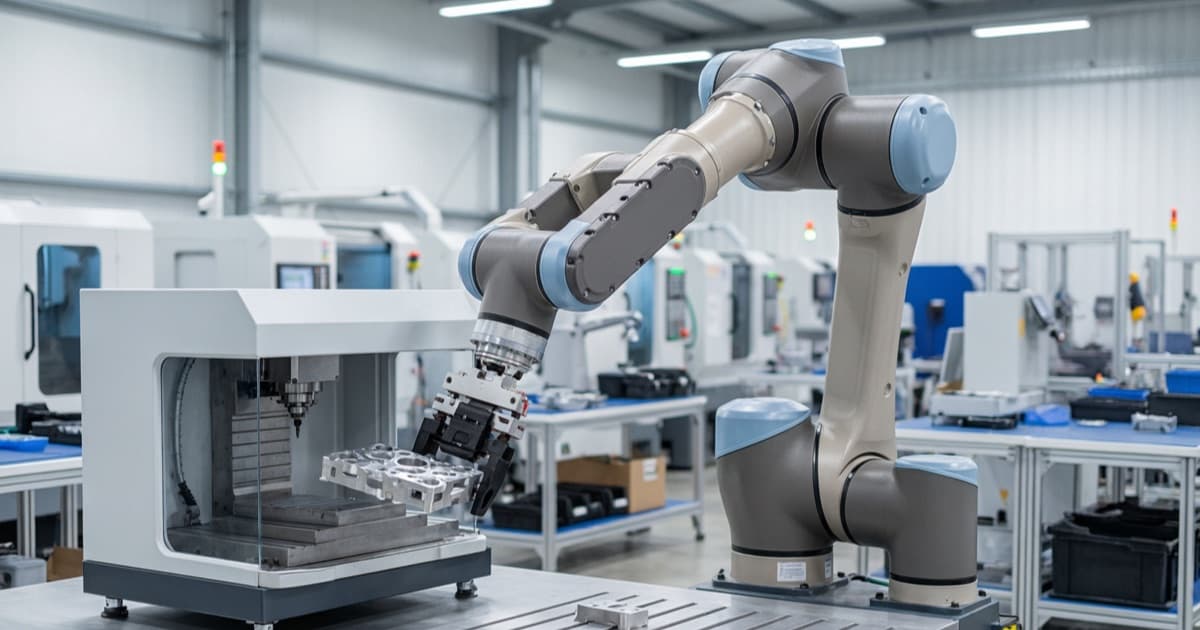
- Machine tending — loading/unloading CNC or injection machines, where the Zu 7 covers most part weights.
- Light assembly and inspection — the Zu 3 suits benchtop tasks where footprint and cost matter more than payload.
What to verify before you commit, as with any Chinese-sourced automation: local integrator support, spare-parts availability in your market, safety certification for your region (the arm must carry the right marks for collaborative operation), and a real reference deployment you can talk to.
Bottom line
JAKA gives you UR-class payload and reach for roughly two-thirds of the price, with an arm-only range of about $12k (Zu 3 / Zu 7 entry) to $28k+ (Zu 12 and up). The savings are genuine — just remember to budget the full cell, not the arm alone, and to vet local support before the quote turns into a purchase order.
Comparing cobot brands before you request quotes? Browse specs and suppliers for collaborative robots to benchmark JAKA against the rest of the field.