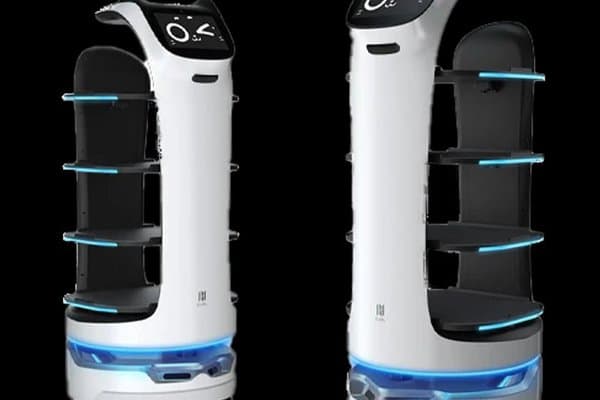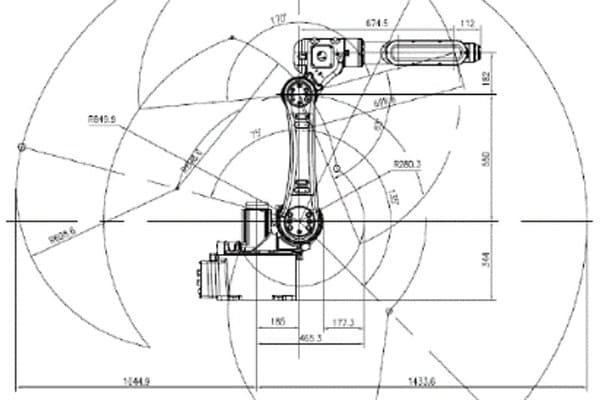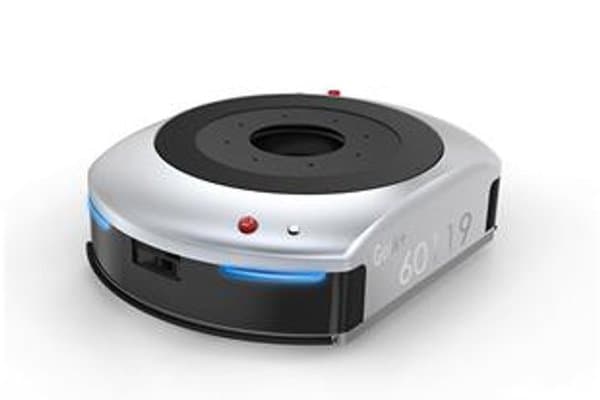
Should you automate your warehouse or keep hiring? It's the most important logistics decision of the decade. Labor costs keep rising, robot prices keep falling, and every major fulfillment center is somewhere in this transition. Here's the full cost comparison so you can make a data-driven decision.
The Core Economics (2026 Numbers)
Annual Cost of One Warehouse Picker
| Market | Hourly Rate | Hours/Week | Annual Salary | Benefits (30%) | Total Fully Loaded |
|---|---|---|---|---|---|
| United States | $18–$22 | 40 | $37,440–$45,760 | $11,000–$14,000 | **$48,000–$60,000** |
| United Kingdom | £14–£18 | 40 | £29,120–£37,440 | £8,700–£11,000 | **£38,000–£48,000** |
| Germany | €16–€22 | 40 | €33,280–€45,760 | €10,000–£14,000 | **€43,000–€60,000** |
| Australia | A$26–$32 | 38 | A$51,000–$63,000 | A$15,000–$19,000 | **A$66,000–$82,000** |
| China (Tier 1 cities) | ¥22–¥28 | 48 | ¥54,912–¥69,888 | ¥11,000–¥14,000 | **¥66,000–¥84,000** |
This is just the baseline cost. Add turnover costs (replacing a warehouse worker costs $3,000–$7,000 in recruiting and training), absenteeism (typically 5–8% of labor hours), and injury costs, and the true cost of manual labor is 15–25% higher than the salary.
Annual Cost of One Warehouse AMR (Autonomous Mobile Robot)
| Cost Item | Entry-Level AMR | Mid-Range AMR | Enterprise System |
|---|---|---|---|
| Robot purchase | $20,000 | $35,000 | $50,000 |
| Amortized over 7 years | $2,857/yr | $5,000/yr | $7,143/yr |
| Software platform | $1,200/yr | $2,400/yr | $3,600/yr |
| Maintenance & parts | $1,500/yr | $2,500/yr | $4,000/yr |
| Electricity | $800/yr | $1,200/yr | $1,500/yr |
| **Total annual cost** | **$6,357/yr** | **$11,100/yr** | **$16,243/yr** |
The fundamental advantage: one AMR costs $6,000–$16,000/year. One picker costs $48,000–$60,000/year in the US.
But this comparison isn't apples-to-apples. One robot doesn't replace one worker on a 1:1 basis — the real question is what productivity output you're getting per dollar spent.
Productivity: What Each Actually Delivers
Manual Picker Performance
| Metric | Standard Picker | Experienced Picker |
|---|---|---|
| Picks per hour | 60–80 | 100–120 |
| Hours worked per shift | 7 (80% efficiency) | 7 |
| Effective picks per shift | 420–560 | 700–840 |
| Shifts per day | 1–2 | 1–2 |
| Effective picks per day | 420–1,120 | 700–1,680 |
Humans tire, take breaks, slow down, and make mistakes. The productivity curve drops sharply in hours 6–8 of a shift.
AMR Performance (Goods-to-Person System)
| Metric | Entry-Level AMR | Enterprise System |
|---|---|---|
| Picks per hour (with human packer) | 150–200 | 300–450 |
| Hours operating per day | 20–22 | 22–24 |
| Effective picks per day | 3,000–4,400 | 6,600–10,800 |
| Error rate | 0.1–0.5% | 0.01–0.1% |
A goods-to-person AMR system keeps the human at a stationary pick station while the robot brings inventory to them. This increases pick rates 3–5× compared to traditional walk-to-pick methods.
The Break-Even Analysis
Scenario 1: Small Fulfillment Center (US, $20/hr labor)
Current situation:
- 10 pickers running 2 shifts
- Annual labor cost: 10 × $55,000 = $550,000
Automation option:
- 15 AMRs at $30,000 each = $450,000 upfront
- Reduces headcount from 10 to 4 (keep 4 to handle exceptions, packing, returns)
- Annual savings: 6 workers × $55,000 = $330,000
- Annual robot operating cost: 15 robots × $8,000 = $120,000
- Net annual savings: $210,000
- Payback period: 450,000 ÷ 210,000 = 2.1 years
Scenario 2: Large E-Commerce Fulfillment (US, Peak Season Problem)
This is where automation delivers its greatest advantage. A large fulfillment center handling 100,000 orders/day during Q4 peak:
Manual approach:
- 500 seasonal pickers during peak (October–January)
- Annual seasonal labor cost: 500 × 4 months × $4,500/month = $9M
- Turnover and quality issues severe
AMR approach:
- 200 AMRs (RaaS contract for peak scaling)
- 150 permanent staff instead of 500 seasonal
- 95%+ order accuracy vs. 97% with humans (robots win on accuracy)
- On-demand scale-up for peak season without hiring crises
Scenario 3: Southeast Asian Warehouse ($5/hr labor)
Low-cost labor markets fundamentally change the math:
Current situation:
- 20 pickers at $5/hr, 48-hour weeks
- Annual labor cost: 20 × $12,480 = $249,600
Automation option:
- 20 AMRs at $25,000 = $500,000 upfront
- Reduces to 8 workers
- Annual savings: 12 × $12,480 = $149,760
- Annual robot cost: 20 × $7,000 = $140,000
- Net annual savings: $9,760
- Payback period: 51 years — does not make economic sense
In low-wage markets, automation rarely makes financial sense unless you have specific quality or throughput requirements that humans can't meet.
Beyond the Numbers: What Robots Do Better and Worse
Where Robots Clearly Win
Speed and consistency: AMRs maintain constant speed and accuracy through a 20-hour shift. Human performance degrades by 20–30% in the second half of a shift.
Inventory accuracy: Robots don't mispick, don't grab the wrong SKU when distracted, and don't place items in the wrong location. Error rates drop from 1–3% (manual) to 0.01–0.5% (automated).
24/7 operation: AMRs charge in 30–60 minutes (or swap batteries) and resume. Covering 3 human shifts requires 3× the headcount or expensive shift premiums.
Scalability: Adding capacity means adding robots (if the fleet management system supports it), not hiring, training, and managing more people.
Where Humans Still Win
Irregular items: Robots struggle with oddly shaped packages, damaged goods, and items outside their programmed parameters. Humans handle exceptions naturally.
Low-volume, high-variety: In warehouses with thousands of SKUs and low volume per SKU, the economics of automation are weak. Human flexibility is the economic winner.
Unstructured environments: Robots require clean, organized environments. A messy or frequently reconfigured warehouse is harder to automate.
Returns processing: Reverse logistics is still largely a human domain — the variety and damage states of returned items are difficult to automate cost-effectively.
The Hidden Cost of NOT Automating
Many managers focus on the upfront cost of robots and miss the rising cost of NOT automating:
- Wage inflation: US warehouse wages have increased 25–35% since 2021. This trend continues.
- Recruitment cost: Average US warehouse turnover is 60–70% annually. At $5,000 per replacement hire, that's $3,000–$3,500 per worker per year just in turnover cost.
- Peak season risk: Manual-only operations are vulnerable to labor shortages during critical periods (Q4, holiday seasons). One bad hiring season can cost millions in missed orders.
- Competitive disadvantage: Amazon, Walmart, and major 3PLs are all automating. Manual-only competitors are building a structural cost disadvantage that compounds over time.
Top Warehouse Robot Systems by Price (2026)
| System | Price Range | Best For | Chinese Brand? |
|---|---|---|---|
| Geek+ P-Series | $25,000–$50,000/unit | Goods-to-person picking | Yes |
| Hai Robotics HAIPICK | $30,000–$80,000/unit | High-density storage | Yes |
| Quicktron Q-Series | $15,000–$30,000/unit | Basic transport AMR | Yes |
| Locus Robotics | $25,000–$45,000/unit | Pick-assist | No (US) |
| 6 River Systems | $1,500/month RaaS | Pick-assist | No (US) |
| AutoStore | $500K+ (system) | Cube storage | No (Norway) |
Chinese manufacturers (Geek+, Hai Robotics, Quicktron) dominate the mid-market at 30–50% lower cost than Western alternatives while delivering comparable performance.
Frequently Asked Questions
How many robots does it take to replace one worker?
It depends heavily on the system. For goods-to-person AMR systems, one robot unit combined with a human packer at a station produces 3–5× more picks than the same human walking to pick. You typically replace 2–3 walk-and-pick workers with 1 robot + 1 stationary packer.
Can you automate just part of a warehouse?
Yes, and this is often the smartest approach. High-volume, repetitive zones (fast-moving SKUs, pallet transport) automate easily and deliver the best ROI. Reserve human labor for returns, irregular items, and value-added services.
What's the minimum warehouse size for AMRs to make sense?
Generally, a facility processing 500+ orders per day with at least 3 pickers begins to show positive ROI on AMR investment. Smaller operations should look at pick-assist cobots or partial automation before committing to a full AMR fleet.
How reliable are warehouse robots?
Leading AMR manufacturers (Geek+, Hai Robotics) report 99%+ uptime on their deployed fleets. Most systems include redundancy — if one robot fails, the fleet management system redistributes its tasks to other units automatically.
Find Warehouse Robots Within Your Budget
Industrial Robot ROI & Payback Guide →