China has become the manufacturing base for a large share of the world's robot mowers, which makes it the natural place to source — whether you're a distributor filling a catalog, a retailer building a private label, or a landscaping firm buying a fleet. But a great factory price means nothing if the units can't legally sell in your market or arrive with a 15% defect rate. Run this checklist before you commit.
1. Certifications — the deal-breaker first
Market access lives or dies on compliance marks, so confirm these *before* discussing price:
- Europe: CE marking is mandatory, and radio-enabled mowers (GPS, 4G, app control) also need RED (Radio Equipment Directive) conformity. Ask for the test reports, not just a claim.
- United States: FCC certification for the wireless modules is required, plus UL or equivalent safety listing for retail channels.
- Batteries: UN38.3 for lithium battery transport is non-negotiable for shipping.
Get copies of the actual certificates and cross-check the issuing lab. Uncertified units are a compliance and liability trap, however cheap.
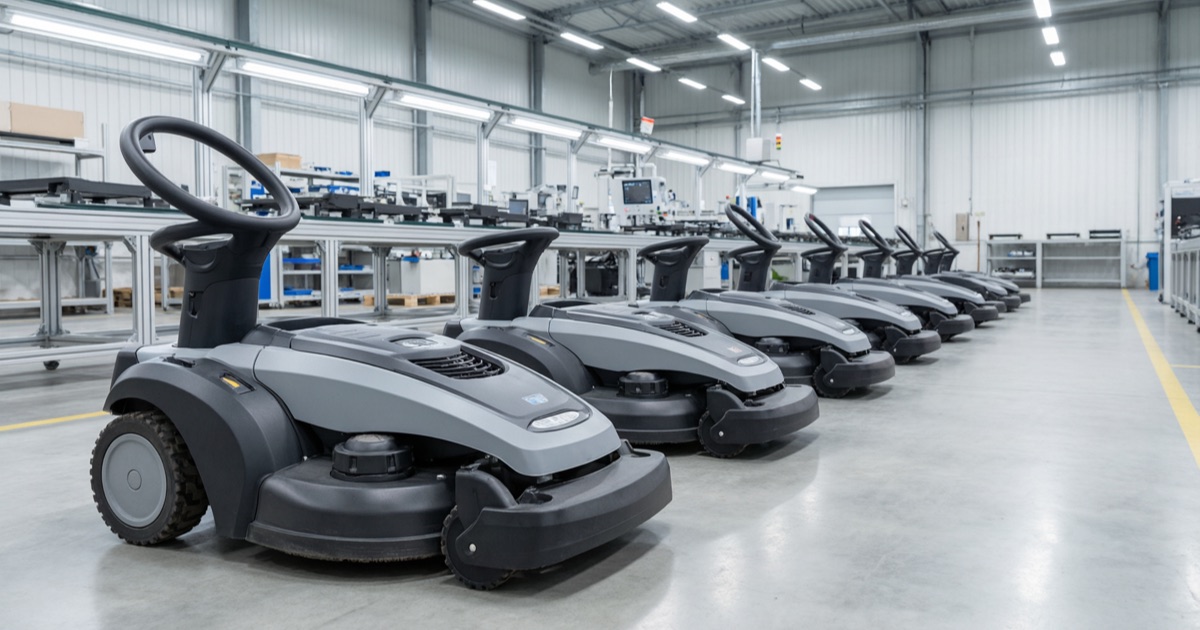
2. MOQ and pricing structure
Minimum order quantities vary widely. Established factories may set higher MOQs for standard models but require far more for private-label customization (custom shell, color, logo, firmware). Clarify: the MOQ for stock vs. custom units, tooling or setup fees for private label, and how per-unit price steps down at volume. Don't let a low headline price hide steep customization costs.
3. Warranty, spares, and after-sales
Robot mowers are field electronics that live outdoors — they *will* need service. Pin down the warranty term and what it covers (blades and wear parts usually excluded), spare-parts availability and lead time, and whether the supplier provides firmware updates and technical support. A supplier who can't supply blades and wheels a year later will cost you customers.
4. A pre-shipment QC checklist
Inspect (or hire a third party to inspect) before the goods leave China:
- Function test every unit or a statistical sample: navigation, docking, cut, app pairing, rain sensor.
- Weatherproofing spot-check against the claimed ingress rating.
- Battery health and correct charging behavior.
- Cosmetic and packaging condition for retail-ready presentation.
- Firmware version consistent across the batch.
- Accessories and manuals complete and in your market's language.
5. Vet the supplier itself
Confirm it's a real manufacturer (not a trading company reselling), ask for existing export references to your region, and start with a sample order before a full container. A factory already shipping to your market has cleared hurdles a newcomer hasn't.
Bottom line
Sourcing robot mowers from China is straightforward *if* you lead with compliance and quality, not price. Confirm the certifications for your market first, clarify MOQ and customization costs, lock down warranty and spares, and run a real pre-shipment inspection. Get those right and the price advantage is yours to keep.
Compare manufacturers, certifications, and specs of robot lawn mowers side by side before you reach out to suppliers.