As robot mowers spread to properties without a handy outdoor outlet — remote plots, second homes, off-grid cabins, large estates — solar charging keeps coming up. The pitch is appealing: a mower that tops up from the sun with no cable to the house and no power bill. Does it hold up? Mostly yes, with important caveats. Here's how to evaluate solar and off-grid mowing before you source.
Two very different "solar" setups
The word covers two distinct designs, and buyers should not confuse them:
- Solar-panel-on-the-mower. A panel built into the mower's shell trickle-charges while it sits idle. Useful as a supplement, but the surface area is small, so it rarely powers a full workload on its own. Treat it as a range extender, not a primary source.
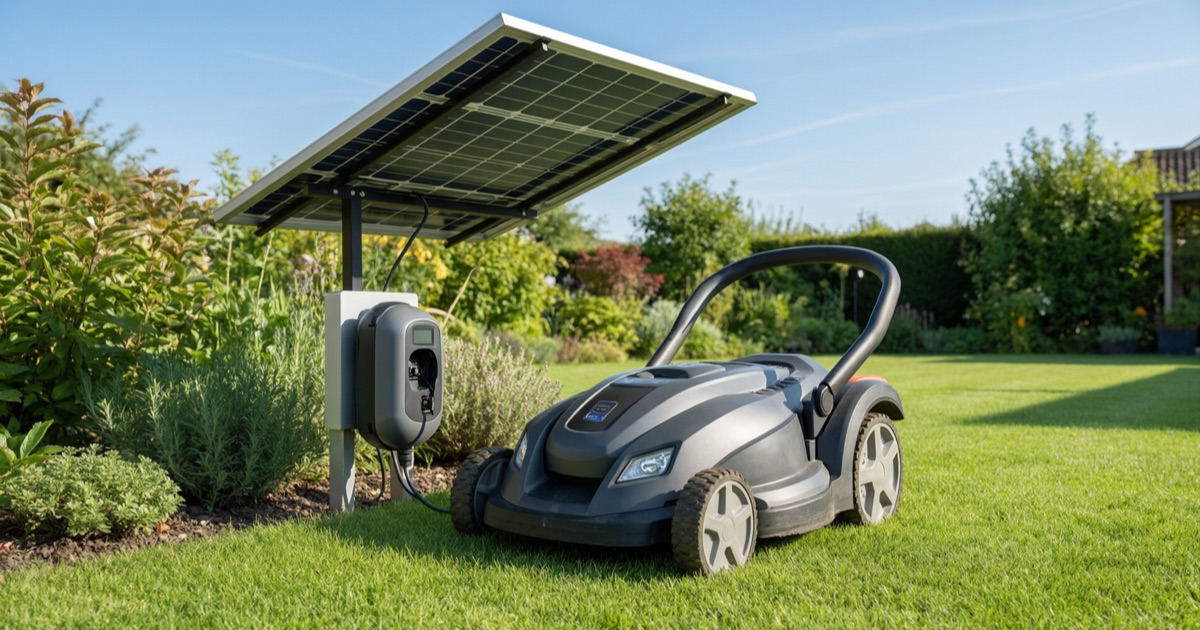
- Solar charging dock. A separate panel (a small canopy or ground-mounted array) feeds the charging station, often through a battery buffer. This is the setup that genuinely enables off-grid operation, because you can size the panel and buffer to the mower's real energy draw.
Where off-grid solar shines
Solar-dock mowing makes the most sense when: there's no convenient outlet near the lawn; the property gets reliable sun; and the area is modest enough that a sensibly sized panel-plus-battery can keep up. Think rural homes, holiday properties you visit occasionally, and eco-conscious owners who want zero grid draw. In those cases it removes the single biggest install headache — running mains power to a dock in the middle of a field.
Where it struggles
Solar is weakest exactly where demand is highest. Big lawns need more mowing hours, hence more energy, while cloudy climates and short winter days cut supply. If your grass grows fast and your skies are grey, an on-mower panel alone won't cover it — you'll want a grid-tied dock or a well-sized solar array with battery storage. Be realistic about your local sun hours before betting on solar.
What to check before you source
- Is solar primary or supplemental? Confirm whether the panel actually runs the workload or merely tops up.
- Panel wattage and battery buffer sized to your lawn's mowing hours and your region's sunlight.
- Grid-fallback option so cloudy stretches don't leave the lawn overgrown.
- Weatherproofing of the panel and dock for permanent outdoor exposure.
- Coverage rating — match the mower's area capacity to your lawn first, then layer solar on top.
Bottom line
Solar robot mowing is real and genuinely useful for off-grid and remote lawns with good sun — but the value is in the *charging dock*, not a token panel on the lid. Size the panel and battery to your actual mowing energy and local sunlight, keep a grid fallback for grey spells, and you get true cable-free, low-cost lawn care.
Compare battery capacity, charging options, and manufacturers of robot lawn mowers side by side before you contact suppliers.