"Can it mow in the rain?" is one of the first questions buyers in the UK, the Pacific Northwest, and Southeast Asia ask — and the honest answer is *it depends on the model and what you mean by mow*. Most modern robot mowers are built to survive rain; whether they should keep cutting through it is a different question. Here's what actually changes when the grass is wet, and how to source a unit that copes.
Surviving rain vs. cutting wet grass
Two separate things get conflated. Nearly all quality robot mowers carry a weatherproof rating and can sit out a downpour or drive home to the dock in it — that's a *survival* spec. Cutting *well* in wet conditions is harder: wet grass clumps, sticks to the blades and deck, and mats down instead of standing up for a clean cut. So a mower can be fully rainproof and still give you a ragged, streaky result if you force it to work a soaked lawn.
What wet grass does to performance
- Cut quality drops. Wet blades fold under the cutter instead of being sliced, leaving uneven patches and tracks.
- Clumping and buildup. Damp clippings cake onto the blade disc and underside, dulling the cut and forcing more frequent cleaning.
- Traction and turf damage. Wet ground plus tires can mean wheel-slip on slopes and visible ruts on soft lawns.
- Sensor confusion. Heavy rain can affect some obstacle sensors, though good units compensate.
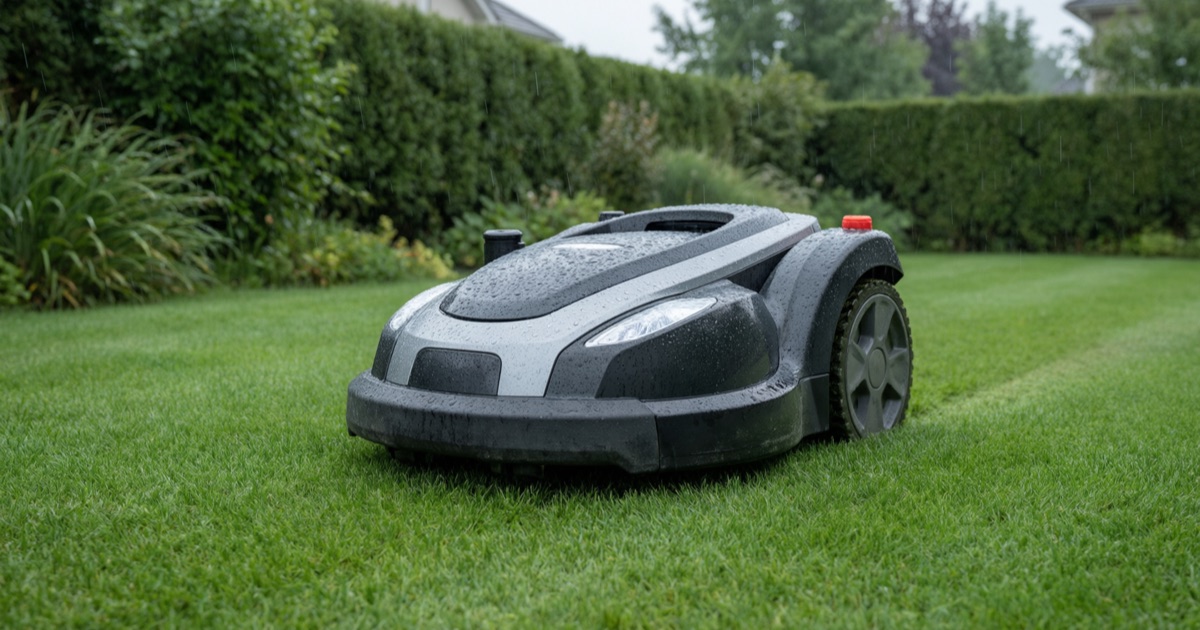
The smarter approach: rain sensors and scheduling
Rather than powering through, the better-designed mowers *manage* rain. A rain sensor pauses the cut and sends the unit back to the dock, then resumes once conditions improve. Because a robot mower trims a little every day, skipping a few wet hours barely dents overall coverage — the lawn never gets away from it. For genuinely wet climates, that intelligent scheduling matters more than raw "mows-in-rain" bravado.
What to check before you source
- Ingress protection rating. Look for a clearly stated IPX weatherproof grade on both the mower and the charging dock, and confirm it's rated for rain, not just splashes.
- Rain sensor and auto-resume. Confirm the unit detects rain, returns to dock, and restarts on its own — and that you can tune the sensitivity.
- Traction for wet ground. All-wheel drive and aggressive tire tread matter far more once the lawn is soft and sloped.
- Deck and blade cleaning. Wet-climate owners clean more often — favor designs with easy blade access and a deck that sheds clippings.
- Corrosion resistance. Sealed electronics and rust-resistant hardware pay off over years of damp operation.
Bottom line
Every serious robot mower should shrug off rain; the ones worth sourcing for a wet climate are those that cut cleanly when they can, sense rain and stand down when they can't, and grip soft ground without tearing it. Prioritize the ingress rating, the rain-sensor logic, and wet-ground traction over marketing claims about mowing in a storm.
Compare weatherproof ratings, traction specs, and manufacturers of robot lawn mowers side by side before you contact suppliers.