Navigation gets the headlines, but once two robot lawn mowers both drive straight lines without a boundary wire, buyers decide on something else: the connected experience. In 2026 the smart-feature layer — anti-theft, app control, zoning, and updates — is where models genuinely differentiate, and where a private-label buyer can either add real value or ship a frustrating product. Here's what actually matters, and what's marketing.
Anti-theft: the feature that closes sales
A robot mower sits outdoors, unattended, worth several hundred dollars — theft is a top buyer objection, especially in resale markets. Premium models now stack multiple defenses, and buyers should treat this as a checklist, not a single tick-box:
- PIN lock so the machine is useless without a code.
- Lift and tilt sensors that halt the blade and can trigger an alarm the moment it's picked up.
- GPS tracking + geofencing to locate a stolen unit and alert if it leaves a defined area.
- Remote disable and real-time app alerts over cellular, so the owner is notified even away from home.
The key sourcing nuance: GPS anti-theft only works with a data connection. That's why the strongest models pair it with 4G/LTE, often bundling a modest free data allowance (commonly around 1 GB) so tracking and alerts work without home Wi-Fi. If you're spec'ing a mid-tier unit, decide early whether anti-theft is Wi-Fi-only (cheaper, weaker) or cellular-backed (costlier, far more sellable).
App and zoning: where complex lawns are won
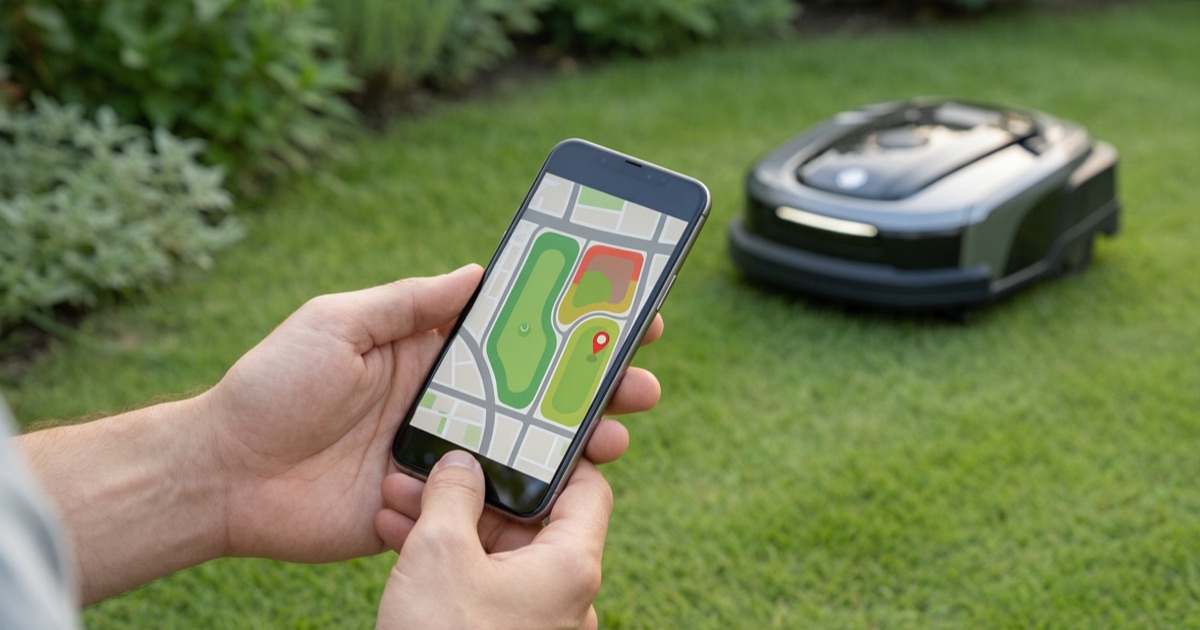
The app is the product's daily face. The features that separate a good one from a demo:
- Multi-zone management — front, back, and side strips scheduled separately, each with its own cutting height and frequency. Leading apps now support dozens to a hundred distinct zones and no-go areas.
- No-go zones and virtual boundaries — drawn in-app instead of buried in the ground; this is the practical payoff of going wire-free.
- Scheduling and rain logic — mow windows that respect quiet hours and pause for wet grass.
- Custom paths — for narrow passages the mower would otherwise struggle to enter.
For buyers, app quality is a due-diligence item, not a spec-sheet line. A capable machine crippled by a buggy, poorly-translated app will generate returns and bad reviews. Test the app on a real, awkward layout before committing volume.
OTA updates: the feature buyers forget to ask about
Over-the-air firmware updates quietly determine whether a mower gets *better* after purchase — improved obstacle avoidance, new app features, bug fixes — or ships frozen at launch quality. For a private-label buyer, OTA capability also means you can address field issues without recalls. Confirm the platform supports OTA and that the vendor has an update track record, not just the hardware capability.
What to prioritize when sourcing
Rank smart features by how much they move the buying decision and reduce returns:
- Cellular-backed anti-theft — highest sales impact in most markets.
- A stable, well-localized app with multi-zone and no-go zones — the daily experience.
- OTA updates — long-term reliability and your ability to fix issues remotely.
- Nice-to-haves — voice/smart-home integration and live camera view; real, but rarely deal-makers.
The takeaway
Once wire-free navigation is table stakes, the connected layer sells the machine. Spec cellular-backed anti-theft, a genuinely usable multi-zone app, and confirmed OTA support before chasing exotic extras — that combination is what turns a decent mower into one buyers keep and recommend.
*Browse connected, app-managed models from verified suppliers on the robot lawn mower category page, or read our robot mower ROI guide for landscaping businesses for the commercial angle.*