Owners are often surprised that a robot mower doesn't just save time — it visibly improves the lawn. Grass gets denser, greener, and more even within a season or two. That's not marketing; it's a direct result of how these machines cut. Understand the mechanism and you can dial in a healthier lawn, and source the right model for your grass.
Why frequent tiny cuts help
A traditional mow removes a big chunk of leaf once a week, stressing the plant and leaving long clippings to rake or bag. A robot mower does the opposite: it trims a millimeters-thin sliver daily or every couple of days, following the turf-care "one-third rule" (never remove more than a third of the blade at once) automatically. Grass responds to gentle, constant trimming by growing sideways and thickening, which crowds out weeds and moss over time.
Mulching: free fertilizer
Robot mowers don't collect clippings — they mulch. The tiny cuttings are so fine they fall between the blades to the soil, where they break down and return nitrogen and moisture to the lawn. Over a season this cuts fertilizer needs and helps the turf hold water in dry spells. The catch: mulching only works well when the mower runs often enough to keep clippings tiny. Let the grass get long first and you'll get visible clumps instead.
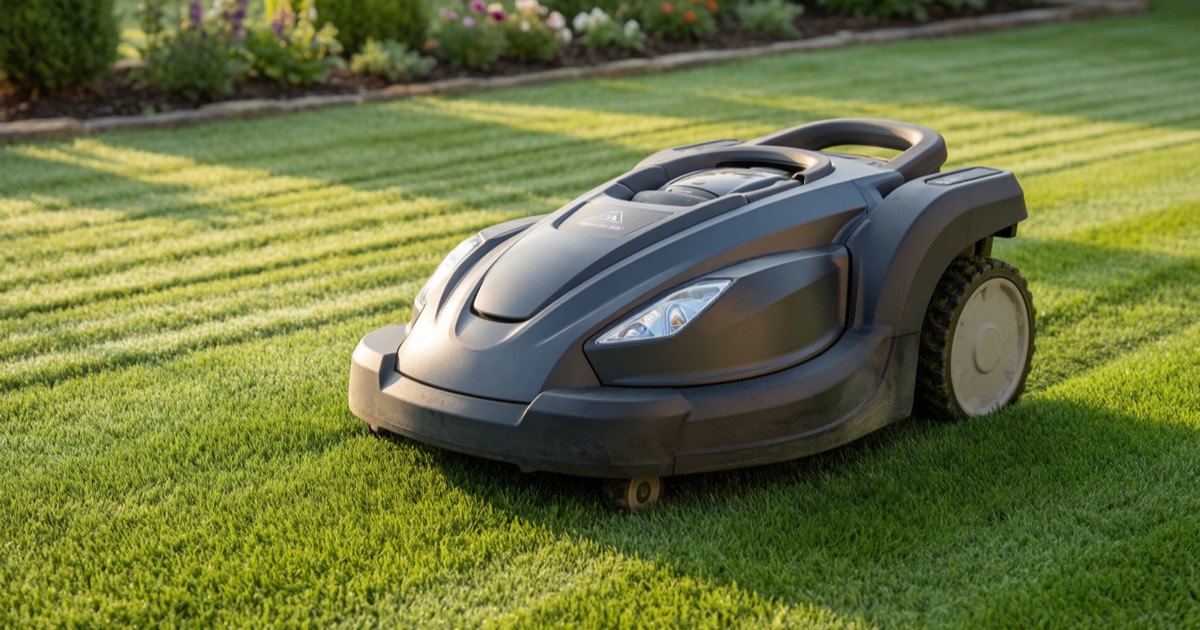
Cut height and grass type
The right cutting height depends on what you're growing:
- Cool-season grasses (fescue, ryegrass, Kentucky bluegrass) generally prefer a taller cut — roughly 4-6 cm — which shades roots and resists drought.
- Warm-season grasses (Bermuda, Zoysia) tolerate and often prefer a shorter cut for a tight, carpet-like finish.
Most robot mowers set height electronically or with a simple dial. What matters when sourcing is the range: confirm the model spans the height your grass wants, and can go tall enough if you run cool-season turf. Very low, golf-style heights need a specialized cutting system, not a consumer unit.
What to check before you source
- Cutting-height range wide enough for your grass species.
- Blade type — pivoting razor blades give a cleaner mulch cut and are cheap to replace; fixed bar blades are tougher for rougher grass.
- Cutting frequency control so you can run often enough for true mulching.
- Cut width vs. lawn size so the schedule can realistically keep the whole lawn short.
Bottom line
A robot mower is really a lawn-health tool that happens to save labor: frequent light cuts thicken the turf, and mulching feeds it for free. Match the cutting-height range and blade type to your grass species, run it often enough to keep clippings fine, and the lawn does the rest.
Compare cutting heights, blade systems, and manufacturers of robot lawn mowers side by side before you reach out to suppliers.