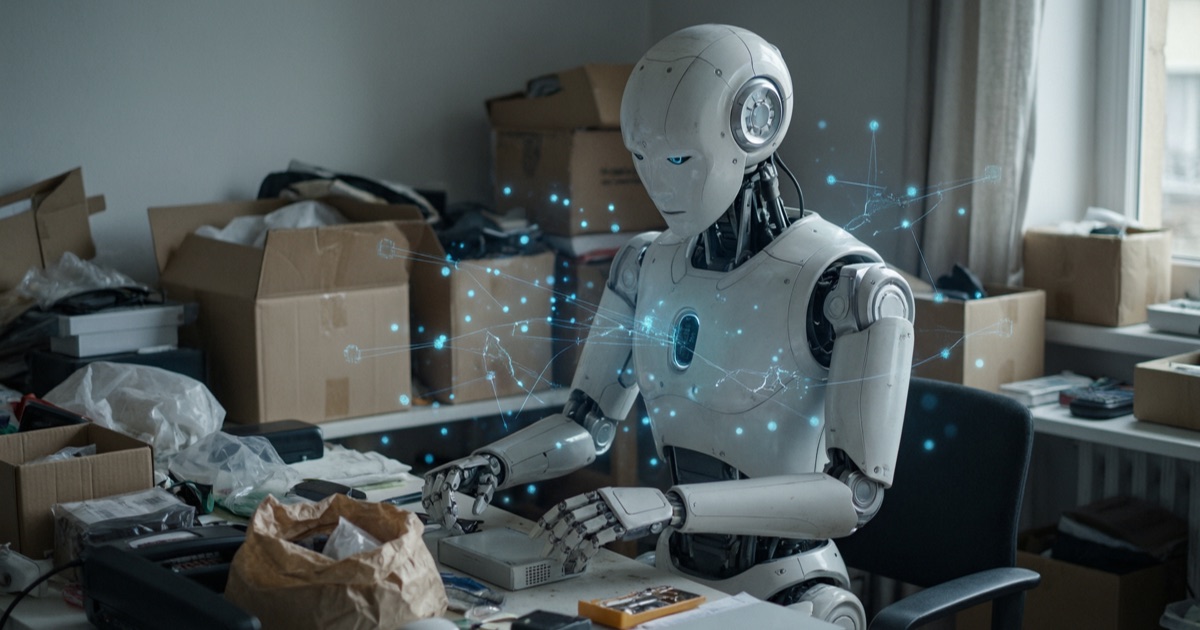
There is a pattern anyone shopping for humanoid robots in 2026 should learn to recognize: the demo is flawless, and the field deployment is a disappointment. The robot that gracefully sorted objects on stage suddenly crushes a differently-packaged egg, cannot tidy a cluttered desk it was not tuned for, and fails to carry a skill from a home setting into a warehouse. The hardware is not the problem. The data behind the robot's decision-making is.
Understanding this gap is the single most useful thing a buyer can do before committing budget. It separates a robot that will actually earn its keep from an expensive demo unit.
The "limbs" are solved; the "brain" is starving
The industry has effectively split into two layers. The lower layer — balance, walking, dexterous grasping, force feedback — is mature. Leading platforms can climb stairs, move material, and handle standardized motions like tightening a cap or folding cloth after millions of iterations on real hardware. Call it the robot's motor control, and treat it as largely a solved commodity.
The higher layer — understanding a scene, planning a multi-step job, and generalizing across environments it has never seen — is where things break. Unlike a language model, which can be trained on freely scraped text, an embodied model needs multimodal physical-interaction data: vision, touch, joint trajectories, and object mechanics, all time-aligned. That data cannot be crawled off the internet. It has to be captured by digitizing human skill in the real world, and there is nowhere near enough of it.
The numbers behind the shortage
Industry estimates suggest a genuinely general-purpose embodied model needs on the order of ten million hours of high-quality real interaction data. One widely cited figure puts the globally available, compliant supply at roughly half a million hours as of early 2026 — a shortfall of well over 99 percent. Collecting more is expensive: traditional teleoperated real-machine capture has been reported at roughly 500 to 1,000 RMB per hour, with heavy setup for each new scenario. The result is data that is scarce, costly, and inconsistent — exactly the conditions that produce a robot which memorizes one task but cannot adapt.
What to ask a vendor about their data foundation
When you evaluate a humanoid robot, push past the demo and interrogate the data story:
- Generalization, not repetition. Ask to see the robot handle a variant it was not pre-configured for — a different package, a messier table, a new room. A robot that only nails the rehearsed setup is telling you its data is narrow.
- Scenario coverage. How many genuinely distinct environments — home, retail, factory, storage — is the model trained on? Lab-only data is the classic reason a deployment underperforms.
- Data source and update path. Is training data collected at scale (for example, through lightweight wearable capture, which some vendors run at a fraction of real-machine cost) and refreshed over time, or was it a one-off batch for a single demo?
- Multimodal alignment. Well-aligned vision, touch, and motion data is what lets a robot cope with the unexpected. Ask how the vendor handles it.
The bigger takeaway for buyers
A useful mental model borrowed from the AI-data world applies here: the durable value increasingly sits in the standardized data pipeline behind the robot, not the chassis in front of it. For a buyer, that means the right question in 2026 is not "how capable is the body" — that layer is converging — but "how deep and how current is the data teaching this robot to think." Answer that before you sign, and you avoid buying a very expensive demo.