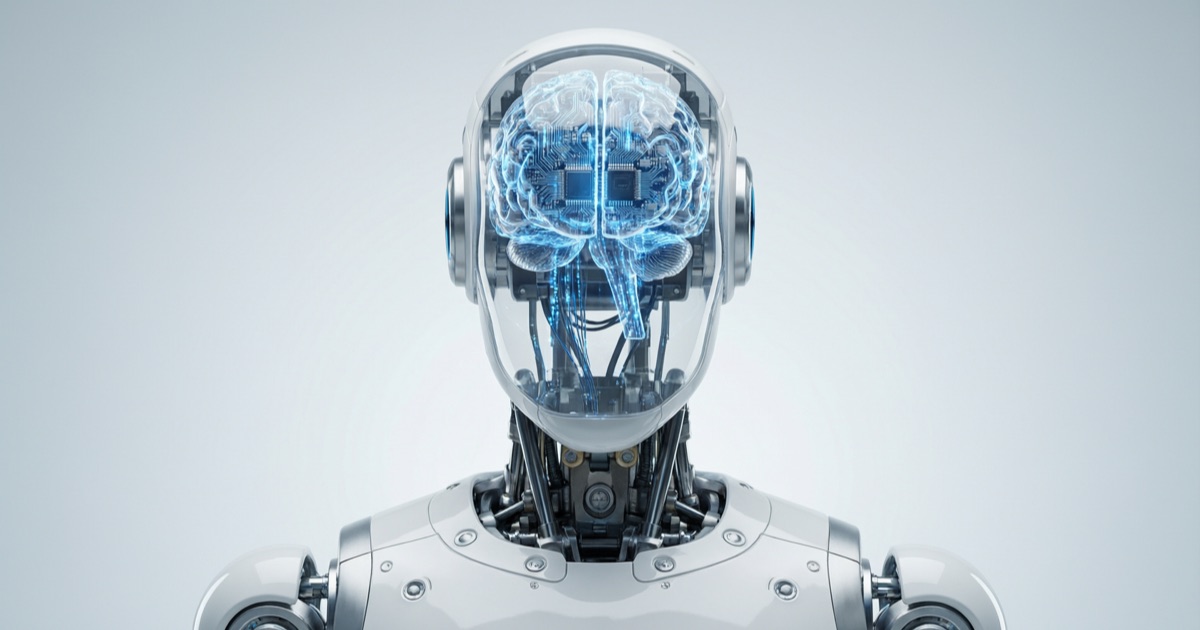
For most of the last two years, buying a humanoid robot meant buying a body: joint count, payload, walking stability, battery life. In 2026 that framing is quietly breaking apart. The body has become the easier half of the problem, and a growing group of software-first vendors are selling the harder half — the autonomy stack — as a separate product that can run on top of hardware they did not build.
If you are scoping a humanoid deployment this year, it is worth treating the brain and the body as two procurement decisions, not one. Here is how to reason about the part that is now most likely to decide whether your project works.
Teleoperation looks great in a demo and breaks in the field
Most impressive humanoid videos show a robot that was trained to do exactly one thing — fold a shirt, restock a shelf — often with a human quietly driving it through teleoperation behind the scenes. That approach is fine for a controlled booth and unreliable the moment the robot enters an environment it has not seen. For a real site with variable lighting, clutter, and one-off tasks, teleoperation-heavy systems do not scale, because every new situation needs a human in the loop.
When you evaluate a vendor, ask directly how much of the demo was autonomous versus teleoperated, and what happens when the robot faces a layout it was never shown. The gap between those two answers is the gap you will pay for later.
What a modern autonomy stack actually contains
The more credible approaches now separate skill from strategy. Individual skills — opening a door, climbing stairs, lifting a box — are trained in simulation using reinforcement learning, where the software masters each motion through large-scale trial and error before it ever touches real hardware. Then a higher-level policy, often trained by watching video of humans performing tasks, decides which skills to combine and in what order. The simulation layer teaches the *how*; the master policy learns the *what* and *when*.
This matters for buyers because it is what lets a robot chain steps together on its own — go to the mail room, take the stairs, use the elevator, place an item on the correct shelf — instead of running a single scripted routine. Browse current humanoid robot options and ask which vendors can show autonomous multi-step task chaining, not just isolated party tricks.
Why cross-platform software changes the buying math
The most consequential shift is that some vendors sell software designed to run across different humanoid platforms rather than being locked to one manufacturer's chassis. If that model holds up, it decouples your two decisions: you can source a competitive body from one supplier and the intelligence from another, and swap either without starting over.
That flexibility comes with a caveat. A software-first vendor still has to integrate tightly with each hardware maker, and the field is crowded, so support and roadmap stability are real risks. Analysts tracking this space have floated large long-term numbers — one estimate puts the robot foundation-model market on the order of $150 billion by the mid-2030s — but those are forecasts, not proof any single vendor will survive the shakeout.
A short checklist before you sign
- Confirm what fraction of the workload runs autonomously versus under teleoperation.
- Ask whether skills are trained in simulation and how the vendor handles the sim-to-real gap.
- Verify whether the software is tied to one body or portable across platforms.
- Require a live demo of a multi-step task in a layout the robot has not been pre-tuned for.
The body will keep getting cheaper and more capable. In 2026, the brain is where the risk — and the leverage — now lives. Buy it deliberately.