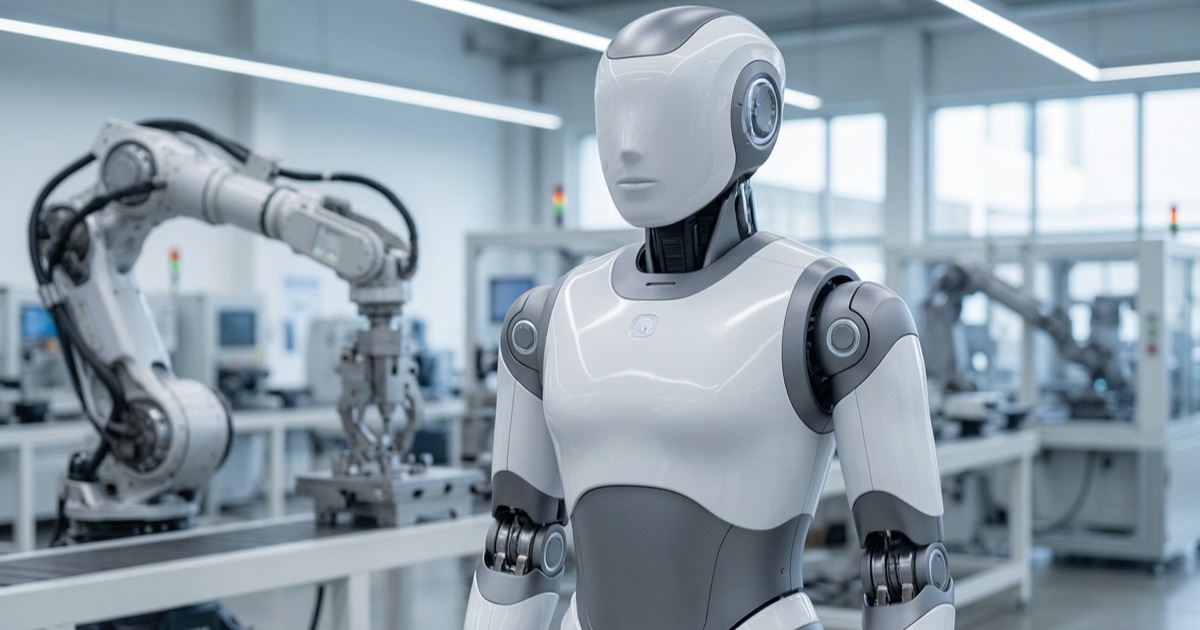
The humanoid robot market is splitting into two very different products that happen to share a name. On one side are industrial humanoids built to work shifts in factories and warehouses. On the other, a fast-growing wave of consumer "companion" humanoids marketed on emotional connection and lifelike looks. For buyers evaluating either, the gap between a polished launch video and the machine that actually ships has never mattered more.
Consumer vs. industrial: not the same purchase
At a recent flagship launch in China, a leading listed humanoid maker showed full-size "bionic" companion units with human-proportioned bodies and customizable faces, topping out near the equivalent of roughly $135,000 for the highest-spec model. Days later, a competitor unveiled a similarly positioned product starting at a fraction of that price. That spread — from a few thousand dollars to six figures for machines pitched at the same "companion" use case — is the clearest signal that this category is still finding its price floor.
Industrial humanoids are a steadier proposition. The same vendor's factory-oriented series reportedly reached annualized capacity above 6,000 units, deployed in automotive manufacturing and warehouse and logistics settings. These are the units with a real, if early, commercial track record — repetitive material handling, line-side tasks, and structured environments where a robot's stiff gait and limited dexterity are acceptable trade-offs.
Where launch demos oversell
The recurring lesson from 2026 launches is to discount the showreel. Buyers and press at the consumer event flagged mechanical facial expressions, laggy conversation, and an unnatural walking gait — a reminder that "养成系" emotional AI and long-term memory features are marketing claims until you can test them. Vendors typically demonstrate dancing and runway walks precisely because deep, dynamic interaction is the hardest thing to show working reliably.
For a sourcing checklist on any humanoid robot purchase, prioritize:
- Live, unscripted interaction — request a demo with your own prompts, not the scripted stage routine.
- Real duty cycle — battery life, thermal limits, and continuous run time under load, not peak specs.
- Serviceability — spare joints, actuator lead times, and who repairs the unit in your region.
- Payload and reach for industrial units; degrees of freedom and safety certification for anything operating near people.
What the market split means for pricing
Chinese suppliers are driving humanoid costs down aggressively — flagship general-purpose units that reportedly listed near the equivalent of $80,000 a couple of years ago have fallen to roughly a third of that as volume scales. First-half 2026 embodied-AI funding in China ran into the tens of billions of yuan, and new entrants from the automotive sector are pushing prices further. For buyers, that means waiting six to twelve months often buys a materially better unit for less money — but it also means today's "first mover" premium rarely reflects finished capability.
Bottom line
If you need work done now, industrial humanoids in structured environments are the defensible buy, and Chinese suppliers lead on price-to-capability. Consumer companion humanoids remain early: impressive on stage, uneven in the hand. Treat the emotional-AI narrative as a roadmap, insist on hands-on testing, and let the current pricing volatility work in your favor rather than against it.