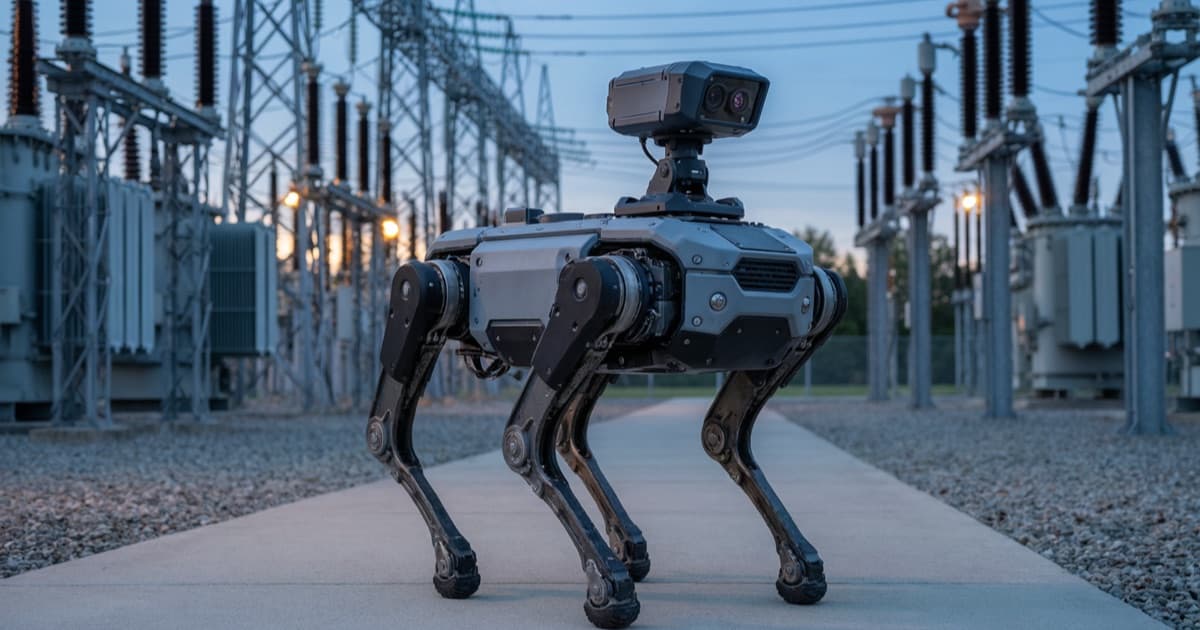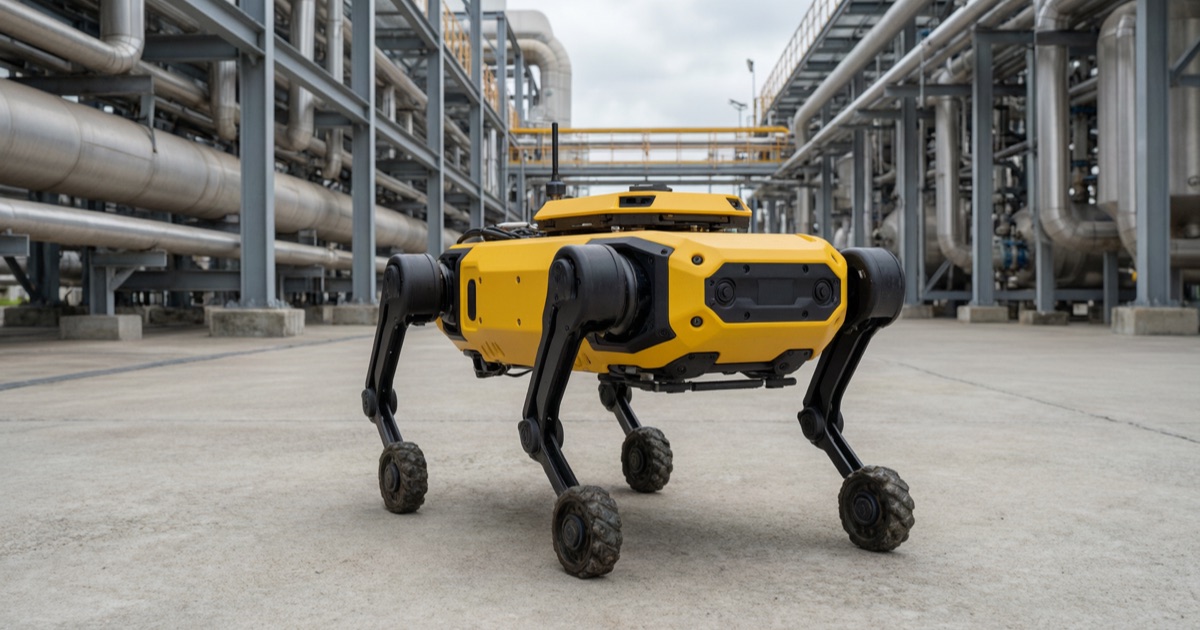
Boston Dynamics Spot is the most recognizable quadruped robot on the market, and the most misunderstood on price. The widely-quoted $74,500 is real — but it's the base robot only, and almost nobody deploys Spot at that number. Once you add the arm, sensor payloads, and the software subscription that makes autonomous missions actually work, a real deployment lands two to three times higher. The figures below reflect publicly reported 2026 pricing and typical enterprise quotes; Boston Dynamics does not publish a full à-la-carte price list, so treat the add-on numbers as representative distributor-quote ranges, not fixed MSRP.
The base robot — Spot Explorer (~$74,500)
Spot Explorer is the entry configuration: the robot, a charger, a battery, and the basic SDK. At $74,500 it's aimed at developers, researchers, and companies building their own applications on top of Spot. It walks, climbs stairs, self-rights, and carries payloads, but out of the box it does *not* include the autonomy software or fleet tools that most commercial buyers actually need. Think of Explorer as the platform, not the finished solution.
The cost stack — what a real deployment adds
Most commercial buyers build up from the base. Based on reported enterprise quotes, a typical stack looks like this:
| Component | Typical cost | What it does |
|---|---|---|
| Spot (base / Explorer) | ~$74,500 | The robot, charger, battery, SDK |
| Spot Arm | ~$65,000 | 7-DOF manipulator, ~11 kg payload — open doors, turn valves, pick up objects |
| Thermal / gas sensor payload | ~$8,000 | Inspection sensing for utilities and industrial sites |
| Spot CAM+ (360° camera) | ~$12,000 | Pan-tilt-zoom imaging for remote inspection |
| CORE / autonomy software | ~$15,000 | On-robot compute + autonomous mission execution |
| Orbit / Scout fleet software | ~$15,000–$25,000 per year | Schedule, monitor, and manage missions and data |
Adding the arm alone roughly doubles the price — a Spot + Arm configuration lands around $120,000–$140,000 before software.
Year-one total — what enterprises actually pay
Stack a realistic inspection deployment — base robot, arm, a thermal sensor, Spot CAM+, the autonomy license, and first-year support — and the year-one figure reported for typical enterprise buyers runs roughly $150,000–$195,000. A common reference build breaks down as: base ($74,500) + Arm ($65,000) + thermal sensor ($8,000) + Spot CAM+ ($12,000) + CORE license ($15,000) + annual support (~$20,000) ≈ $194,500 in year one.
After year one, the recurring cost is mostly software and support — roughly $20,000–$25,000 per year for Orbit/Scout subscriptions and maintenance. Over three years, total cost of ownership for a full deployment lands around $190,000–$245,000, depending on how many payloads and seats you run.
Is Spot worth it — or should you look at alternatives?
Spot earns its price in environments where downtime or human risk is expensive: substation and pipeline inspection, nuclear and mining sites, construction progress capture. If you need proven ruggedness, dock-and-recharge autonomy, and vendor support, the cost pencils out against sending people into hazardous areas.
But if your use case is lighter — research, education, security patrol, or a proof-of-concept — the $74,500 entry point is hard to justify when Chinese quadrupeds like Unitree now start in the low thousands. Many buyers who *think* they need Spot actually need a sub-$10,000 quadruped plus their own software. Match the robot to the risk and duty cycle, not to the brand name.
Sourcing and comparing quadrupeds
Before committing six figures to a single platform, it's worth benchmarking Spot against the full field of quadruped and inspection robots — many of which target the same inspection and patrol jobs at a fraction of the price. Compare robot dogs and quadruped suppliers to weigh capability against cost across brands before you buy.