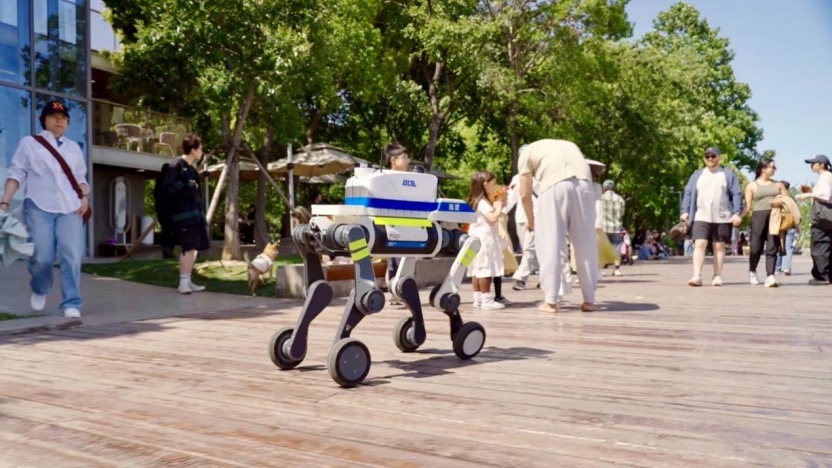
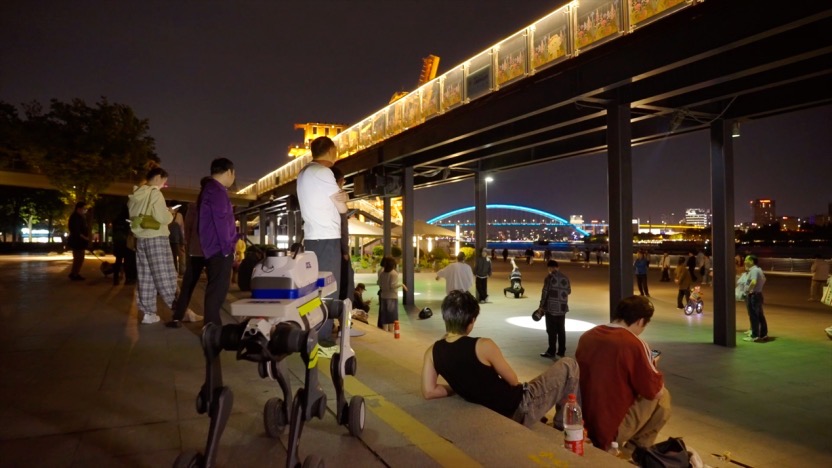
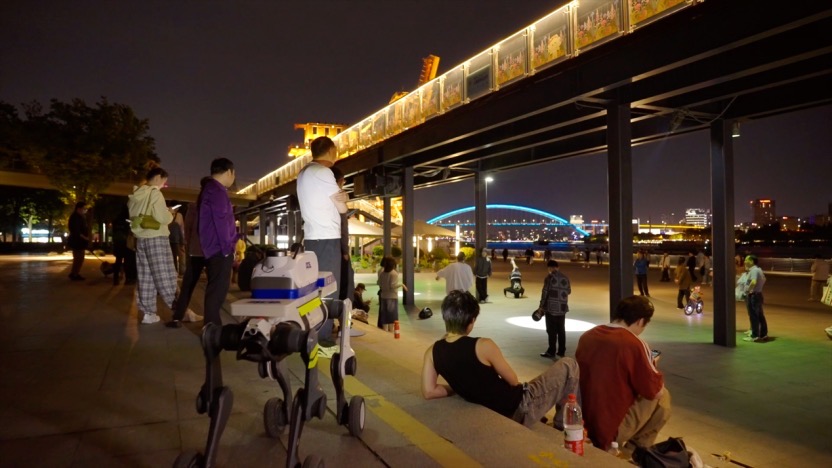
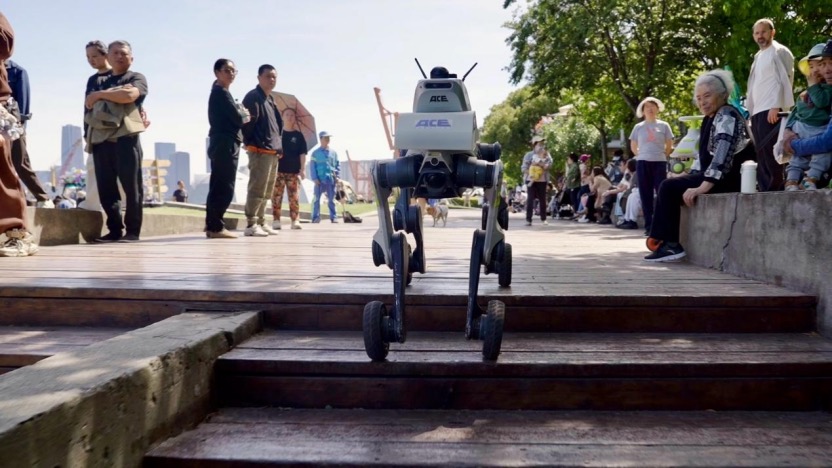
Patrol robot dogs are moving from scripted demos to genuine round-the-clock duty. Recent deployments in open urban districts describe quadruped robots running 24/7 unattended patrols — walking public waterfronts, event grounds, and mixed pedestrian-vehicle streets day and night, then returning to a charging dock on their own. For anyone sourcing a patrol robot dog in 2026, the interesting question is no longer "can it walk?" but "can it run a full shift without a babysitter?"
Here is what separates a true 24/7 autonomous patrol unit from a teleoperated toy.
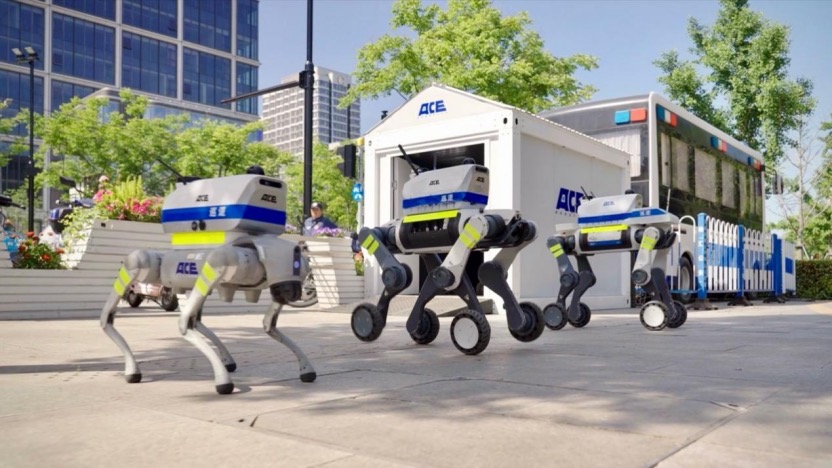
Mapless navigation is the dividing line
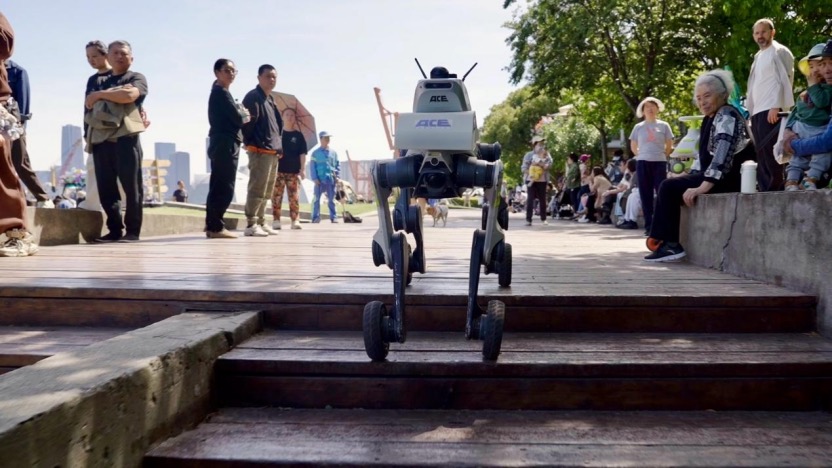
Traditional inspection robots follow pre-set tracks or need a pre-built high-precision map of a closed site. Open-scenario patrol is different: the robot has to perceive its surroundings, localize itself, and plan a path in real time — coping with construction, pedestrians cutting across, cars merging, and terrain features like same-colored steps it must detect and climb. When evaluating a unit, ask directly whether navigation depends on a pre-built map or works "see-and-go" in unstructured space. Deployments that survive real streets typically rely on multi-modal 3D perception rather than fixed routes.
Compare current quadruped options on our robot dog category page, and cross-reference security-specific builds under security patrol robots.
Fleet software: one operator, many dogs
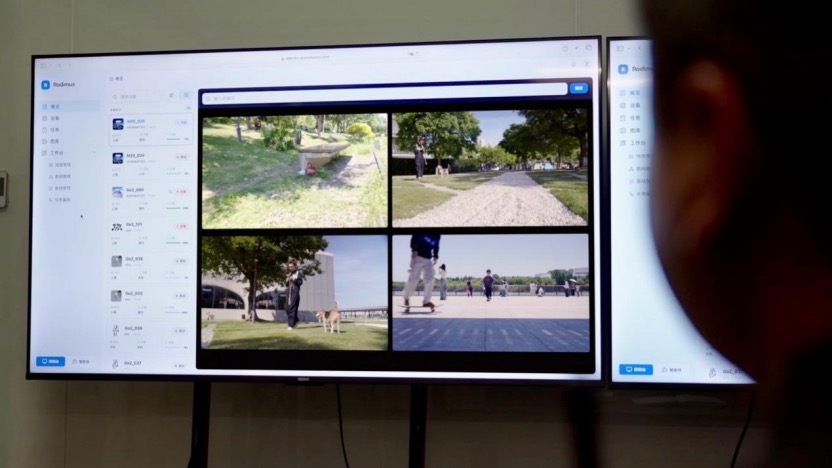
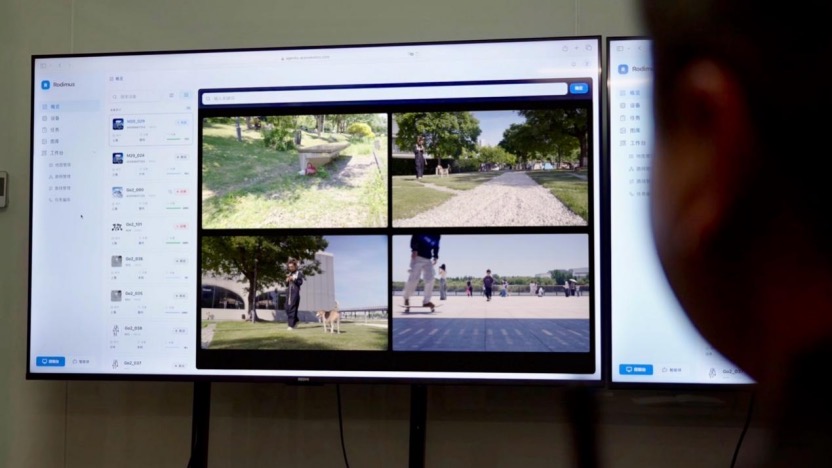
The operational economics only work if a single person can oversee several robots. Look for a cloud management platform that supports remote dispatch, voice-based commands, task assignment, and automatic incident reports (event statistics plus outcomes). The goal is a closed loop: the robot detects an anomaly, captures evidence, issues a spoken warning, and escalates to on-the-ground staff when needed — without a human driving it around. In field reports, this cluster model is what turns a single novelty robot into a cost-positive patrol program: one control room, a handful of units, and coverage that scales without adding headcount. Ask vendors how many robots one operator has actually run in a live deployment, not the theoretical maximum.
The 24/7 checklist
- Self-charging. Confirm the robot autonomously returns to a dock and resumes patrol. Without this, "24/7" is marketing.
- All-weather and night operation. Ask for evidence of high-dynamic-range imaging and night vision, plus an IP rating for rain and dust.
- Terrain range. Stairs, curbs, gravel, slick stone — request video of the specific surfaces at your site.
- Intervention rate. How many patrol hours per human intervention? This single metric predicts real staffing savings.
- Evidence and compliance. Confirm how footage is captured, stored, and handed off, and check local rules on recording in public or semi-public space.
- Support for imports. For overseas buyers, verify spare-part lead times, firmware updates, and whether the fleet platform is hosted regionally.
Beyond security
The same autonomy stack that handles municipal patrol is being pitched for industrial inspection, tourism guidance, and facility monitoring. If you expect to expand use cases later, favor a platform with an open task framework over a single-purpose unit — it protects your investment as the deployment grows.
The takeaway for 2026: buy for the *shift*, not the demo. A patrol robot dog that maps-as-it-goes, manages itself in a fleet, and docks to recharge is infrastructure; one that needs a remote pilot is an expense.