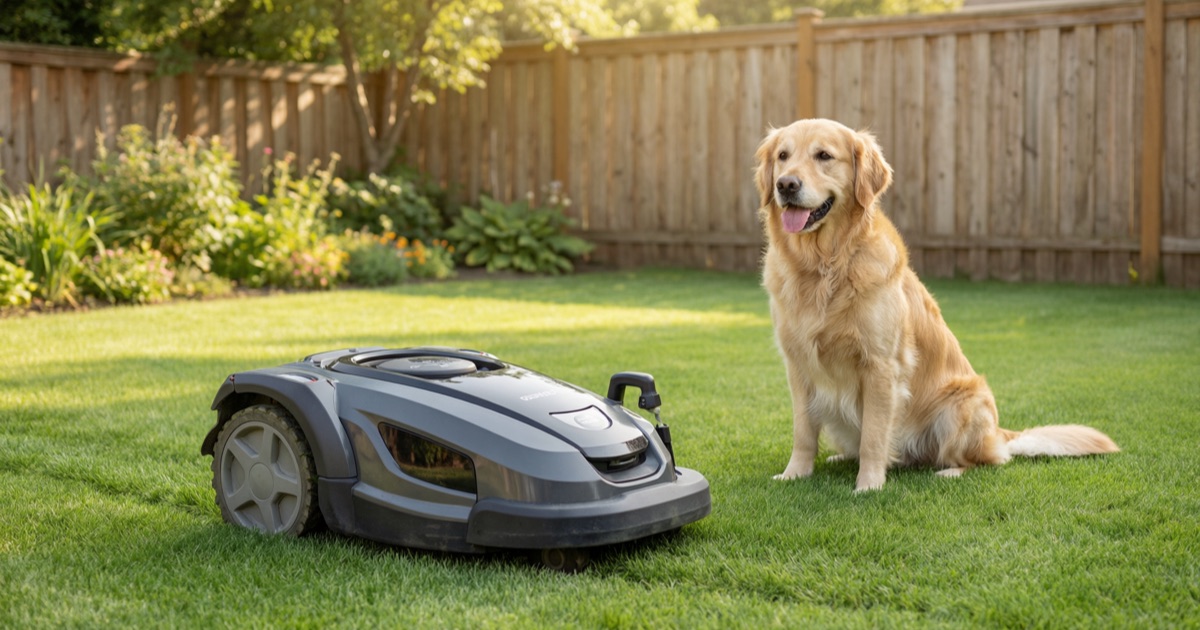
It is a fair question to ask before letting a blade-carrying robot loose in a yard where children play and pets roam: are robot lawn mowers actually safe? The short answer in 2026 is that they can be very safe when you combine the machine's built-in protections with a little common sense. Here is what the safety systems do, where the real risks remain, and how to stay on the safe side.
What the built-in safety features do
Modern robot mowers are designed with several overlapping protections:
- Lift and tilt sensors. These monitor the mower's position and stop the blades in under two seconds if the unit is picked up or tipped. This is the single most important safety feature — reach under a running mower and the blades should already be stopping.
- Recessed, lightweight blades. Many models use small pivoting blades mounted well inside the body, under a protective deck and low to the ground. That placement makes it hard for small fingers or paws to reach the cutting area during normal operation, and the light blades retract on impact rather than driving through it.
- Obstacle and collision detection. Most units detect obstacles and change direction, and collision sensors trigger a reverse-and-reroute if the mower bumps a toy, shoe, or animal. Higher-end 2026 models add camera-based avoidance that can recognize 150+ obstacle types up to five meters away and hold a roughly one-meter safety zone around them.
The risks that remain
No safety system is perfect. Small or slow-moving pets (and wildlife such as hedgehogs) are the most common real-world concern, especially at night when many animals are active and cameras see less. Toys and low objects left on the lawn can still be struck. And the protections assume normal use — deliberately reaching under a running machine, or letting a toddler treat it as a ride-on, defeats them.
Simple rules that keep families safe
- Schedule mowing when the yard is empty — while kids are at school or pets are indoors — rather than during play time.
- Avoid night mowing. It is better for wildlife and for camera-based obstacle avoidance, which works best in daylight.
- Keep the lawn clear of toys and clutter before a run, and supervise very young children around the machine.
- Choose a model with strong avoidance. If children or pets use the yard often, prioritize units with vision-based obstacle detection on top of the standard lift, tilt, and collision sensors.
What to check when buying or sourcing
If you are selecting a robot lawn mower — whether for your own family or for resale — treat the safety stack as a core spec, not a bonus. Confirm the model has lift and tilt cut-off, a recessed blade design, and obstacle avoidance, and that these features are clearly documented. For buyers importing at volume, ask suppliers about the relevant safety certifications for your target market.
The bottom line
Robot lawn mowers are safe for households with children and pets when you buy a model with proper sensors and use it sensibly — mow when the yard is empty, skip night runs, and keep the grass clear. Used that way, the risk is low and the convenience is high.