STEM Robotics Lab Equipment Educational Robot — Solutions & Suppliers from China
Setting up a STEM robotics lab requires more than just buying robots. A complete lab includes programmable robots, workstations, laptops or tablets, sensors, curriculum materials, and teacher training resources. Chinese manufacturers like Makeblock, DFRobot, and Abilix now offer turnkey STEM lab packages that include everything schools need to launch a robotics program.
The biggest advantage of sourcing STEM lab equipment from China is cost. A 20-station robotics lab that costs $60,000-$80,000 from Western vendors like VEX Robotics or LEGO Education can be set up for $25,000-$40,000 using Chinese alternatives — without sacrificing quality. Brands like DFRobot and Makeblock have international curriculum support, English documentation, and global warranty coverage.
Budget planning for a STEM robotics lab typically falls into three tiers: **Basic** ($5,000-$15,000) for 10-15 coding robot kits suitable for elementary schools; **Standard** ($15,000-$30,000) for 15-20 intermediate platforms with curriculum for middle and high schools; and **Advanced** ($30,000-$50,000+) for 20+ university-grade platforms with ROS, AI vision, and robotic arms. [View our price guide](/robots/educational-robot/price-guide/) for detailed breakdowns, or [browse classroom robotics kits](/robots/educational-robot/classroom-robotics-kit/) for school-focused solutions.
STEM Robotics Lab Equipment Educational Robot Products
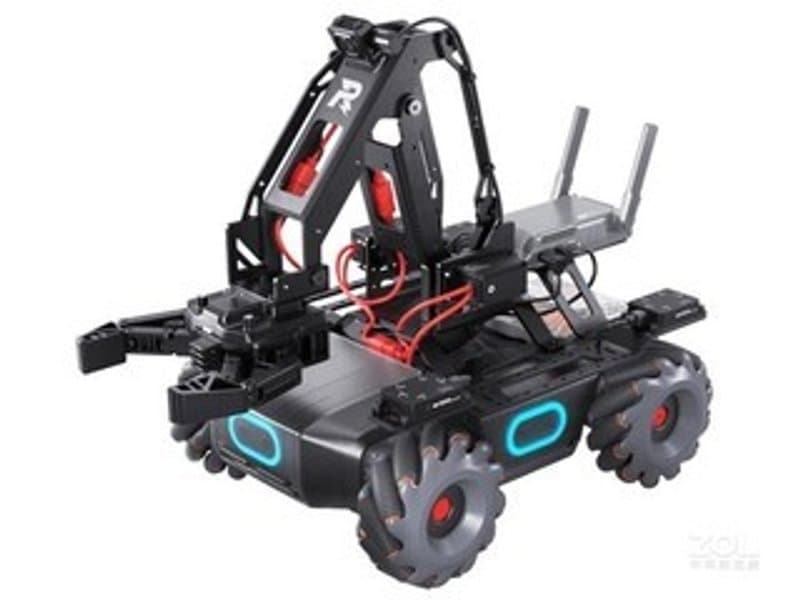

Abilix Krypton 8
Abilix
$600 - $900
pieces: 1,503 building bricksmotors: 36 smart servossensors: Touch x4, Color x2, Ultrasonic x2, Gyro, Compass

Yahboom ROSMASTER X3 Plus
Yahboom
$500 - $700
compute: NVIDIA Jetson Nano 4GBlidar: YDLIDAR X2L (8m range)camera: Astra Pro depth camera

Hiwonder ArmPi Pro
Hiwonder
$300 - $450
dof: 6-DOFcompute: Raspberry Pi 4B 4GBcamera: USB HD camera with OpenCV

Hiwonder JetMax
Hiwonder
$400 - $600
dof: 3-DOF + grippercompute: NVIDIA Jetson Nano 4GBcamera: HD USB camera
Frequently Asked Questions
How much do educational robots cost?
Educational robot prices range from $30 for basic coding kits to $3,000+ for advanced classroom robot systems. Entry-level coding robots like Makeblock mBot ($80-$150) and DJI RoboMaster S1 ($500-$550) teach programming fundamentals. Mid-range platforms like UBTech Yanshee ($800-$1,200) and Dobot Magician Lite ($600-$1,000) offer humanoid and robotic arm experiences. Classroom sets of 10-30 robots typically cost $3,000-$15,000 with curriculum materials. Chinese manufacturers dominate the affordable education robot segment, offering 30-50% savings over Western brands like LEGO Education or VEX Robotics. Wholesale pricing for schools purchasing 20+ units includes additional 15-25% discounts.
What age ranges are educational robots designed for?
Educational robots are available for every age group. Ages 3-5: screen-free coding robots like Matatalab ($150-$200) teach sequencing through physical blocks. Ages 5-8: Makeblock Codey Rocky ($100-$150) and similar robots introduce visual block-based programming. Ages 8-12: mBot series ($80-$200), DJI RoboMaster S1 ($500), and LEGO-compatible robots teach Scratch and Python basics. Ages 12-16: UBTech Yanshee ($800-$1,200), Dobot robotic arms ($600-$2,500), and competition robots for FIRST and VEX leagues. Ages 16+: ROS-based educational platforms ($1,000-$5,000) for university-level robotics and AI coursework. Chinese manufacturers like Makeblock and UBTech offer strong product lines spanning all age ranges.
What coding platforms do educational robots support?
Educational robots support multiple programming environments scaled to different skill levels. Visual block-based coding (Scratch, Blockly, mBlock) is standard for beginners aged 5-12, offering drag-and-drop programming with immediate robot response. Python support is available on mid-to-advanced robots like DJI RoboMaster S1, UBTech Yanshee, and Dobot platforms for ages 10+. C/C++ programming through Arduino-compatible interfaces serves advanced students. ROS (Robot Operating System) is available on university-level platforms. Some Chinese robots like Makeblock products support seamless transitions between Scratch, Python, and Arduino within the same platform. Mobile app programming is available on most modern educational robots for convenient classroom use.
How are educational robots used in classrooms?
Educational robots integrate into classrooms through structured STEM curricula, project-based learning, and robotics competitions. Teachers use robots to teach coding concepts (loops, conditionals, variables), physics principles (motion, sensors, forces), mathematics (geometry, measurement, data analysis), and engineering design (build-test-iterate cycles). Typical classroom setups include 1 robot per 2-3 students, with 45-90 minute lessons 1-3 times per week. Chinese manufacturers like Makeblock and UBTech provide free curriculum aligned with national education standards (NGSS in the US, UK Computing curriculum). Teacher training workshops and online certification programs help educators integrate robots effectively. Competition programs like RoboCup Junior and FIRST further motivate student engagement.
Can I buy educational robots wholesale from China?
Yes, buying educational robots wholesale from China offers significant cost savings. Major Chinese manufacturers like Makeblock, UBTech, DFRobot, and Dobot offer wholesale programs for educational distributors, schools, and training centers. Minimum order quantities typically start at 10-50 units with 15-30% discounts off retail pricing. Larger orders of 100+ units may receive 30-50% discounts. Sourcing platforms like Grabarobot facilitate connections with verified manufacturers and handle logistics. Key considerations include CE/FCC certification for your market, curriculum localization (English interfaces and documentation), warranty terms (typically 1-2 years), and shipping costs (sea freight for bulk orders reduces per-unit logistics costs to $5-15). Lead times average 2-4 weeks for stock items.
What are the benefits of STEM robotics education?
STEM robotics education delivers measurable learning outcomes. Research shows students using educational robots demonstrate 30-40% improvement in computational thinking skills, increased engagement in STEM subjects (particularly among underrepresented groups), and stronger problem-solving and critical thinking abilities. Hands-on robot programming teaches debugging, iterative design, and logical reasoning in tangible ways that screen-only coding cannot replicate. Social benefits include improved teamwork and communication through collaborative robot projects. Career preparation is significant — robotics and AI skills are among the fastest-growing job market demands. Chinese educational robot companies partner with over 50,000 schools globally, providing affordable access to robotics education that was previously limited to well-funded institutions.
Which educational robots are best for robotics competitions?
Top competition-ready educational robots include the VEX IQ and V5 systems ($300-$1,500), popular for VEX Robotics Competitions worldwide. DJI RoboMaster S1 and EP ($500-$800) are used in the RoboMaster Youth competition. Makeblock's mBot Ranger and Ultimate ($150-$500) support MakeX and similar competitions. For FIRST Robotics Challenge, REV and AndyMark kits ($3,000-$6,000) are standard. Chinese manufacturers Makeblock and DJI run their own global competition programs (MakeX and RoboMaster) with participation from 50+ countries. Competition robots typically require additional sensors, motors, and structural components beyond base kits, adding $100-$500 to total cost. School sponsorship and grants often offset competition expenses.
What is the best educational robot for elementary schools?
The Makeblock mBot2 ($150-$200) is the most popular choice for elementary schools. It offers block-based coding, a friendly design, and structured curriculum for ages 8-12. For younger students (6-8), simpler options like Matatalab are available at similar prices.
How much does a classroom set of educational robots cost?
A classroom set of 15-20 robots typically costs $2,000-$4,000 for budget models (mBot2, TurboPi) or $8,000-$12,000 for mid-range models (RoboMaster S1). Most Chinese manufacturers offer 15-30% education discounts and some provide free teacher training.
Which educational robot is best for robotics competitions?
The DJI RoboMaster S1 ($500-$700) is excellent for competition prep with its AI vision and programmable chassis. For VEX/FIRST-style competitions, Makeblock's competition kits ($300-$600) are widely used. UBTech Yanshee ($1,200-$1,800) is ideal for AI and humanoid robotics competitions.
Do Chinese educational robots come with English curriculum materials?
Yes. Major brands like Makeblock, DJI, UBTech, and Hiwonder provide full English documentation, lesson plans, and video tutorials. Makeblock and DJI have particularly strong English-language educator communities and curriculum resources aligned with international STEM standards.
Which educational robot is best for absolute beginners?
The Makeblock mBot2 is best for beginners (ages 8+). Its block-based programming interface requires zero coding experience, and Makeblock's structured curriculum guides students step-by-step. The Hiwonder TurboPi is best for older beginners (14+) who want a more hands-on, DIY approach.
How many robots do I need for a classroom?
One robot per 2-3 students works well. For a class of 30, you need 10-15 robots. Most manufacturers offer education pricing at 15-30% discount for sets of 10+. Budget $2,000-$3,000 for mBot2 classroom sets or $5,000-$10,000 for RoboMaster S1 sets.
Do Chinese educational robots support English-language programming?
Yes. All major brands (Makeblock, DJI, UBTech, Hiwonder, Elephant Robotics) have full English interfaces, documentation, and curriculum. Makeblock and DJI have the strongest English educator communities with lesson plans aligned to international STEM standards.
Can educational robots be used for robotics competitions?
Yes. The DJI RoboMaster S1 has its own global competition (RoboMaster). Makeblock robots are widely used in MakeX competitions. UBTech robots support various AI competition formats. Hiwonder and Elephant Robotics robots are popular in open-format university competitions.
What equipment is needed for a STEM robotics lab?
A complete STEM robotics lab requires: programmable robots (15-30 units for a class), laptops or tablets for programming, charging stations, a teacher management dashboard, curriculum materials, and storage. Budget labs start at $5,000 with basic coding robots like DFRobot micro:Maqueen ($35 each). Standard school labs cost $15,000-$30,000 with Makeblock mBot2 or Abilix Krypton platforms. Advanced university labs with ROS robots and robot arms run $30,000-$50,000. Chinese manufacturers like Makeblock, DFRobot, and Abilix offer turnkey lab packages with everything included at 40-60% below Western alternatives like VEX or LEGO Education.
What is the best robotics kit for middle school classrooms?
For middle school classrooms (ages 10-14), the best options balance engaging hardware with progressive programming. The Makeblock mBot2 ($150-$200) is the most popular choice with Scratch-to-Python progression, built-in sensors, and 40+ lesson plans. The Abilix Krypton 2 ($200-$350) is ideal if students enjoy building with bricks, similar to LEGO Mindstorms but more affordable. For budget-conscious schools, the DFRobot micro:Maqueen Plus V2 ($35-$50) with micro:bit offers excellent value. All three support classroom management tools and have comprehensive English curriculum materials.
Can Chinese educational robots be used for international robotics competitions?
Yes, several Chinese robots are official or compatible platforms for major international competitions. DJI RoboMaster EP Core is the official platform for RoboMaster Youth competitions held in 20+ countries. Makeblock robots are the official platform for MakeX competitions in 60+ countries. Abilix Krypton robots are widely used in WRO (World Robot Olympiad) regional events across Asia and the Middle East. Many of these platforms also work for VEX-alternative competitions and local STEM events. Schools in Jordan, UAE, Saudi Arabia, and Southeast Asia increasingly adopt Chinese platforms due to their competitive pricing and strong competition ecosystem.
How much does it cost to set up a school robotics lab?
School robotics lab costs vary by level: **Elementary ($5,000-$10,000)**: 15-20 DFRobot micro:Maqueen kits ($35-$50 each) + micro:bit boards + tablets + curriculum. **Middle School ($15,000-$25,000)**: 15-20 Makeblock mBot2 or Abilix Krypton 2 kits + laptops + teacher training. **High School ($25,000-$40,000)**: 15-20 DJI RoboMaster EP or myCobot arms + competition equipment + workshop tools. **University ($30,000-$60,000)**: 15-20 ROS-based platforms (Yahboom ROSMASTER, DFRobot ROSbot) + robot arms + AI vision kits + development workstations. Most Chinese manufacturers offer 15-30% education discounts and turnkey lab packages.
What programming languages do educational robots support?
Educational robots support progressive programming levels: **Block-based (Ages 6-10)**: Scratch, MakeCode, Blockly — visual drag-and-drop programming used by Makeblock mBot2, DFRobot micro:Maqueen, and Abilix Krypton. **Python (Ages 10-16)**: Most Chinese educational robots support Python, including DJI RoboMaster (via SDK), Hiwonder ArmPi, and Yahboom JetAuto. **C/C++ (Ages 14+)**: Arduino-based kits from Freenove and DFRobot for low-level programming. **ROS/ROS2 (University)**: Advanced platforms from Yahboom (ROSMASTER), DFRobot (ROSbot), and Elephant Robotics (myCobot) support full ROS2 development with Python and C++ interfaces.
Explore More
All Educational Robot
STEM education robots, coding robots and classroom robotics kits
Classroom Robotics KitAge-appropriate robotics kits for K-12 classrooms with structured curriculum, teacher training, and bulk pricing from Chinese manufacturers.
University Robotics LabAdvanced robotics platforms for university research labs including ROS-based systems, robot arms, and AI development kits from Chinese manufacturers.
Robotics Competition EquipmentCompetition-ready robots and platforms for RoboMaster, MakeX, WRO, and regional STEM robotics competitions.
Coding Robot for SchoolsVisual and text-based coding robots for elementary and middle school programming education with curriculum support.
Get a Free Quote
Fill out the form below and we'll connect you with verified manufacturers within 24 hours.