5 Companion Robot Manufacturers from China & Beyond (2026)
Last verified: Jul 31, 2026 · Direct factory contacts available
Manufacturers
5
From China
100%
Established < 2010
1
New wave (2015+)
2
All Companion Robot Manufacturers
C
Canbot
康力优蓝
📍 Beijing, China
Canbot is one of China's earliest companion robot companies, developing service robots for banks, government halls, and commercial venues. Their robots provide reception, guidance, and interactive companionship services.
Service companion robotsReception robotsCommercial service robots
1 products listed
L
Ling Intelligence
灵至科技
📍 Shanghai, China
Ling Intelligence develops companion robots focused on elderly care. Their robots provide medication reminders, health monitoring, video calling, and daily companionship for senior citizens living independently.
Elderly care robotsSocial robotsHealth monitoring
0 products listed
R
ROOBO
儒博智能
📍 Beijing, China
ROOBO develops AI-powered companion robots for children and families. Their Pudding series robots provide interactive storytelling, language learning, and companionship with advanced voice interaction technology.
AI companion robotsChildren's robotsConversational AI
0 products listed
U
UBTech Robotics
优必选
📍 Shenzhen, China
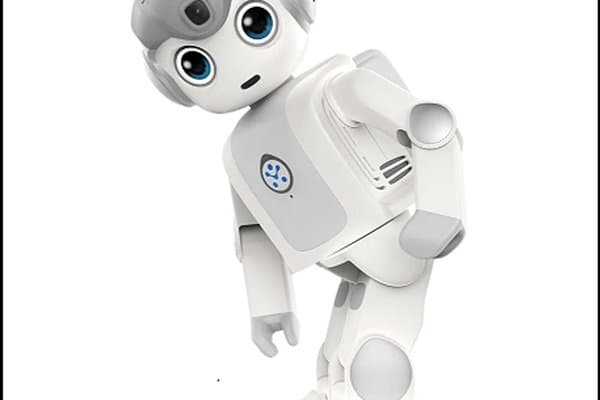
UBTech Robotics produces companion robots like Alpha Mini and Alpha 1S that combine entertainment, education, and social interaction. Their robots feature natural language processing and emotional expression capabilities.
Companion robotsHumanoid robotsEducational robots
18 products listed
U
Unibo
优你宝
📍 Shenzhen, China
Unibo creates interactive companion robots for children that combine AI-powered conversation with educational content. Their robots adapt to each child's learning pace and interests.
Children's companion robotsAI educationSmart toys
0 products listed
Where Companion Robot Factories Cluster
Concentration of companion robot manufacturers by city — useful for planning factory tours, freight consolidation, and shortlisting suppliers in the same logistics zone.
Beijing
2
factories
Shenzhen
2
factories
Shanghai
1
factory
Most Common Capabilities in This Directory
Specialties shared across the 5 verified manufacturers — use this to gauge whether the segment is mature (specialties converge) or fragmented (specialties diverge).
Service companion robots · 1Reception robots · 1Commercial service robots · 1Elderly care robots · 1Social robots · 1
Frequently Asked Questions
How much does a companion robot cost?
Companion robot prices range from $100 for simple interactive toys to $3,000+ for advanced AI-powered social robots. Popular Chinese-made companion robots include the iFlytek Alpha series ($200-$500), UBTech Alpha Mini ($300-$600), and ZhenFund-backed ElliQ-style elderly care robots ($500-$1,500). Premium social robots like LOVOT cost $3,000-$5,000. Children's companion robots like Miko 3 ($200-$300) offer AI-powered educational interaction. Elderly care companion robots with health monitoring, video calling, and medication reminders typically cost $500-$2,000. The market is growing rapidly with Chinese manufacturers offering the best value-for-money ratio in the $200-$1,000 segment.
What companion robots are best for elderly care?
The best elderly care companion robots combine social interaction with practical health features. Chinese options include the iFlytek AI Care Robot ($500-$1,200), which offers voice-activated calling, medication reminders, fall detection, and health monitoring. Temi ($1,500-$2,000) provides telepresence with autonomous navigation, enabling family members to virtually visit. UBTech's service robots offer physical exercise guidance and cognitive stimulation activities. Key features to look for include: large touchscreen for video calls, voice-activated emergency SOS, medication scheduling, daily health check reminders, entertainment (music, news, audiobooks), and integration with smart home devices. Battery life of 8-12 hours ensures all-day companionship.
What companion robots are best for children?
Top children's companion robots combine entertainment with educational value. Miko 3 ($200-$300) offers AI-powered conversation, STEM activities, and adaptive learning for ages 5-12. The iFlytek Alpha Egg series ($150-$400) provides Chinese-English bilingual education and interactive storytelling. UBTech Jimu ($120-$350) combines building blocks with coding education. ROYBI Robot ($150-$250) focuses on language learning for ages 3-7. Chinese manufacturers excel in this segment with competitive pricing and strong educational content. Important safety features include parental controls, content filtering, COPPA-compliant data handling, and screen time limits. Robots with physical interaction (dancing, expressions) maintain children's engagement better than screen-only devices.
What AI capabilities do companion robots have?
Modern companion robots incorporate several AI technologies. Natural language processing enables conversational interaction in multiple languages, with Chinese brands like iFlytek leading in Mandarin-English bilingual capability. Computer vision allows face recognition, emotion detection, and gesture understanding. Machine learning personalizes interactions based on user preferences and behavioral patterns over time. Generative AI integration (via cloud APIs) enables more natural, contextual conversations. Voice cloning allows the robot to speak in familiar voices for elderly users. Activity recognition detects falls, unusual inactivity, and daily routine changes. Chinese companion robots increasingly run AI models on-device for privacy and offline functionality, with cloud processing for complex queries.
Which Chinese brands make the best companion robots?
Leading Chinese companion robot brands include iFlytek, UBTech, ROOBO, Canbot, and Enabot. iFlytek is the dominant force, leveraging its world-leading voice AI technology in the Alpha series and healthcare-focused companion robots. UBTech produces humanoid companion robots like Alpha Mini and Yanshee for education and entertainment. ROOBO (now Roobo AI) specializes in children's AI companions. Canbot focuses on elderly care and retail reception robots. Enabot offers pet-like companion robots with remote monitoring via mobile apps. These companies benefit from China's advanced AI ecosystem and cost-efficient manufacturing, offering products at 40-60% lower prices than Western competitors like LOVOT, ElliQ, and Jibo.
Can companion robots monitor health for elderly users?
Yes, advanced companion robots offer meaningful health monitoring for elderly users. Features include medication reminders with confirmation tracking, daily wellness check-ins through conversational AI, vital sign monitoring through connected Bluetooth devices (blood pressure cuffs, glucose meters, pulse oximeters), fall detection using onboard cameras and motion sensors, and activity level tracking to detect changes in daily routines that may indicate health decline. Some models connect to telemedicine platforms for remote doctor consultations. Chinese robots from iFlytek and Canbot integrate with China's healthcare data standards and are expanding compatibility with international health platforms. However, companion robots supplement rather than replace professional medical monitoring.
How do companion robots connect with family members remotely?
Companion robots enable remote family connection through multiple channels. Video calling via built-in cameras and screens allows face-to-face interaction, with the robot autonomously navigating to find the elderly user when a call comes in. Mobile apps let family members remotely control the robot to check on loved ones, view activity logs, and receive alert notifications. Photo and message sharing through the robot's screen keeps families connected throughout the day. Some models like Temi and Enabot allow family members to remotely pilot the robot through the home. Privacy features include camera indicators, scheduled availability windows, and do-not-disturb modes. Chinese manufacturers typically offer free companion apps for iOS and Android.
What is the best companion robot for elderly care?
For elderly care, we recommend robots in the $500-$1,000 range like the Ling AI Robot or Unibo Social Bot. These offer video calling for family check-ins, medication reminders, fall detection alerts, and conversational AI to reduce loneliness. Budget options like the Enabot EBO SE ($150-$250) work well for basic remote monitoring.
Are companion robots safe for children?
Yes. Chinese companion robots designed for children undergo strict safety testing and feature rounded edges, non-toxic materials, and content filters. Models like the UBTech Alpha Mini and ROOBO Pudding include parental controls, screen time limits, and age-appropriate educational content.
Do companion robots require internet to function?
Basic functions (local voice commands, pre-loaded content, movement) work offline. However, AI conversation, video calling, cloud-based learning, and software updates require an internet connection. Most companion robots use Wi-Fi; some premium models support 4G connectivity.
How long do companion robots last?
Hardware typically lasts 3-5 years with normal use. Battery life is 4-8 hours per charge for mobile models. The main limiting factor is software support — manufacturers typically provide updates for 2-3 years. Budget for potential battery replacement ($30-$80) after 1-2 years.
Are companion robots effective for reducing loneliness in elderly?
Studies show that companion robots can significantly reduce feelings of loneliness in elderly users. The key factors are conversation quality, consistent personality, and video calling capability for family connection. Models with health monitoring also provide practical benefits for remote care.
Which companion robot has the best AI conversation?
The UBTech Alpha Mini and Ling AI Robot have the most natural conversation capabilities, powered by cloud-based AI. The Alpha Mini excels in general conversation, while the Ling AI Robot is specifically optimized for elderly-friendly dialogue with slower pace and clearer pronunciation.
Can companion robots recognize different family members?
Yes. The Ling AI Robot and Unibo Social Bot feature facial recognition that identifies different family members and personalizes interactions. The UBTech Alpha Mini supports voice recognition for multiple users. Budget models like the Enabot EBO SE do not have person recognition.
How secure is the camera on companion robots?
All major Chinese companion robot brands use encrypted video transmission and cloud storage. The Enabot EBO SE and UBTech Alpha Mini both support end-to-end encryption. Always change default passwords and keep firmware updated. For maximum privacy, choose models that support local storage without cloud dependency.
Related Resources
Buying Options
Ready to shortlist companion robot suppliers?
Use our quote form for a tighter supplier shortlist and direct factory pricing from verified manufacturers.
Get a Free Quote
Fill out the form below and we'll connect you with verified manufacturers within 24 hours.