Heavy Load AGV Automated Guided Vehicle (AGV) — Solutions & Suppliers from China
Heavy-load AGVs transport materials weighing 5 to 100+ tons in industries like steel manufacturing, shipbuilding, aerospace, and heavy equipment production. These specialized vehicles use omnidirectional drive systems, reinforced chassis, and precision positioning to move massive loads safely.
Chinese heavy-load AGV manufacturers like Kunship (KSEC), Siasun, and Sanfeng dominate this segment, with deep expertise gained from serving China's massive steel, automotive, and shipbuilding industries. Their AGVs transport steel coils, vehicle bodies, ship sections, and aerospace components with millimeter-level positioning accuracy.
Heavy-load AGVs cost $80,000–$200,000+ depending on payload capacity and customization. Despite the high unit cost, ROI is typically under 2 years due to the elimination of overhead cranes, forklifts, and the significant safety improvements in handling dangerous heavy loads.
Heavy Load AGV Automated Guided Vehicle (AGV) Products
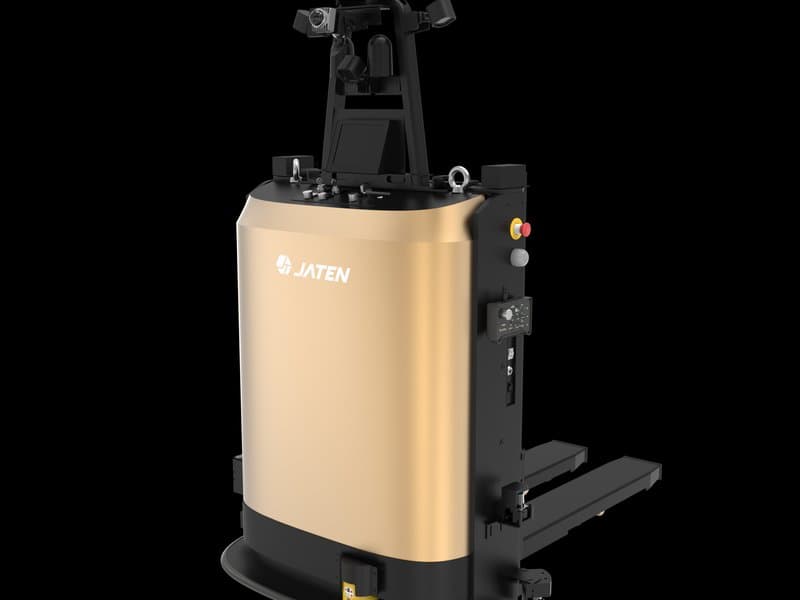
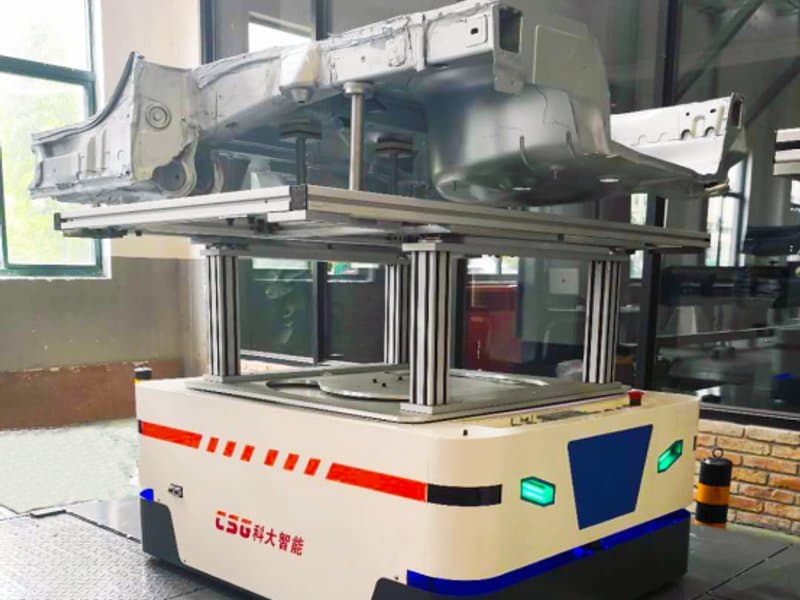
CSG Huaxiao AGV-H2
CSG Huaxiao
$45,000 - $75,000
payload: 3,000kgspeed: 1.0 m/snavigation: Laser + inertial
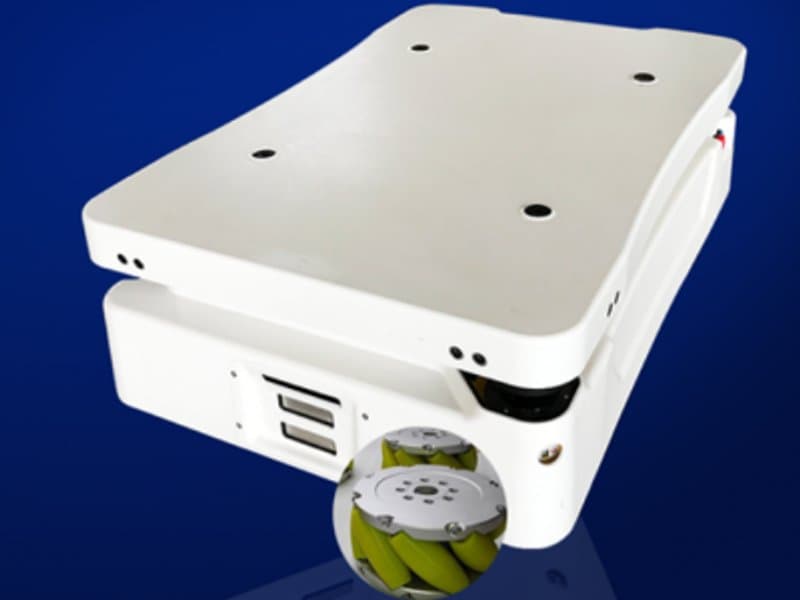
JKJD AGV-M300
JKJD (Shenyang)
$55,000 - $90,000
payload: 5,000kgspeed: 0.8 m/snavigation: Magnetic nail + laser
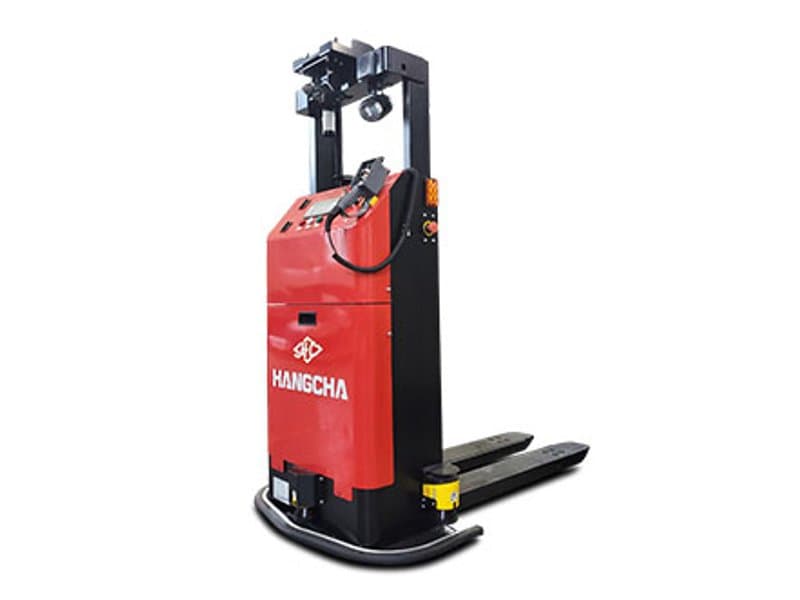
Hangcha AGV Forklift
Hangcha Intelligent
$60,000 - $95,000
payload: 2,500kgspeed: 1.2 m/snavigation: Natural SLAM + reflector
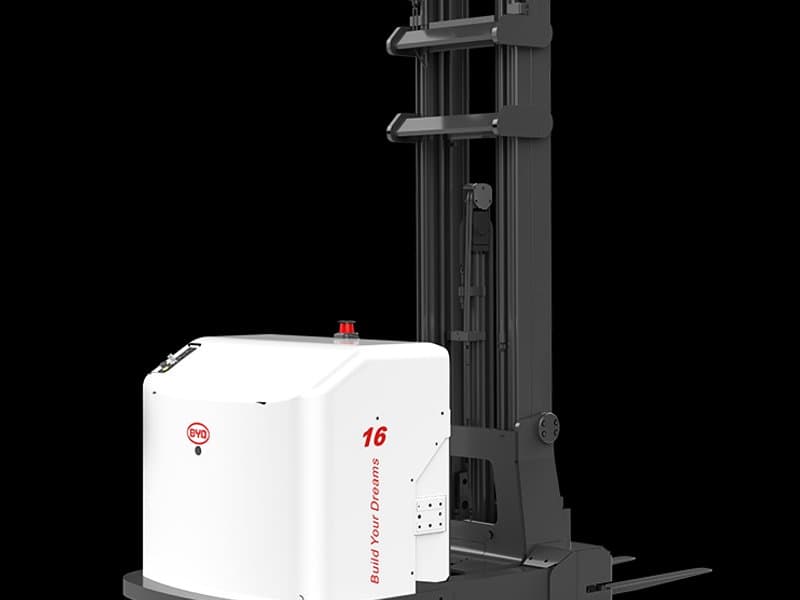
BYD AGV Forklift B20
BYD Forklift
$55,000 - $85,000
payload: 2,000kgspeed: 1.0 m/snavigation: Laser SLAM
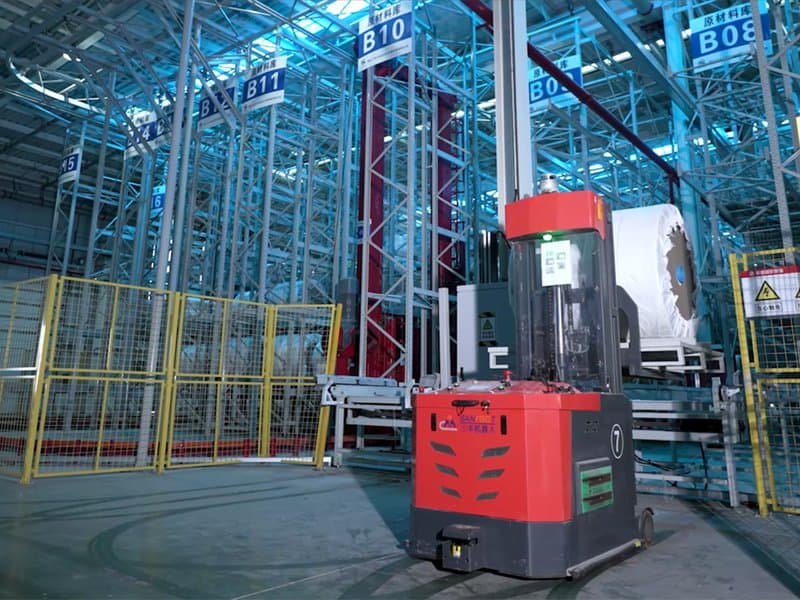
Sanfeng SF500 AGV
Sanfeng Intelligent Equipment
$40,000 - $65,000
payload: 2,000kgspeed: 1.0 m/snavigation: Magnetic stripe + RFID
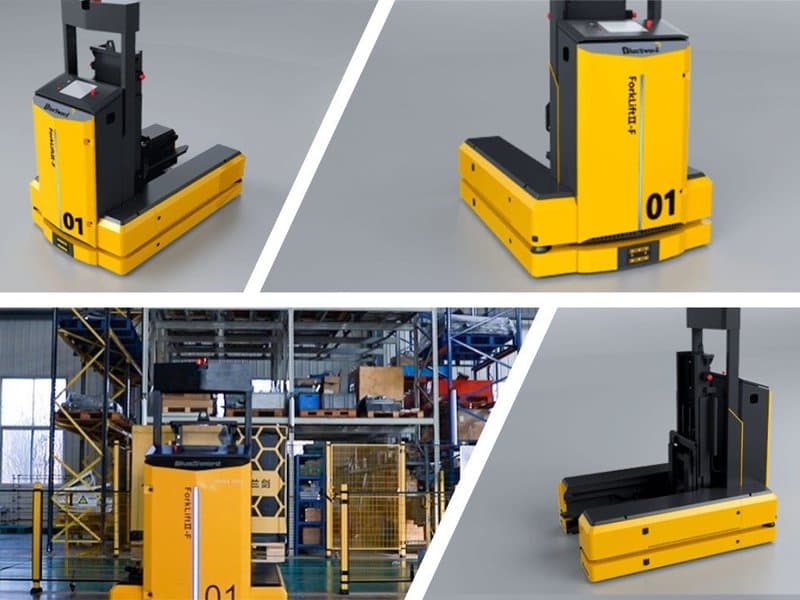
Siasun AGV-S500
Siasun Robot & Automation
$50,000 - $80,000
payload: 3,000kgspeed: 1.0 m/snavigation: Laser + inertial + magnetic
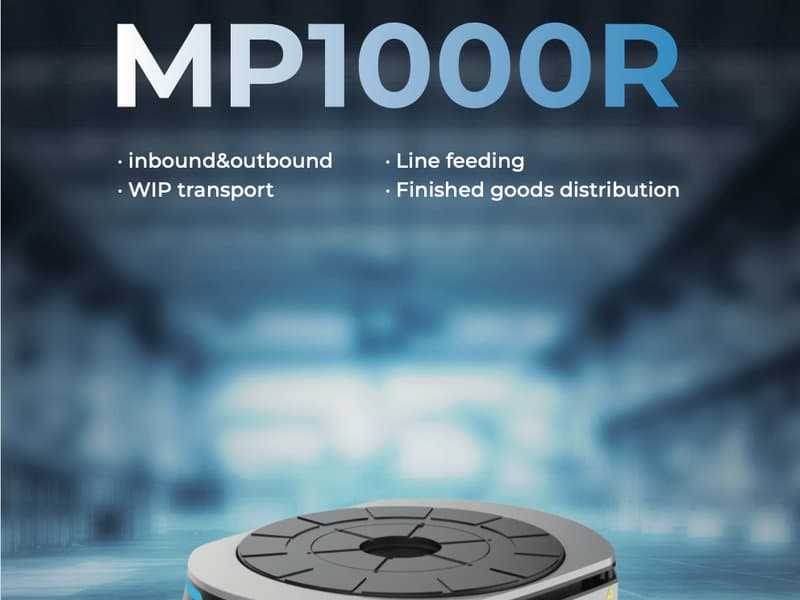
Geekplus MP1000R AGV
Geekplus
$35,000 - $50,000
payload: 1,000kgspeed: 2.0 m/snavigation: QR code + visual SLAM
Frequently Asked Questions
What is the difference between an AGV and an AMR?
AGVs (Automated Guided Vehicles) follow fixed paths using magnetic tape, wires, or painted lines embedded in the floor, while AMRs (Autonomous Mobile Robots) use LiDAR, cameras, and SLAM technology to navigate freely without infrastructure modifications. AGVs are typically cheaper ($10,000-$50,000) and more reliable for repetitive, fixed-route tasks, while AMRs cost more ($25,000-$80,000) but offer dynamic rerouting around obstacles and easy layout changes. AGVs stop when their path is blocked, whereas AMRs can autonomously find alternative routes. For high-volume, stable manufacturing environments with predictable material flows, AGVs offer better ROI and simpler maintenance. Many modern Chinese manufacturers like Hikrobot and Seer now offer hybrid solutions that combine AGV reliability with AMR flexibility.
How much does an AGV cost?
AGV prices range from $10,000 to $200,000+ depending on payload capacity, navigation technology, and application complexity. Budget magnetic stripe AGVs for light material transport start at $10,000-$25,000 per unit. Mid-range laser-guided AGVs with 1,000-2,000kg payload capacity cost $25,000-$60,000. Premium autonomous forklift AGVs run $60,000-$120,000. Enterprise-grade heavy-duty AGVs handling 5,000kg+ loads in automotive plants can exceed $120,000-$200,000. Chinese manufacturers like KSEC, Jaten, and Siasun offer 30-50% cost savings compared to European brands like KUKA and Dematic. A complete AGV system including fleet management software, charging stations, and integration typically costs 2-3x the per-unit robot price.
Who are the top Chinese AGV manufacturers?
China's leading AGV manufacturers include Siasun (China's largest listed robotics company with 3,000+ AGVs in automotive plants), KSEC/Kunship (25+ years in tobacco and automotive AGVs), Jaten Robot (10,000+ units deployed from Dongguan), Hikrobot (Hikvision subsidiary with advanced machine vision AGVs), and CSG Huaxiao (specializing in heavy-load AGVs up to 100 tons). Geekplus leads in warehouse AGVs with 30,000+ robots globally, while Quicktron (Alibaba-backed) dominates e-commerce fulfillment. Seer Intelligent provides AGV navigation controllers powering 200+ brands. Hangcha and BYD Forklift bring their forklift manufacturing expertise to autonomous forklift AGVs. Together, Chinese AGV manufacturers hold over 60% of the global AGV market share by unit volume, shipping approximately 80,000 AGVs annually.
What types of navigation do AGVs use?
AGVs use several navigation technologies with varying cost and complexity trade-offs. Magnetic stripe/tape navigation is the simplest and cheapest ($10,000-$25,000 per unit), following magnetic tape or painted lines on the floor — ideal for fixed routes but inflexible to layout changes. Magnetic nail/spot navigation uses embedded floor markers for precise positioning at ±5mm accuracy, common in automotive assembly. Laser/reflector navigation uses laser scanners and wall-mounted reflectors for infrastructure-light guidance at $25,000-$50,000 per unit. Natural SLAM (Simultaneous Localization and Mapping) uses LiDAR to build environmental maps without any floor infrastructure, costing $30,000-$60,000 but offering maximum flexibility. QR code grid navigation provides a good balance of accuracy and cost for warehouse applications. Many Chinese AGV manufacturers like Seer and Hikrobot now offer multi-mode navigation controllers that switch between methods within a single facility.
What is the ROI of deploying AGVs?
AGV deployments typically achieve ROI within 1.5-3 years depending on scale and application. A mid-size manufacturing plant deploying 20 AGVs at $40,000 each ($800,000 total system cost including software and integration) can replace 30-40 forklift operators, saving $600,000-$900,000 annually in labor costs alone. Additional quantifiable benefits include 99.5% on-time material delivery (vs 85-90% manual), 70% reduction in product damage during transport, 24/7 operation capability, and near-zero workplace transport accidents. In warehouse applications, 50 AGVs handling pallet movement can reduce labor requirements by 60% and increase throughput by 200-300%. Chinese-manufactured AGVs accelerate payback by 6-12 months compared to European alternatives due to lower upfront costs. Fleet management software further improves ROI by optimizing task allocation and reducing empty travel by 20-30%.
How long does it take to implement an AGV system?
AGV implementation timelines range from 4 weeks for simple deployments to 6 months for complex manufacturing integrations. Phase 1 (1-2 weeks): site survey, workflow analysis, and system design including route planning, fleet sizing, and charging station placement. Phase 2 (2-4 weeks): infrastructure preparation — laying magnetic tape or installing reflectors, setting up Wi-Fi/5G networks, and installing charging stations. Phase 3 (1-2 weeks): AGV deployment, commissioning, route programming, and fleet management software configuration. Phase 4 (1-2 weeks): integration testing with WMS/MES/ERP systems, safety validation, and operator training. Simple magnetic stripe AGV deployments in warehouses can be completed in 4-6 weeks. Complex automotive assembly line AGV systems with heavy payloads and MES integration typically require 4-6 months. Chinese manufacturers like Siasun and KSEC provide turnkey implementation services including project management and post-deployment optimization.
What payload capacities are available for AGVs?
AGV payload capacities span an enormous range from 100kg to over 100 tons, covering virtually every industrial material handling need. Light-duty AGVs (100-500kg) handle tote and carton transport in e-commerce warehouses, priced at $10,000-$25,000. Medium-duty AGVs (500-2,000kg) are the most common category for pallet transport and manufacturing material supply, costing $25,000-$60,000. Heavy-duty AGVs (2,000-5,000kg) serve automotive assembly lines and heavy manufacturing at $60,000-$120,000. Ultra-heavy AGVs (5,000-60,000kg) transport automotive bodies, steel coils, and aircraft components at $120,000-$200,000+. CSG Huaxiao manufactures AGVs handling up to 100 tons for shipyard and heavy equipment applications. JKJD (Shenyang) specializes in precision heavy-load AGVs for aerospace manufacturing. Selecting the right payload tier is critical — over-specifying by one tier typically adds 40-60% to the per-unit cost.
How much does a complete AGV system cost for a medium warehouse?
A complete AGV system for a medium warehouse (10,000-30,000 sqm) with 15-30 AGVs typically costs $500,000-$1,500,000 including hardware, software, infrastructure, and integration. Hardware accounts for 50-60% of total cost, fleet management software 15-20%, infrastructure modifications 10-15%, and integration/commissioning 10-15%. Chinese manufacturers offer turnkey pricing that bundles all components, often at 30-40% less than European system integrators.
Are Chinese AGVs reliable compared to European brands?
Chinese AGV manufacturers have reached quality parity with European brands for most applications. Companies like Siasun supply AGVs to General Motors and BMW plants in China, while Geekplus robots operate in DHL and Nike facilities worldwide. Mean time between failures (MTBF) for top Chinese AGVs exceeds 20,000 hours, comparable to KUKA and Dematic. Chinese manufacturers typically offer faster delivery (4-8 weeks vs 12-16 weeks) and more responsive after-sales support in Asian markets.
What ongoing maintenance costs should I budget for AGVs?
Annual AGV maintenance costs typically run 5-10% of the initial hardware purchase price per unit. For a $40,000 AGV, expect $2,000-$4,000 per year in maintenance including battery replacement (every 3-5 years at $3,000-$8,000), sensor calibration, wheel replacement, and software updates. Many Chinese manufacturers offer maintenance contracts at $1,500-$3,000 per unit annually covering preventive maintenance, remote diagnostics, and replacement parts.
Should I buy an AGV or an AMR for my warehouse?
Choose an AGV if your facility has stable layouts, predictable material flows, and you prioritize lower cost and simpler maintenance. AGVs excel in manufacturing environments with fixed production lines. Choose an AMR if your warehouse layout changes frequently, you need dynamic obstacle avoidance, or you require flexible routing. Many modern Chinese AGVs now offer hybrid navigation that blurs the line — Hikrobot and Seer models can operate in both fixed-path and free-navigation modes within the same facility.
How many AGVs do I need for my facility?
Fleet sizing depends on throughput requirements, travel distances, and shift patterns. A general rule of thumb: calculate total daily material movements, divide by the number of trips one AGV can complete per shift (typically 40-80 trips for short routes, 15-30 for long routes), and add 20% buffer for charging downtime and maintenance. A 10,000 sqm warehouse with 500 daily pallet movements typically needs 10-15 AGVs. Most Chinese manufacturers offer free fleet sizing consultation and simulation as part of their pre-sales process.
Explore More
All Automated Guided Vehicle (AGV)
Automated guided vehicles for warehouse logistics, manufacturing material handling, and heavy-load transport
Warehouse AGVAutomated guided vehicles for pallet transport, goods-to-person, and warehouse logistics operations.
Manufacturing AGVAGVs for assembly line supply, work-in-progress transport, and factory floor material handling.
Get a Free Quote
Fill out the form below and we'll connect you with verified manufacturers within 24 hours.