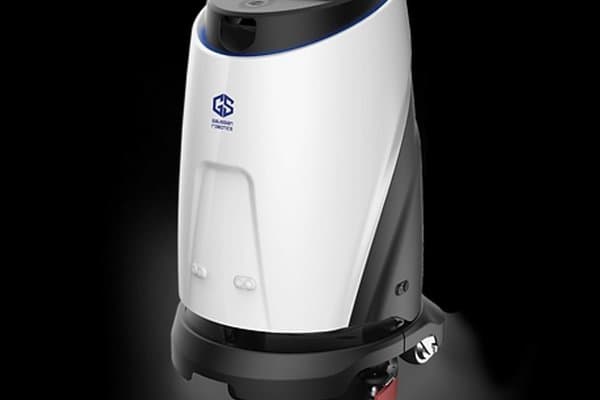
The adoption curve for autonomous mobile robots (AMRs) in warehouse and logistics facilities has crossed the inflection point. According to Interact Analysis data released April 2026, 42% of logistics facilities over 50,000 sqm now operate at least one AMR — up from 28% in 2024 and 19% in 2022.
What the Numbers Mean
The 42% figure includes all AMR types: cleaning robots, inventory management drones, sorting robots, and goods-to-person systems. Within the cleaning robot category specifically, adoption rates are lower — approximately 28% of large logistics facilities use autonomous floor cleaning robots — but growing at 35% year-over-year, faster than any other AMR cleaning category.
Why the Inflection Point Hit Now
Three converging factors:
Labor market pressure: US warehouse vacancy rates hit historic lows in 2025 while warehouse worker turnover averaged 42% annually. Night-shift cleaning roles are particularly difficult to fill — autonomous cleaning robots solve a genuine labor access problem, not just a cost problem.
ROI validation: Early adopter data from 2022-2024 deployments has matured. Payback periods of 7-14 months (depending on facility type) are now well-documented. Facilities that deployed cleaning AMRs in 2022 are renewing and expanding rather than reverting to manual cleaning.
Technology maturity: Navigation reliability has reached 99.5%+ uptime in controlled warehouse environments. The failure modes that plagued 2020-2022 deployments — getting stuck, failing to return to dock, navigation errors — have been largely resolved in current-generation hardware.
Regional Variation
China: Highest adoption rate at 67% of large logistics facilities — driven by labor cost inflation and government automation incentives.
Germany: 51% adoption, driven by high labor costs and strong Mittelstand industrial tradition of automation investment.
United States: 38% adoption, growing rapidly from 24% in 2024 as Amazon and Walmart-led automation standards diffuse through the supply chain.
UK: 29% adoption, slower due to Brexit-related labor supply and lower investment in automation relative to EU peers.
Cleaning Robot Type Preferences by Facility
| Facility Type | Preferred Robot Type | Average Payback |
|---|---|---|
| E-commerce fulfillment | Floor scrubber + vacuum combo | 8-10 months |
| Cold storage | Specialized cold-rated scrubber | 10-14 months |
| Cross-dock facility | Sweeper + occasional scrub | 11-13 months |
| Manufacturing warehouse | Industrial vacuum AMR | 9-12 months |
| Food & beverage | Sanitization-rated scrubber | 7-9 months |
What Comes Next
The next adoption wave targets mid-size facilities (20,000-50,000 sqm) that have historically been priced out of AMR solutions. Entry-level Chinese autonomous scrubbers at $12,000-$18,000 landed cost make the economics work for this segment for the first time.