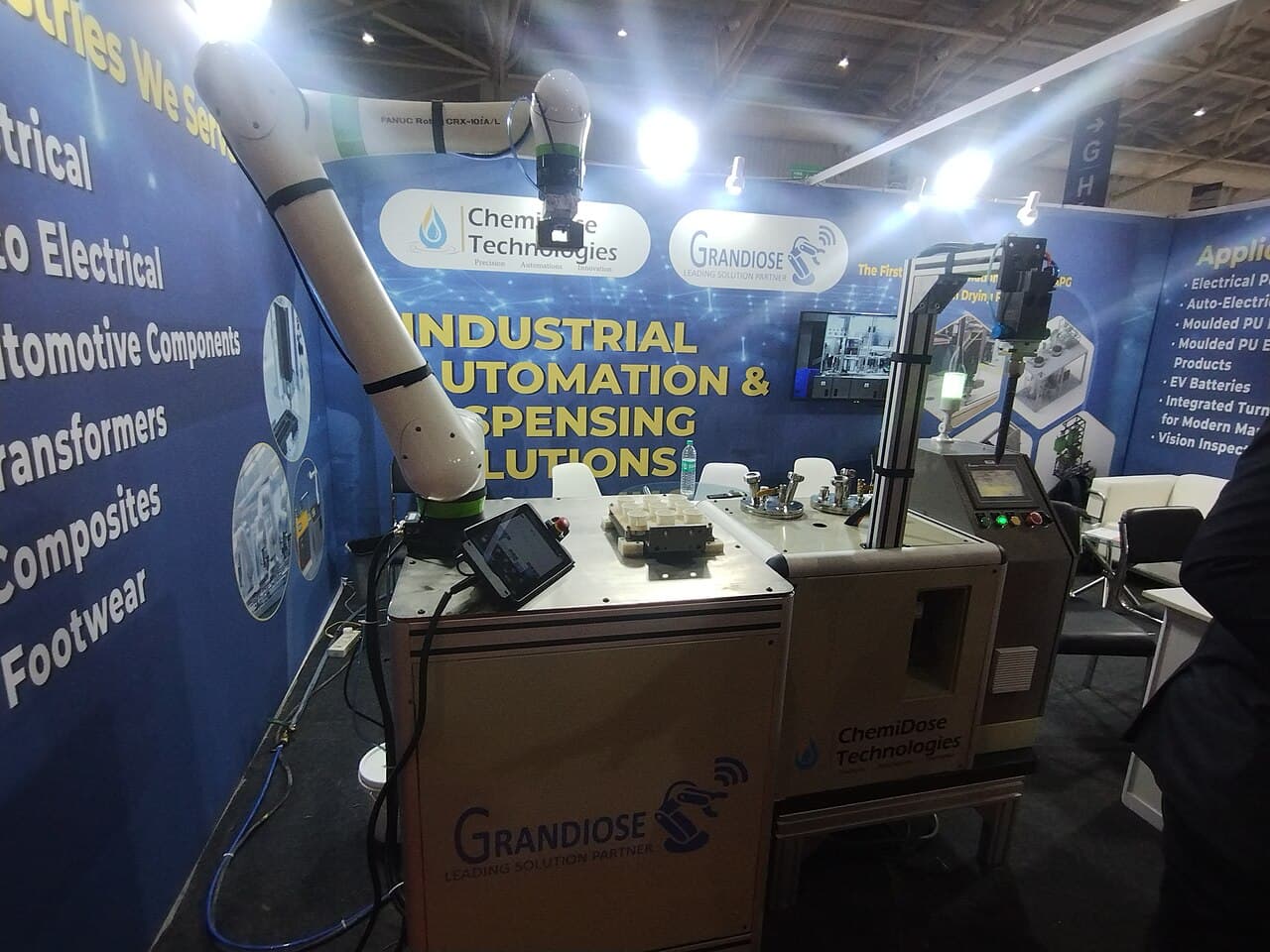
Fanuc India has completed a $180 million factory expansion at its Bangalore manufacturing campus, doubling annual robot production capacity from 7,500 to 15,000 units. The expanded facility, which covers 120,000 square feet, will serve as Fanuc's primary manufacturing base for the South Asia and Middle East regions, replacing the previous model of importing most robots from Fanuc's Japanese factories.
What the Expansion Includes
The Fanuc India factory expansion adds three new production lines dedicated to the M-20 and M-20iD robot series, along with a dedicated controller assembly and testing bay. Key features of the expanded operation:
- Localized subcomponent sourcing: Approximately 65% of robot components are now sourced from Indian suppliers, up from 30% prior to the expansion, reducing lead times and import dependency
- Expanded training center: A 5,000 sq ft customer training facility adjacent to the factory can train up to 200 engineers per month on Fanuc robot programming and maintenance
- R&D localization lab: A new applications engineering lab will adapt Fanuc robots for India-specific use cases including textile machinery, dairy processing, and pharmaceutical packaging
- Battery production line: For the first time, Fanuc India manufactures its own robot controller batteries and backup power units locally
Market Drivers in India
The expansion reflects strong demand growth in India's manufacturing sector, driven by:
PLI (Production Linked Incentive) scheme: The Indian government's PLI program for electronics and manufacturing has attracted investment from Foxconn, Samsung, and domestic manufacturers, creating demand for industrial robots.
Automotive expansion: India's automotive sector is investing heavily in new assembly plant capacity, with major OEMs including Maruti Suzuki, Tata Motors, and Hyundai India all announcing capacity additions in 2025-2027.
Entry-level robot demand: The Indian market has seen growing demand for lower-cost robot configurations — a segment Fanuc India is targeting with locally assembled M-10 series robots priced 18-22% below imported equivalents.
Impact on Pricing and Lead Times
The localization strategy is expected to reduce lead times for Indian customers from 16-20 weeks (imported from Japan) to 4-6 weeks for standard configurations. Fanuc India has announced a 12% price reduction on locally assembled M-20 series robots, effective immediately.
What This Means for Robot Buyers
For buyers in South Asia and the Middle East, Fanuc's expanded Indian manufacturing capacity translates into shorter delivery times and more competitive pricing. The localized training and support infrastructure also reduces total cost of ownership for buyers without existing robot expertise.
Buyers evaluating industrial robot arms should note that regional manufacturing localization is accelerating across major vendors, reducing historical advantages of Japanese and European manufacturing quality where Indian facilities now meet equivalent standards.
Enterprises in India considering automation investments should also explore collaborative robots as an entry point, with several vendors now offering localized support in the Indian market.