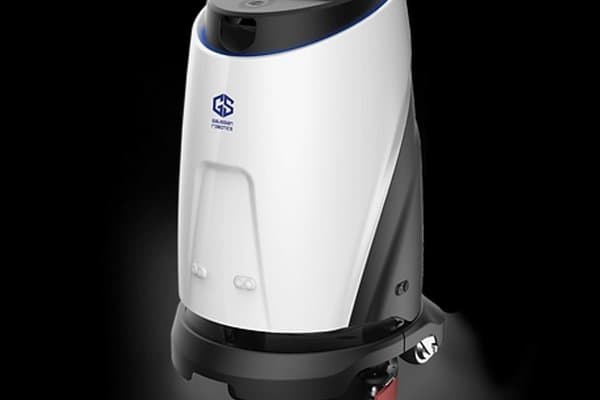
The commercial cleaning robot market has entered its mainstream adoption phase. According to MarketsandMarkets' April 2026 report, the global market for autonomous commercial cleaning robots reached $4.2 billion, growing 38% year-over-year from $3.0 billion in 2025.
Market Structure
The market divides into three segments by robot type:
Floor scrubbers (65% of market): The largest and most mature segment. Battery-powered autonomous scrubbers (typically 50-100cm cleaning width) clean and dry hard floor surfaces in warehouses, airports, shopping malls, and hospitals. Gaussian Robotics, Gausium, and Tennant lead.
Vacuum and sweeper robots (22% of market): Specialized for dry debris collection in facilities with carpeted areas or open warehouse shelving. Ecobot and Intボット Robotics are key players.
Multi-function platforms (13% of market): The fastest-growing segment. Robots that combine vacuuming, sweeping, mopping, and increasingly disinfection in a single platform. Expect this segment to grow to 25% of market by 2028.
Why Now: The Cost Inflection
The key driver is not technology — the technology has been viable since 2021. The driver is economic: at $15,000-$30,000 per unit with a 7-12 month payback period, autonomous cleaning robots now deliver better ROI than human cleaning labor in most developed markets.
This calculation:
- Average fully-loaded cost of a night-shift cleaning worker in the US: $45,000-$55,000/year
- One autonomous scrubber replaces 1.5-2.0 FTE equivalent at 3-4x the coverage rate
- Annual robot operating cost (energy, maintenance, consumables): $3,000-$5,000
- 5-year total cost: $22,000-$40,000 vs. $225,000-$275,000 for human labor
Geographic Distribution
| Region | Market Share | Growth Rate | Key Driver |
|---|---|---|---|
| Asia-Pacific | 42% | 45% | China logistics boom |
| Europe | 28% | 31% | Labor shortage, green mandates |
| North America | 24% | 35% | E-commerce automation |
| Rest of World | 6% | 40% | Emerging market adoption |
Competitive Landscape
Chinese manufacturers (Gaussian, Gausium, Ecobot, LG) account for 58% of units sold globally due to aggressive pricing and rapid manufacturing scale. Landed costs are 40-60% below comparable Western models.
Western manufacturers (Tennant, Nilfisk, Kärcher) maintain strong positions in North America and Europe through established dealer networks, service infrastructure, and brand trust with large enterprise procurement departments.
Outlook to 2028
The market is projected to reach $8.7 billion by 2028 at 20% CAGR. Key trends:
- RaaS (Robot-as-a-Service) models will account for 35% of new deployments by 2028
- Fleet management software becomes the key competitive differentiator
- Humanoid cleaning robots begin commercial pilots in hotels and hospitals by late 2027