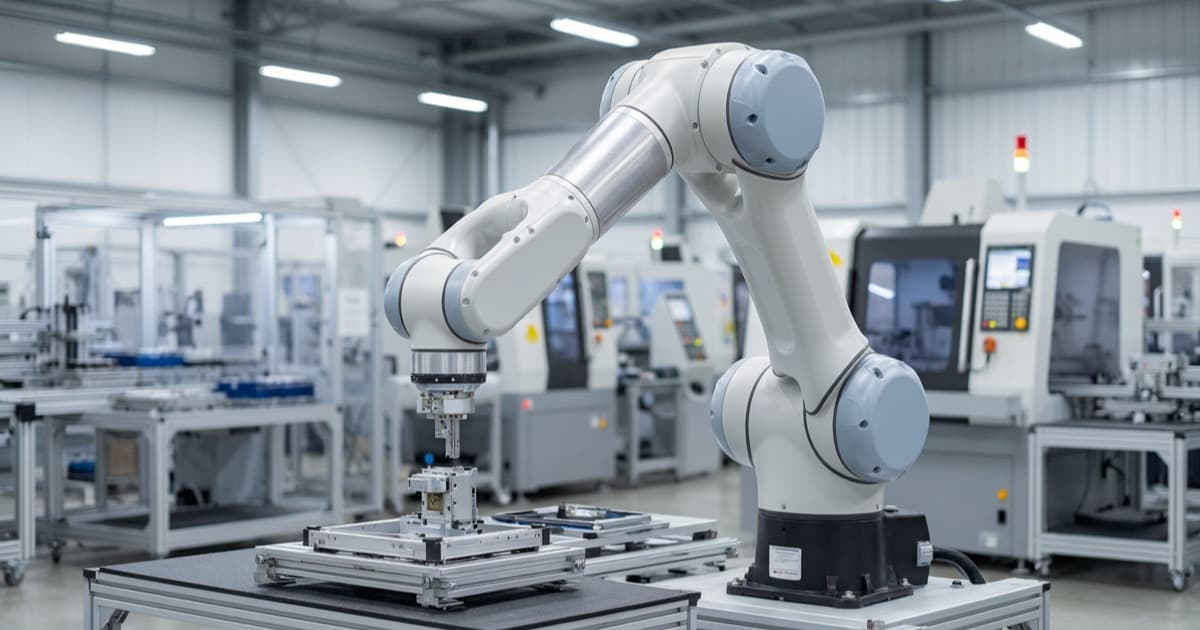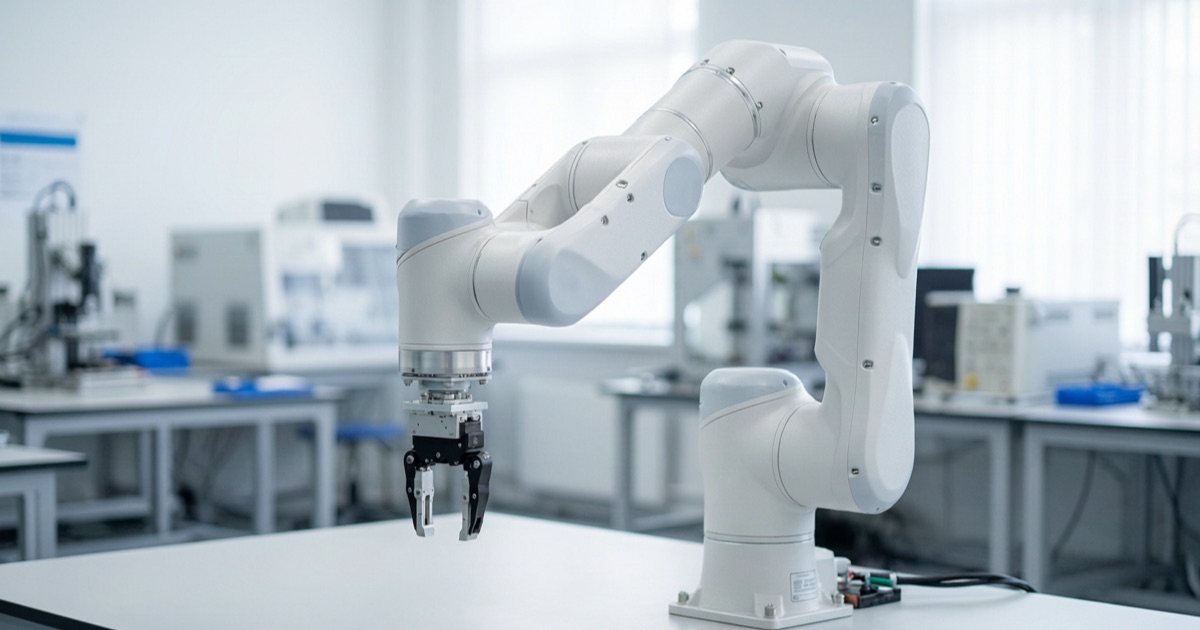
Franka Robotics (formerly Franka Emika) makes one of the most recognizable robot arms in research labs worldwide: a sleek, 7-axis torque-sensing cobot that has become a default platform for robotics and AI research. If you're scoping an arm for a university lab, a corporate R&D group, or a light industrial cell that needs true force control, Franka is almost always on the shortlist. Here's what its arms actually cost in 2026 and how to read the number.
A note on the figures below: cobot pricing is quote-driven and varies with region, distributor, and academic status. These are indicative arm-level prices based on published distributor listings and buyer reports, not fixed global list prices. Use them to budget, then request a real quote.
The Franka lineup and what each costs
Franka sells essentially one arm design in a few packagings. All share the same core hardware: 7 degrees of freedom, torque sensors at every joint, a 3 kg payload, 855 mm reach, and ±0.1 mm pose repeatability. What changes between models is the software license, support, and intended use — research versus production.
| Model | Positioning | Indicative price (arm-level) |
|---|---|---|
| Franka Research 3 (FR3) | Research / AI, full low-level control | ~€25,466 (≈ $27,000–$30,000) |
| Franka Production 3 | Industrial cobot, gripper + app package | ~€25,000 (≈ $27,000–$28,000) |
| Panda (legacy, discontinued) | Original research robot, still in labs | ~$20,000–$25,000 for a complete system |
The headline takeaway: budget roughly $25,000 to $30,000 for a Franka arm, with the exact figure driven by which package you buy and your buyer status. Academic and education-only bundles can land lower; commercial buyers with full support typically sit at the top of that band. Some buyers report low-five-figure deals, so it pays to ask about academic pricing if you qualify.
The Research 3 is the model most new buyers want. It opens up low-level access to the robot's control and learning stack — the reason it dominates manipulation, reinforcement-learning, and imitation-learning research. The Production 3 is the same arm hardened and licensed for repeatable industrial work, sold with a gripper and application package. The original Panda is discontinued but still everywhere in labs; if you're buying used, expect to inherit an older software stack and to verify support availability before committing.
What Franka is — and isn't — good for
Franka's differentiator is not payload or reach. At 3 kg and 855 mm, it is deliberately small. What you pay for is sensitivity: joint-level torque sensing makes it exceptional at force-controlled tasks, contact-rich manipulation, and safe human-adjacent operation.
- Research and AI — the FR3 is a reference platform for robot learning; its open control interface is the whole point.
- Delicate assembly and testing — insertion, polishing, and inspection tasks where force feedback matters more than brute payload.
- Education — its polish and software ecosystem make it a common teaching arm.
Where it's the wrong tool: heavy payloads, long-reach palletizing, or high-throughput material handling. For those, a UR10-class or an industrial 6-axis arm costs similar money and moves far more mass. If your job is 'lift 10 kg all day,' Franka is not the answer — a higher-payload cobot is.
Budget the full system, not just the arm
As with any cobot, the arm is only part of the bill:
- The arm — the numbers above.
- End-of-arm tooling — grippers, sensors, or custom tooling. Franka's own hand is often bundled with Production 3; research setups vary widely.
- Compute and integration — a control PC, real-time kernel setup, and software development. For research this is staff time; for production it's integrator cost.
- Accessories — mounting, vision, safety guarding where required.
Across the industry, an installed cobot cell often lands at 1.5–3× the arm price once tooling and integration are counted. Franka's mid-tier arm price doesn't change that ratio — plan for it.
Bottom line
Franka Robotics sells a premium 7-axis, force-sensitive arm for roughly $25k–$30k, with the Research 3 aimed at labs and the Production 3 at industry. It's the right buy when sensitivity and open control matter more than payload — and the wrong buy when you need to move real weight. Confirm your academic status for pricing, verify software and support terms (especially on legacy Panda units), and budget the whole cell, not just the arm.
Comparing 7-axis arms before you request quotes? Browse specs and suppliers for collaborative robots to benchmark Franka against the rest of the field.