# E-Commerce Fulfillment Automation 2026: ASRS vs Goods-to-Person vs AMR
E-commerce fulfillment automation is experiencing its most competitive and innovation-dense period in history. The combination of sustained e-commerce growth (US online retail hit $1.1 trillion in 2025), acute warehouse labor shortages, and rapidly falling robot costs has created conditions where automation is no longer just for Amazon-scale operations.
This guide is for distribution center operators evaluating fulfillment automation — from 10,000 sq ft boutique fulfillment operations to 500,000+ sq ft regional DCs.
The Three Main Approaches
1. Autonomous Mobile Robot (AMR) Fleets
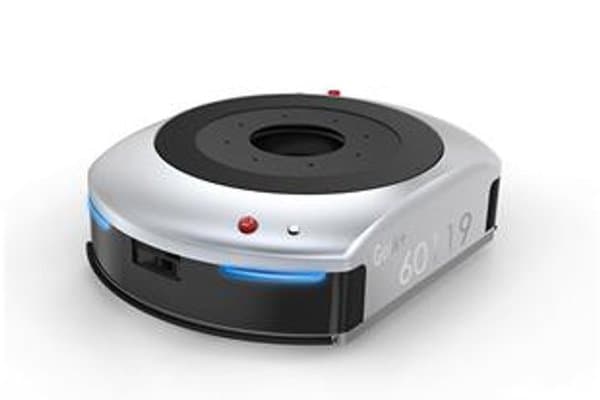
AMR systems bring the storage to a picking station, or assist humans in picking goods from shelves. The most common implementation:
- AMRs drive under mobile shelving pods
- Pick pods to human pickers at fixed stations ("goods-to-person" via mobile robotics)
- Humans pick items from the pod and place in outbound totes
- AMR returns pod to storage location
Leading providers: Kiva/Amazon Robotics (internal only), Geek+, 6 River Systems, Locus Robotics, Hai Robotics, Quicktron, AutoStore
Throughput: 300-600 units per picker-hour (vs. 60-100 for conventional pick-to-walk)
Best for: SKU counts under 100,000, mixed-size items, operations that need flexibility to scale seasonally
Capital cost: $500,000-3M for a complete AMR fulfillment system (varies enormously by scale)
Implementation timeline: 3-9 months
2. AS/RS (Automated Storage and Retrieval Systems)
AS/RS systems automate storage itself — cranes, shuttles, or robots within a dense storage structure retrieve items on demand.
Types of AS/RS for e-commerce:
| System | Storage format | Throughput | Cost |
|---|---|---|---|
| Pallet crane AS/RS | Pallets | 40-120 pallets/hr | $2M-15M |
| Shuttle AS/RS (miniload) | Totes/cases | 200-1000 totes/hr | $1.5M-8M |
| AutoStore cube | Bins | 500-2000+ picks/hr | $3M-20M+ |
| Vertical lift modules (VLM) | Any | 50-200 picks/hr | $80K-300K each |
| Vertical carousels | Any | 30-150 picks/hr | $30K-120K each |
AutoStore deserves special mention — it's the most capital-efficient dense storage system for high-SKU-count e-commerce. A grid of stacked bins, accessed by grid robots running on rails, achieves storage density 4-6x traditional shelving while providing pick rates of 500-2,000+ picks/hour at large installations. AutoStore has installations at major e-commerce operations across Europe and is expanding rapidly in North America.
Best for: 10,000+ SKUs, consistent order patterns, long-term fixed-location operations
Implementation timeline: 12-24 months (full installation and integration)
3. Pure Goods-to-Person (GTP) Systems
GTP systems bring items to stationary human pickers without them walking the warehouse. Picking stations are ergonomically designed for maximum throughput. The goods delivery mechanism can be:
- Conveyor-based (items arrive on conveyor from storage)
- AMR-based (mobile pods delivered by AMRs)
- AS/RS-based (miniload shuttle retrieves totes)
GTP systems consistently deliver the highest picking rates achievable with human labor: 500-800 picks/hour per picker station, vs. 60-100 for traditional pick-to-walk.
Comparison Matrix
| Factor | AMR fleet | AS/RS / AutoStore | GTP conveyor |
|---|---|---|---|
| Capital cost | $$ | $$$-$$$$ | $$ |
| Space efficiency | Medium | Very high | Medium |
| Peak scalability | Easy (add robots) | Limited (fixed structure) | Medium |
| SKU flexibility | High | Medium | High |
| Implementation time | 3-9 months | 12-24 months | 6-15 months |
| Pick rate per station | 300-600/hr | 500-2000+/hr | 400-800/hr |
| Maintenance complexity | Medium | High | Medium |
| Best fit DC size | 5,000-200,000 sq ft | 20,000-500,000+ sq ft | Any |
Price Guide: What Does Fulfillment Automation Cost?
Small DC (5,000-20,000 sq ft, 500-2,000 orders/day)
AMR solution: 10-20 AMRs + infrastructure
- Hardware: $800,000-2M
- Software + integration: $200,000-500,000
- Total: $1M-2.5M
- Payback: 18-36 months
Vertical lift modules (entry-level AS/RS):
- 5-10 VLM units + conveyor
- Hardware: $500,000-1.5M
- Total: $700,000-2M
- Payback: 24-42 months
Mid-size DC (50,000-150,000 sq ft, 5,000-25,000 orders/day)
AMR fleet (Geek+, Hai Robotics, or similar):
- 50-150 AMRs + workstations + WMS integration
- Total investment: $3M-8M
- Payback: 24-40 months
AutoStore cube:
- Depends on SKU count and throughput, but typically $4M-12M for this scale
- Best suited when storage density is the constraint
Large DC (200,000+ sq ft, 50,000+ orders/day)
At this scale, custom integration of multiple technologies is standard. A complete DC automation project (AS/RS + AMRs + robotics sortation + automated packing) runs $15M-75M+, with the largest Amazon-scale facilities exceeding $500M.
ROI Benchmarks from Deployed Systems
From publicly reported deployments:
- Radial (fulfillment services): Locus Robotics AMR deployment resulted in 3x productivity improvement per picker-hour
- DHL Supply Chain: AMR-assisted picking improved throughput 30-200% (varies by facility layout)
- Locus Robotics milestone: 1 billion picks completed across DHL network as of February 2026, with documented 30-180% productivity improvements
- AutoStore customers (average): Reports 4-6x storage density vs. conventional shelving
When NOT to Automate
Fulfillment automation isn't the right answer for every operation:
- Order volumes under 300/day: Manual operation is almost always more cost-effective below this threshold
- Highly variable SKU catalog: If your top-selling SKUs change dramatically week-to-week, the storage optimization benefits of AS/RS are diminished
- Very short lease term: If you're leasing your DC for under 3 years, the payback period for most automation exceeds your remaining lease term
- Seasonal-only operations: The capital is hard to justify for 3-month peak operations
For these scenarios, robot-as-a-service (RaaS) models are emerging as a viable alternative — renting AMR fleets seasonally rather than buying.
Frequently Asked Questions
Q: How long does it take to implement an AMR system?
For a mid-size AMR deployment (20-50 robots), expect 3-6 months from contract signing to full operation. This includes site preparation (floor coating, network infrastructure, charging stations), hardware delivery, software configuration, WMS integration, and staff training. AS/RS installations take significantly longer: 12-24 months for a complete system.
Q: Can small e-commerce operations afford fulfillment automation?
Yes, at smaller scales. A single AutoStore grid module or 5-10 AMRs can be justified at 300-500 orders per day with current pricing. RaaS models are also making enterprise-grade AMRs accessible to smaller operations without large upfront capital.
Q: What happens if an AMR breaks down during peak season?
Reputable AMR vendors maintain 98-99.5% fleet uptime through predictive maintenance, rapid replacement programs, and remote diagnostics. Most AMR systems are designed so that a single robot failure doesn't halt operations — the remaining fleet redistributes the workload. Maintain a spare parts kit and service contract for critical components.
Q: How does AMR automation handle multi-channel fulfillment (retail + D2C + wholesale)?
Modern AMR warehouse management software supports multi-channel order routing with different SLAs, pick priorities, and output lanes. The key integration point is your WMS — ensure the AMR vendor's software can integrate via API with your existing WMS before committing.
Q: What labor reduction can I realistically expect?
Best-in-class AMR deployments achieve 40-65% labor reduction in the picking function. However, new roles are created (AMR technicians, exception handlers, data analysts), and non-picking functions (receiving, packing, shipping) still require labor. Total DC headcount reductions of 25-40% are realistic for well-designed AMR deployments.