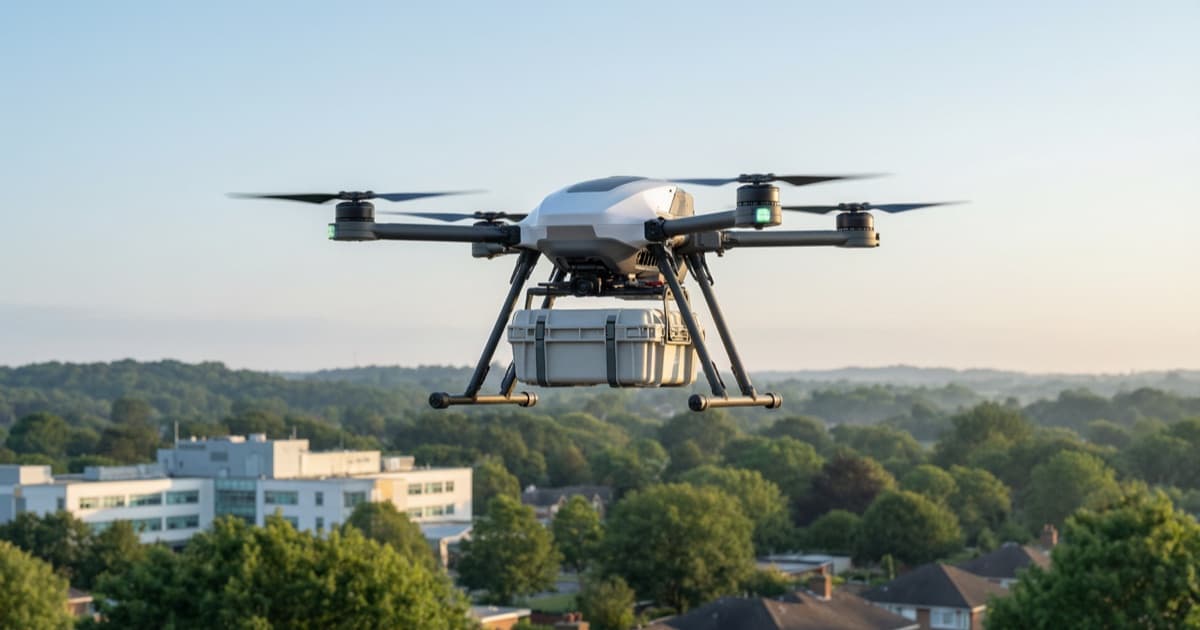
Infrastructure inspection is one of the fastest-growing applications for commercial drones. Inspecting bridges, power lines, wind turbines, pipelines, and other critical assets with drones instead of human inspectors dramatically reduces costs, improves safety, and generates higher-quality data. In 2026, the global market for infrastructure inspection drones exceeds $4.5 billion, growing at 25–30% annually.
This market analysis covers the state of drone infrastructure inspection in 2026: the business case, regulatory environment, leading platforms, market size by segment, competitive landscape, and actionable guidance for companies evaluating drone inspection programs.
The Business Case for Drone Infrastructure Inspection
Why Drones Are Transforming Infrastructure Inspection
Safety: The most compelling driver. Bridge inspectors routinely work at height over water or traffic, and power line inspectors face similar risks working near energized lines. Drones eliminate most of these hazards by keeping humans on the ground.
Cost: Drone inspection costs a fraction of traditional methods:
| Inspection Type | Traditional Method | Drone Method | Savings |
|---|---|---|---|
| Bridge inspection | $5,000–$20,000/inspection (scaffolding/rigging) | $500–$2,000/inspection | 70–90% |
| Power line (distribution) | $1,500–$3,000/mile (helicopter) | $200–$500/mile | 60–80% |
| Wind turbine blade | $3,000–$6,000/turbine (rope access) | $400–$800/turbine | 75–85% |
| Cell tower | $2,000–$5,000/tower (scaffolding) | $300–$700/tower | 80–85% |
Speed and Frequency: A bridge inspection that takes 2–3 days with traditional methods takes 2–4 hours with drones. This enables more frequent inspections and faster identification of emerging problems.
Data Quality: Drone-mounted cameras capture millimeter-resolution imagery of every surface. This creates a permanent, quantifiable record of asset condition, enabling comparison across time and detection of subtle deterioration patterns.
Market Size 2026
| Segment | Global Market Size (2026) | Growth Rate |
|---|---|---|
| Bridge inspection | $1.2B | 28% CAGR |
| Power line inspection | $1.4B | 22% CAGR |
| Wind turbine inspection | $0.8B | 25% CAGR |
| Pipeline inspection | $0.6B | 30% CAGR |
| Cell tower inspection | $0.4B | 20% CAGR |
| Other infrastructure | $0.7B | 25% CAGR |
| **Total** | **$5.1B** | **25% CAGR** |
Regulatory Environment: United States and Key Markets
United States — FAA Framework
The FAA's push to normalize Beyond Visual Line of Sight (BVLOS) operations — centered on the proposed Part 108 framework — has significantly expanded commercial drone infrastructure inspection:
- Part 107 operations: Standard commercial drone operations remain the baseline. Requires visual observer for operations beyond line of sight, but BVLOS waivers are now more accessible
- BVLOS operations: The Part 108 framework is designed to permit routine BVLOS operations for infrastructure inspection with proper detect-and-avoid technology. This is a major expansion enabling large-scale power line and pipeline inspections
- Remote ID: All drones must broadcast Remote ID. DJI and other major manufacturers comply
- Night operations: Permitted with proper lighting for emergency infrastructure inspection
- State and local restrictions: Preemption disputes ongoing, but federal framework generally governs
Key requirement: Operations beyond visual line of sight (BVLOS) for utility inspections now require either a BVLOS waiver or certification under the new Part 108 framework. Most large inspection companies are operating under BVLOS waivers as of early 2026.
European Union — EASA Framework
EASA's Specific category framework (2024–2025 implementation) has clarified requirements:
- STS (Standard Scenario): Pre-defined operational scenarios for routine flights, including limited BVLOS
- Light UAS Operator Certificate (LUC): Available for qualified operators
- National permits: Still required in some member states for certain operations
Other Key Markets
- United Kingdom: Post-Brexit UK CAA framework mirrors EASA closely. BVLOS operations permitted with operator approval
- Canada: Transport Canada BVLOS operations require Special Flight Operations Certificates (SFOCs). Process being streamlined
- Australia: CASA allows BVLOS with appropriate approvals. Growing market
- China: CAAC regulations permit commercial drone inspection. Large domestic market with DJI dominant
Leading Drone Platforms for Infrastructure Inspection
Multi-Rotor Drones (Close-Range Inspection)
DJI M350 RTK
The industry standard for close-range infrastructure inspection. Available worldwide, with extensive dealer and service network.
- Price: $7,000–$9,000 (airframe only)
- Payload: Zenmuse cameras, thermal sensors, LiDAR
- Flight time: 55 minutes
- IP rating: IP55
- Best for: Bridge inspection, cell tower inspection, close visual inspection
DJI Mavic 3 Enterprise
Compact, portable option for inspection of smaller assets and rapid deployment.
- Price: $3,500–$5,000
- Flight time: 45 minutes
- Camera: 4/3 CMOS, 56x hybrid zoom
- Best for: Quick inspections, smaller structures, mobile inspection teams
Skydio X2
American-made drone with excellent autonomous flight capabilities. Preferred by US government agencies.
- Price: $10,000–$13,000
- Flight time: 35 minutes
- 360° obstacle avoidance: Best in class
- Best for: Complex structures with limited flight corridors
Fixed-Wing Drones (Long-Range, BVLOS)
Wingtra One
VTOL (vertical take-off and landing) fixed-wing for mapping and linear infrastructure.
- Price: $30,000–$45,000
- Flight time: 60 minutes VTOL, 120 minutes fixed-wing cruise
- Best for: Mapping corridor infrastructure at high resolution
DJI Dock 2 (Drone-in-a-Box)
For permanent monitoring installations at infrastructure sites. Enables fully autonomous scheduled inspections.
- Price: $25,000–$35,000 (dock) + $7,000 (drone)
- Automated missions: Yes
- Best for: Critical infrastructure requiring frequent regular inspection
Software for Drone Infrastructure Inspection
Data capture is only half the solution. Infrastructure inspection software processes drone imagery into actionable reports:
Pix4D / Bentley ContextCapture
Photogrammetry and 3D modeling. Essential for creating digital twins of bridges, towers, and complex structures.
- Price: $3,000–$15,000/year (professional)
- Output: 3D models, orthomosaics, measurements
DJI Terra / 3D Survey
DJI's mapping and modeling software, integrated with DJI platforms.
- Price: Included with DJI Enterprise maintenance or $1,500–$5,000/year standalone
Flyability Inspector
Specialized for confined space and complex structure inspection. Creates 3D point clouds from indoor/under-bridge flights.
- Price: $3,000–$8,000/year
SkyFish M2 / Kiwi Inspect
AI-powered anomaly detection. Automatically identifies cracks, corrosion, vegetation encroachment, and other defects.
- Price: $2,000–$6,000/year
Delair.ai / Kespry
Enterprise platforms for large-scale infrastructure monitoring programs. Include flight planning, data processing, and asset management.
- Price: $5,000–$20,000/year depending on scale
Market Analysis: Segment Deep Dive
Bridge Inspection Drones
Market size: $1.2 billion globally (2026)
Key players: Commonwealth Institute, BridgeWise, state DOTs (public programs)
Dominant platforms: DJI M350, Skydio X2, DJI Mavic 3E
Dominant software: Pix4D, ContextCapture, custom DOT solutions
US regulatory context: The 2021 Infrastructure Investment and Jobs Act allocated $27 billion for bridge repair over 5 years. This has dramatically increased bridge inspection budgets and drone adoption.
Competitive landscape: Many smaller drone service companies compete in bridge inspection. Barriers to entry are relatively low — a $15,000–$25,000 drone setup plus inspection software enables entry. Competition is driving prices down for end customers.
Power Line Inspection
Market size: $1.4 billion globally (2026)
Key players: Utilities (internal programs), Sharper Shape, UIS (utility inspection services)
Dominant platforms: Fixed-wing BVLOS (senseFly, Wingtra), DJI M350 RTK with LiDAR
Dominant software: Proprietary utility platforms, Esri ArcGIS integration
BVLOS economics: The ability to inspect 100+ miles of power lines per day with BVLOS drones (vs. 10–20 miles with visual observers) is transforming the economics. Large utilities are building internal BVLOS programs.
LiDAR integration: Power line inspection increasingly uses LiDAR to model conductor sag, vegetation encroachment, and tower geometry. LiDAR-equipped drones (DJI L2) are standard for this application.
Wind Turbine Inspection
Market size: $0.8 billion globally (2026)
Key players: SkySpecs, Sky-futures, BladeRunner, Vestas internal programs
Dominant platforms: DJI M300 + zoom camera, tethered systems for nacelle inspection
Dominant software: SkySpecs Platform, custom blade analysis tools
Unique requirements: Wind turbine blade inspection requires high-resolution imagery to detect leading-edge erosion, lightning damage, and delamination. 200+ images per turbine. AI-based defect detection is standard.
Inspection frequency: Annual blade inspections are standard. High-value turbines may be inspected twice annually.
Competitive Landscape
Major Service Companies
| Company | Focus | Geography | Scale |
|---|---|---|---|
| Sharper Shape | Power line inspection | US, Europe | 50+ pilots |
| SkySpecs | Wind turbine blades | Global | 1M+ blade images |
| UIS (Hensel Phelps) | Utility inspection | US | Large fleet |
| SKYTRON | Infrastructure inspection | Germany | Large fleet |
| Cyberhawk | Oil, gas, power | UK, Middle East | Mid-size |
Drone Manufacturers' Role
DJI dominates hardware (70%+ market in enterprise inspection drones). However, the value is increasingly in software and service. DJI's role is similar to Apple's in smartphones — they provide the platform, while software and service companies capture the application value.
Pricing: Drone Infrastructure Inspection Programs
Entry-Level Program (Single Bridge/Asset Owner)
| Item | Cost |
|---|---|
| DJI Mavic 3E | $4,500 |
| Basic inspection software (Pix4D React) | $1,500/year |
| FAA Part 107 certification (self) | $0 (self-study) |
| Training (2-day course) | $1,500 |
| **Total initial investment** | **$6,000–$8,000** |
Professional Program (Utility or Large Infrastructure Owner)
| Item | Cost |
|---|---|
| 2x DJI M350 RTK | $16,000 |
| LiDAR payload (DJI L2) | $8,000 |
| Professional software suite | $15,000/year |
| BVLOS waiver preparation | $15,000–$25,000 |
| Staff (2 pilots + 1 data analyst) | $250,000/year |
| Fleet management software | $3,000/year |
| **Year 1 total** | **$307,000–$317,000** |
Drone Inspection Service Company
| Item | Cost |
|---|---|
| Fleet (5 DJI M350 RTK) | $40,000 |
| BVLOS-certified fleet (add sensors + waivers) | $100,000 |
| Data processing infrastructure | $30,000 |
| Software subscriptions | $50,000/year |
| Staff (5 pilots, 2 analysts, 1 manager) | $650,000/year |
| **Annual operating cost** | **$870,000** |
| **Breakeven (at $500/mile power line)** | **1,740 miles/year** |
ROI Analysis
Bridge Inspection ROI (State DOT)
A state DOT with 500 bridges, inspecting each annually:
| Cost Category | Traditional | Drone |
|---|---|---|
| Per inspection | $10,000 | $1,200 |
| Total annual (500 bridges) | $5,000,000 | $600,000 |
| **Annual savings** | — | **$4,400,000** |
On this illustrative model, a $150,000 program investment (2 drones + software + staff) would pay for itself within months — actual savings vary widely by state and asset mix.
Power Line Inspection ROI (Investor-Owned Utility)
A utility with 5,000 miles of transmission lines:
| Cost Category | Helicopter | Drone (BVLOS) |
|---|---|---|
| Per mile | $2,000 | $350 |
| Total annual inspection | $10,000,000 | $1,750,000 |
| **Annual savings** | — | **$8,250,000** |
BVLOS drone programs are generating ROI within the first year for most large utilities.
Pros and Cons of Drone Infrastructure Inspection
Advantages
- Safety: Eliminates inspector fall and electrocution hazards
- Cost: 60–90% cheaper than traditional methods per inspection
- Speed: 10–20x faster than manual inspection
- Data quality: Permanent, quantifiable record enabling trend analysis
- Frequency: Enables more frequent monitoring at lower cost
- Access: Can inspect areas inaccessible to humans (confined spaces, energized lines)
Disadvantages
- Weather dependency: Wind, rain, and extreme temperatures ground drones
- Battery limitations: 30–60 minute flight times limit single-mission coverage
- BVLOS complexity: Beyond visual line of sight operations require regulatory approvals
- Data processing bottleneck: Generating actionable reports from thousands of images takes time
- Skilled operator requirement: Effective inspection requires both piloting skill and domain expertise
- Regulatory uncertainty: Regulations vary by jurisdiction and are evolving
Frequently Asked Questions
How accurate is drone-based bridge inspection compared to traditional methods?
Drone inspection can achieve millimeter-level resolution on concrete and steel surfaces from close range. Studies by the US FHWA and academic researchers have found that drone inspection detects 95–100% of visible defects found by traditional inspection methods, with superior documentation quality.
What is BVLOS and why does it matter for infrastructure inspection?
BVLOS stands for Beyond Visual Line of Sight. Traditional drone operations require the pilot to maintain visual contact with the drone. BVLOS operations allow drones to fly beyond the pilot's direct line of sight, which is essential for inspecting long linear assets like power lines and pipelines without a team of visual observers.
How do I get BVLOS approval for utility inspection?
In the US, you need to apply for a BVLOS waiver from the FAA under Part 107. This requires a detailed operational safety case including detect-and-avoid technology, command and control link redundancy, and operational procedures. Many companies hire aviation regulatory consultants to prepare BVLOS waiver applications. The FAA's proposed Part 108 framework is expected to streamline this process for qualified operations.
What is the typical ROI timeline for a drone inspection program?
Most infrastructure owners see positive ROI within 6–18 months of launching a drone inspection program, depending on the scale of their asset base and the alternative cost of traditional inspection methods.
How is AI being used in drone infrastructure inspection?
AI is used for automated defect detection — identifying cracks, corrosion, vegetation growth, and other anomalies in drone imagery automatically, without human review of every image. This significantly reduces the time and cost of data processing. Leading platforms claim 85–95% accuracy in defect detection compared to human expert analysis.
What happens if a drone loses power during an inspection?
Modern inspection drones have return-to-home (RTH) functions that automatically activate on signal loss or low battery. The drone returns to its launch point. Drones used for critical infrastructure inspection typically have redundant batteries and fail-safe flight termination procedures.
Conclusion
Drone infrastructure inspection is no longer experimental — it is the standard of care for bridge, power line, and wind turbine inspection in most developed markets. The economics are compelling: 60–90% cost savings versus traditional methods, with superior data quality and dramatically improved safety outcomes.
For utilities and infrastructure owners, the question is no longer whether to adopt drone inspection, but how quickly to build internal capability versus using service providers. For drone service companies, the opportunity is in specialized expertise, BVLOS operations at scale, and AI-driven data analysis.