# Cold Storage Warehouse Robots: Automation for Freezer and Refrigerated Facilities
Cold storage automation is one of the fastest-growing segments in warehouse robotics in 2026 — and for obvious reasons. Frozen food warehouses operating at -18°C to -28°C are among the most miserable environments for human workers, with extreme cold, moisture, and repetitive heavy lifting creating high injury rates, high turnover, and chronic staffing shortages.
The robotics industry has responded. Specialized cold-rated AMRs, AS/RS (automated storage and retrieval systems), and robotic palletizers are now available from a growing number of manufacturers, with price and performance data that make the business case compelling for most mid-to-large cold chain operators.
The Cold Storage Problem
Cold storage warehouses handle three main temperature zones:
| Zone | Temperature | Products |
|---|---|---|
| Ambient | 15-25°C | Non-perishables, dry goods |
| Chilled/refrigerated | 0-10°C | Fresh produce, dairy, beverages |
| Frozen | -18°C to -28°C | Ice cream, frozen meals, frozen meat |
| Deep freeze | -30°C to -40°C | Long-term frozen storage |
Robots face different engineering challenges in each zone. The frozen zone (-18 to -28°C) is the most demanding: standard industrial robots aren't rated for these temperatures, lubricants can freeze, batteries discharge faster, and condensation creates electrical risks as equipment moves between zones.
Why Human Workers Struggle in Cold Storage
Before looking at automation, understanding the human problem context matters for the ROI calculation:
- Turnover rates in frozen warehouses average 30-60% annually — 3-5x the rate in ambient warehouses
- Workers are limited to 20-45 minute shifts in deep freeze environments before mandatory warm-up breaks
- Productivity in extreme cold is 30-40% lower than in ambient environments
- Injury rates are 2x higher than ambient warehouses (slips, strains, cold-related illness)
- Labor premiums for cold storage workers are $3-8/hour above ambient equivalents
This combination — high turnover, limited shift duration, lower productivity, premium wages — makes the ROI case for cold storage robotics exceptionally strong.
Types of Cold Storage Robots
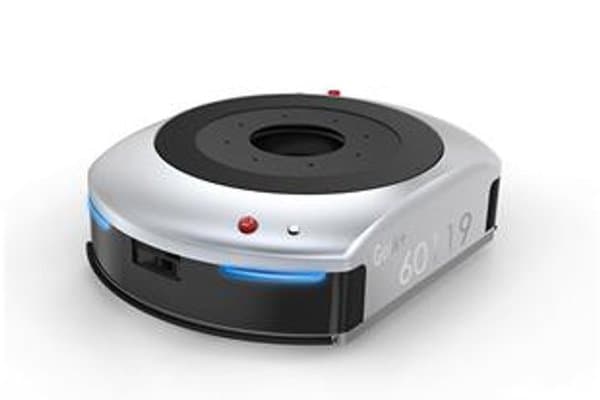
Cold-Rated Autonomous Mobile Robots (AMRs)
AMRs that operate in refrigerated and frozen environments require:
- Low-temperature rated batteries (lithium iron phosphate cells perform best at low temperature vs. standard lithium-ion)
- Sealed electronics to prevent condensation damage during zone transitions
- Cold-grade lubricants that remain fluid at operating temperature
- Heated battery compartments in some designs to maintain optimal discharge rates
Leading manufacturers (2026):
- Geek+ (Cold-rated versions of R-series)
- Quicktron (cold storage variants)
- 6 River Systems (Chuck, cold-rated)
- Locus Robotics (cold storage configuration)
- OTTO Motors (heavy payload, cold-rated OTTO 1500)
Price range: $45,000-120,000 per AMR unit in cold-rated configuration vs. $35,000-80,000 for ambient equivalents (~20-40% premium for cold rating)
Cold Storage AS/RS (Automated Storage & Retrieval)
AS/RS systems — automated vertical carousels, shuttle systems, and mini-load cranes — are purpose-built for cold storage because the entire system operates at a constant temperature, eliminating zone-transition condensation issues.
System types:
| System | Temperature rating | Throughput | Best for |
|---|---|---|---|
| Pallet AS/RS crane | -28°C | 40-120 pallets/hour | Full pallet storage |
| Shuttle/miniload AS/RS | -28°C | 200-600 totes/hour | Piece-pick operations |
| Vertical lift module (VLM) | -18°C typically | 50-150 picks/hour | Dense storage, limited floor space |
| Goods-to-person (GTP) in freezer | -25°C | 300-800 items/hour | High-volume piece picking |
Price range: $800,000-5,000,000+ for a complete AS/RS installation, depending on scale. This is large capital, but the per-unit storage and handling cost over 10-15 years typically beats manual operation significantly.
Robotic Palletizers (Cold-Rated)
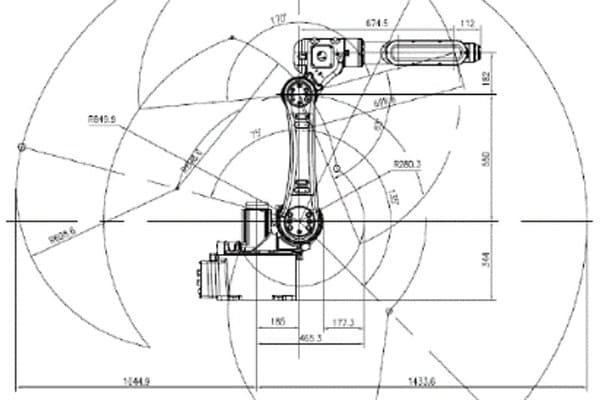
Palletizing — stacking cases onto pallets — is physically demanding, repetitive work that's well-suited to automation regardless of temperature. Cold-rated palletizers are available from:
- FANUC (M-410 series, cold-rated options)
- Yaskawa Motoman (MPL series, cold-ready)
- Columbia/Okura (specialized food-grade palletizers)
- Kawasaki (ZD series)
Price range: $120,000-350,000 for a cold-rated palletizing cell vs. $80,000-250,000 for ambient.
ROI Model for Cold Storage Automation
Sample scenario: frozen food DC, 50,000 sq ft, 3 shifts
Current labor:
- 30 pickers × $26/hour × 2,080 hours × 1.35 burden rate = $2.19M/year
- 40% annual turnover × $5,000 recruiting/training cost × 12 workers/year = $60,000/year
- Overtime premium (due to turnover gaps) = $180,000/year
- Total annual cost: ~$2.43M
With 15 AMRs replacing 18 manual pickers:
- AMR fleet: 15 × $70,000 = $1.05M capex
- Annual maintenance: $90,000
- Remaining labor (oversight + non-automatable tasks): 12 workers × $52,000 = $624,000
- Total annual cost: ~$714,000
Annual savings: $1.716M. Payback period: ~7 months.
This is an unusually fast payback for robotics investment, driven by the high labor cost and turnover in frozen environments.
Key Considerations Before Buying
Temperature cycling is your enemy. AS/RS and fixed automation avoid it by staying in one zone. AMRs face the problem directly — every trip from a freezer zone to a warmer staging area creates condensation risk on electronics and optical sensors. Demand proof of real-world operation records from your AMR vendor, not just laboratory temperature ratings.
Charging infrastructure in cold environments. AMR batteries charge more slowly at low temperature. If your AMRs are charging inside the freezer, you'll need larger battery capacity or more frequent charging cycles. Most cold-storage AMR deployments use heated charging stations at the perimeter of the cold zone.
Food-grade certification. For food cold storage, robots operating in proximity to product need to meet FDA Food Safety Modernization Act (FSMA) and, in many cases, USDA inspection requirements. Verify that your robot manufacturer provides food-grade materials documentation and that the robot design eliminates crevices where contamination can accumulate.
Worker safety in mixed environments. If humans and AMRs share a cold storage environment, ISO/TS 15066 (cobot safety) and ANSI/RIA R15.08 (AMR safety) standards apply. Cold environments reduce human reaction speed — safety speed limits for AMRs near people may need to be set lower than in ambient environments.
Frequently Asked Questions
Q: What is the coldest temperature a robot can operate in?
Specialized cold storage robots from Jungheinrich, Still, and a few others are rated to -30°C. Standard industrial cobots are typically rated to 0°C. Modifying a standard robot for cold operation voids warranties and typically produces poor results — always specify purpose-designed or factory-certified cold-rated equipment.
Q: How do I prevent condensation damage when robots move between temperature zones?
Three approaches: (1) Keep robots in one zone permanently, (2) Use sealed electronics enclosures with desiccant or nitrogen purge, (3) Allow a temperature transition period — slow the AMR at the zone boundary and give electronics time to warm before condensation forms. Most serious AMR deployments use a combination of (2) and (3).
Q: What is the battery life of a cold-rated AMR?
At -20°C, lithium-ion batteries typically deliver 60-70% of their ambient-temperature capacity. Lithium iron phosphate (LFP) chemistry performs better in cold — retaining around 75-80% of ambient capacity at -20°C. Plan your shift and charging schedules accordingly — you may need 20-30% more AMUs than the vendor's ambient specifications suggest.
Q: Can I use cobots in a cold storage picking application?
Yes, but verify cold rating carefully. Universal Robots UR series is rated to 0°C — usable in refrigerated environments but not in frozen zones. Fanuc CR series has similar limitations. For deep freeze applications, purpose-built cold automation is necessary.