The agricultural drone spraying market has matured enough in 2026 that real operational data — not marketing projections — is available for comparative analysis. Farmers in the US, China, Southeast Asia, and Brazil have accumulated thousands of hours of drone spraying data across rice, corn, wheat, soybeans, cotton, and orchard crops. The picture that emerges is more nuanced than drone advocates typically present.
Drone spraying is genuinely superior in specific scenarios. In others, it's more expensive and less effective than alternatives. Knowing which is which before you invest $15,000–$40,000 in hardware is the entire point of this guide.
Cost Structure Comparison
Traditional Ground Sprayer (Self-Propelled, 1,200 gal)
- Equipment cost: $350,000–$600,000
- Annual depreciation: $35,000–$60,000
- Operating cost per acre: $4–$8 (fuel, chemicals, labor)
- Effective coverage: 400–600 acres/day in open terrain
- Limitations: Cannot operate in wet soil conditions; damages crops in tall growth stages; difficult terrain access
Manned Aerial Application (Contracted)
- Cost per acre: $8–$18 depending on region and product
- No capital investment
- High speed coverage (1,000+ acres/day)
- Regulatory requirements: FAA Part 137 license
- Limitations: Minimum coverage areas typically 50+ acres; buffer zones required near water and populated areas; less precision than drones
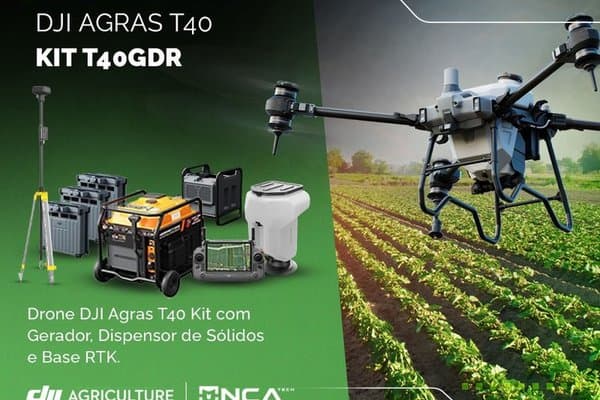
Agricultural Drone (DJI AGRAS T50, owner-operated)
- Equipment cost: $17,999 (DJI MSRP, one unit)
- Battery and charger kit: $3,000–$5,000
- Annual maintenance: $1,500–$3,000
- Effective coverage: 40–60 acres/day (single drone, experienced operator)
- Operating cost per acre: $2–$5 at scale (excluding depreciation)
- Including depreciation (5-year): $6–$12 per acre
Agricultural Drone (DJI AGRAS T40, contracted service)
- Market rate in the US: $12–$25 per acre
- Market rate in China: ¥15–30 per mu (~$2–$4 per acre)
- No capital investment
- Flexible scheduling
When Drone Spraying Wins
Terrain inaccessibility: Hillside vineyards, terraced rice paddies, mountainous orchard rows — ground equipment literally cannot access these areas. Drones are the only economically viable mechanical option outside hand-spraying. The ROI calculation for orchard operators on hillside terrain is often compelling within 1–2 seasons.
Late-season tall crops: Ground sprayers compact soil and damage plants when crops are above knee height. Drones spray over the canopy without contact, enabling late-season applications that would damage a ground rig entry. For corn fungicide applications at the VT/R1 growth stage, drone spraying is the primary alternative to aerial contract spraying.
Precision buffer zones: Drone GPS precision (±0.1m with RTK) enables spraying to property lines and creek buffers that manned aircraft cannot safely achieve. For operations with complex field geometries, the precision advantage over contracted aerial is substantial.
Water body compliance: The combination of precision and controlled droplet size makes drone spraying the preferred method for applications near wetlands or water features where buffer zone requirements are strict.
Small plot operations: For operations under 200 acres, the contracted aerial minimum charge often makes cost-per-acre uncompetitive. An owner-operated drone covering 200 acres over 4 days beats contracted aerial economics on small farms.
When Traditional Methods Win
Large-scale row crops on flat terrain: For 5,000+ acre corn/soybean operations on flat Midwest terrain, a self-propelled ground sprayer at $5/acre operating cost beats drone economics by a significant margin. The drone's terrain advantage doesn't apply; the ground rig's coverage rate advantage does.
Time-critical applications: A drone covering 50 acres/day cannot match a ground rig covering 500 acres/day when an unexpected pest pressure requires rapid field-wide coverage. Speed matters in integrated pest management.
High-volume applications: Drone tank sizes (currently up to 100 liters for the DJI AGRAS T100) limit application rates. Fungicide applications requiring 10+ gallons per acre are impractical on drones; ground equipment handles these easily.
DJI AGRAS 2026 Model Comparison
| Model | Tank Size | Coverage/Hour | RTK GPS | Best For | Price |
|---|---|---|---|---|---|
| AGRAS T10 | 10L | 10 acres | Optional | Small farms, demos | $12,000–$15,000 |
| AGRAS T25 | 25L | 20 acres | Standard | Mid-size farms | $18,000–$22,000 |
| AGRAS T50 | 50L | 40 acres | Standard | Commercial operations | $17,999–$22,000 |
| AGRAS T40 | 40L | 32 acres | Standard | Multi-crop operations | $30,000–$34,000 |
| AGRAS T100 | 100L | 60 acres | Standard | Large commercial | $40,000+ |
*Coverage rates are manufacturer estimates under ideal conditions. Real-world coverage is typically 60–80% of these figures.*
ROI Calculation: 500-Acre Operation, Owner-Operated Drone
Annual spray applications: 3 per season (herbicide, fungicide, insecticide)
Total acres to spray per year: 1,500 acres (500 × 3)
Without drone (contracted aerial at $15/acre): $22,500/year
With DJI AGRAS T50 (purchased):
- Hardware cost amortized over 5 years: $4,400/year
- Maintenance: $2,000/year
- Battery replacement (annual): $1,000/year
- Operator labor (self-operated): No incremental cost
- Chemical savings (10–15% reduction from precision): -$1,500/year
- Annual total: $5,900/year
Annual savings: $16,600
Payback period: ~1.5 years
This is the scenario where drone ownership is a compelling investment. Consistent application schedules, moderate acreage, accessible terrain, and owner-operator capability combine for an excellent return.
For operations that can't self-operate or have intermittent spray needs, contracted drone services at $12–$20/acre are cost-competitive with contracted aerial and offer precision advantages.
For more agricultural drone options, visit the agricultural drone category.
Regulatory Considerations (US)
Commercial drone spraying in the US requires FAA Part 107 certification. Each state also has agricultural pesticide application licensing requirements — contact your state department of agriculture for specific requirements. DJI AGRAS drones are currently subject to restrictions in some federal agency procurement contexts due to the Countering CCP Drones Act; review your state and local regulatory environment before purchasing.
Frequently Asked Questions
Q: How many acres can one drone operator cover per day?
With a DJI AGRAS T50 and efficient field logistics, 40–60 acres is achievable for an experienced operator. With a swarm setup (2–3 drones, one operator with automated charging stations), 80–120 acres per day is documented in Chinese commercial operations.
Q: What crops are best suited for drone spraying?
Orchards, vineyards, rice, and specialty crops with terrain or access challenges are the strongest candidates. Row crops on flat terrain benefit less from drone economics unless late-season applications or precision requirements are a factor.
Q: Can drones replace aerial application services completely?
Not for large-scale row crop operations. Speed and volume capacity still favor manned aerial application for rapid large-area coverage. Drones complement rather than replace contracted aerial in most large farming contexts.
Q: What's the shelf life of an agricultural drone?
DJI rates the AGRAS series for 3,000 flight hours. At typical commercial utilization (200 hours/year), this represents a 15-year mechanical lifespan — though most operators refresh hardware every 5–7 years to access performance improvements.