Outdoor Patrol Security Patrol Robot — Solutions & Suppliers from China
Outdoor security patrol robots are designed to operate autonomously in open environments including corporate campuses, industrial parks, and residential communities. These robots navigate roads, sidewalks, and pathways while using thermal cameras, LiDAR, and AI-powered analytics to detect unauthorized intrusions, suspicious behavior, and safety hazards.
Chinese manufacturers offer ruggedized outdoor patrol robots with IP65/IP66 weather protection, all-terrain mobility, and 8-12 hour battery life for extended patrol shifts. Many models feature two-way intercoms for remote security response and license plate recognition for vehicle access control.
The cost savings are significant — a single patrol robot can cover the territory of 2-3 security guards while providing consistent, round-the-clock surveillance with permanent digital records of every patrol.
Outdoor Patrol Security Patrol Robot Products
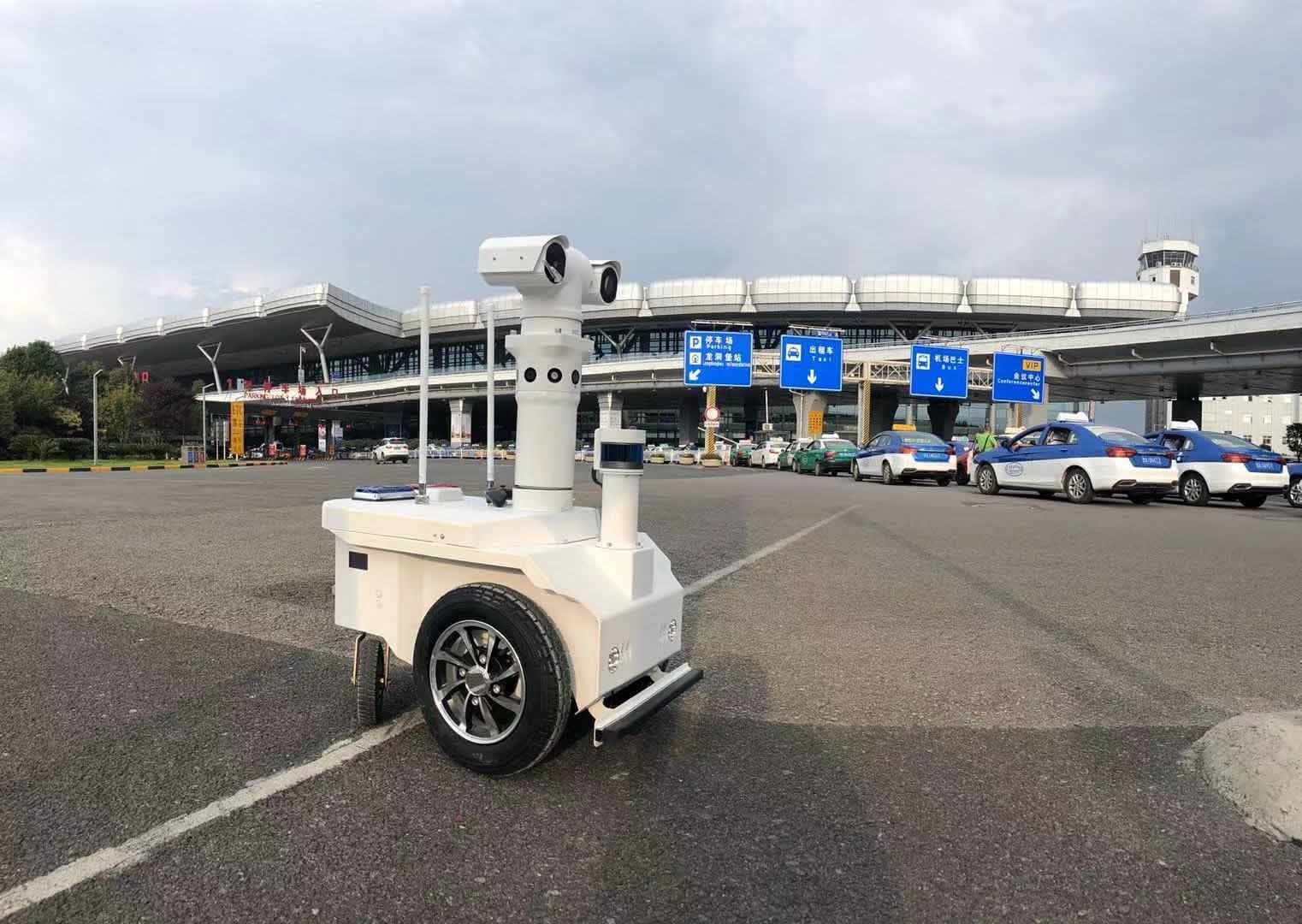
Gosuncn Patrol Robot SR5
Gosuncn Robot
$25,000 - $45,000
weight: 180kgspeed: 1.2 m/sbattery: 8 hours

Topsky Sentinel S200
Topsky (Shenzhen Topvision)
$18,000 - $32,000
weight: 130kgspeed: 1.2 m/sbattery: 7 hours
Siasun Patrol Bot SR-20
Siasun Robot & Automation
$30,000 - $55,000
weight: 200kgspeed: 1.0 m/sbattery: 8 hours
Frequently Asked Questions
How much does a security patrol robot cost?
Security patrol robot prices from Chinese manufacturers range from $15,000 for basic indoor models to $55,000+ for premium outdoor platforms with advanced sensor suites. Indoor patrol robots like the AIMBOT Patrol X3 typically cost $15,000-$28,000, offering SLAM navigation, face recognition, and basic environmental monitoring. Mid-range outdoor patrol robots from Gosuncn and Dalu Robot run $20,000-$45,000 with thermal imaging, license plate recognition, and weatherproof construction. Premium models like the Siasun SR-20, designed for critical infrastructure, cost $30,000-$55,000 and include features like gas detection and drone integration. Chinese manufacturers offer 30-50% savings compared to Western alternatives like Knightscope.
What features should I look for in a security patrol robot?
Essential features for security patrol robots include autonomous navigation (SLAM for indoor, GPS+RTK for outdoor), multi-sensor surveillance (HD visible + thermal cameras), AI-powered detection (intrusion, face recognition, behavior analysis), and reliable connectivity (4G/5G for real-time video streaming). For outdoor deployment, IP65 or higher weather protection is critical, along with all-terrain mobility and operating temperature range of at least -20°C to 50°C. Battery life of 6-10 hours with autonomous recharging ensures continuous 24/7 operation. Additional valuable features include two-way voice intercom, emergency alert systems, license plate recognition, and integration APIs for connecting to existing security management platforms. Brands like Gosuncn and Topsky offer comprehensive feature sets at competitive price points.
Can security patrol robots replace human security guards?
Security patrol robots are best positioned as force multipliers rather than complete replacements for human guards. A single patrol robot operating 24/7 can cover the equivalent of 3-4 guard shifts at roughly 30-50% of the annual cost, particularly for routine perimeter patrol and surveillance tasks. Robots excel at consistent, tireless monitoring — they never get distracted, tired, or skip checkpoints — and their thermal cameras and AI analytics detect threats that human eyes would miss at night. However, human guards remain essential for complex judgment calls, physical intervention, customer interaction, and emergency response. The optimal approach used by most Chinese deployments combines 1-2 patrol robots with a reduced human guard team, typically cutting security staffing costs by 40-60% while improving coverage and detection rates.
How long does it take to deploy a security patrol robot?
Deployment timelines for security patrol robots typically range from 1-4 weeks depending on the environment complexity. Indoor robots using SLAM navigation require 2-5 days for initial mapping, route planning, and system integration. Outdoor robots need 1-2 weeks for GPS waypoint programming, terrain assessment, and charging station installation. Integration with existing security management systems (VMS, access control, alarm panels) adds another 1-2 weeks. Most Chinese manufacturers like Gosuncn and Youibot provide on-site installation teams and remote configuration support. For multi-robot fleet deployments, plan for 3-6 weeks including fleet coordination setup, communication infrastructure, and staff training. Cloud-based management platforms from manufacturers can be operational within 24 hours of robot activation.
What is the ROI of investing in a security patrol robot?
Security patrol robots typically deliver ROI within 12-18 months based on guard labor savings alone. A mid-range outdoor patrol robot costing $25,000-$40,000 replaces approximately $30,000-$50,000 in annual guard salary costs (based on 24/7 coverage requiring 3-4 shifts). Beyond direct labor savings, robots reduce security incident losses through earlier threat detection — AI-powered thermal cameras and behavior analysis catch intrusions 3-5x faster than human patrols. Maintenance costs run approximately $2,000-$4,000 annually (battery replacement, sensor calibration, software updates). Insurance companies in some markets offer premium reductions of 5-15% for facilities using robotic patrol systems. Chinese manufacturers offer leasing options starting at $800-$1,500/month, allowing businesses to achieve positive ROI from month one without large upfront capital expenditure.
Are security patrol robots suitable for outdoor use in harsh weather?
Yes, outdoor security patrol robots from leading Chinese manufacturers are engineered for harsh weather operation. Models like the Gosuncn SR5 and Siasun SR-20 carry IP65 or IP66 ratings, meaning they are fully dust-tight and protected against heavy rain and water jets. Operating temperature ranges typically span -20°C to 55°C, with some specialized models rated to -30°C for northern regions. All-terrain chassis with large wheels or track systems handle wet surfaces, snow, gravel, and mild slopes up to 15-20 degrees. Key weather-resistant features include heated camera housings to prevent lens fogging, waterproof connector systems, and corrosion-resistant body materials. However, extreme conditions like typhoons, heavy snow accumulation over 15cm, or flooding may require temporary robot recall. Battery performance decreases by 15-25% in extreme cold, so shorter patrol routes should be planned for winter operation.
How do security patrol robots connect with existing security systems?
Modern security patrol robots integrate with existing security infrastructure through standardized protocols and APIs. Video feeds stream to existing Video Management Systems (VMS) via RTSP/ONVIF protocols, allowing operators to view robot cameras alongside fixed CCTV. Alarm events push to security operations centers through MQTT, HTTP webhooks, or direct integration with platforms like Milestone, Hikvision, and Dahua VMS. Most Chinese manufacturers provide RESTful APIs and SDKs for custom integration with access control systems, building management systems (BMS), and enterprise security platforms. Robot patrol data — including GPS tracks, incident logs, and captured images — syncs to cloud dashboards accessible via web browsers and mobile apps. Gosuncn and Youibot both offer pre-built integrations with major Chinese security platforms, while also supporting international standards for global deployments.
What is the cheapest security patrol robot available from China?
The most affordable Chinese security patrol robots start at approximately $12,000-$15,000 for basic indoor models from manufacturers like Youibot (AIMBOT) and smaller Shenzhen-based companies. These entry-level robots include SLAM navigation, HD cameras, and basic intrusion detection but lack thermal imaging and outdoor weatherproofing. For outdoor patrol, expect minimum prices of $18,000-$22,000 from brands like Dalu Robot and Topsky.
Are there leasing or rental options for patrol robots?
Yes, several Chinese manufacturers and distributors offer Robot-as-a-Service (RaaS) leasing models. Monthly lease rates typically range from $800-$2,000 depending on the model and contract length (12-36 months). Gosuncn and Youibot both offer leasing programs that include maintenance, software updates, and technical support. Leasing eliminates the upfront capital expenditure and allows businesses to test robotic security before committing to purchase.
What ongoing costs should I budget for after purchasing?
Annual operating costs for a security patrol robot typically run $3,000-$8,000. This includes battery replacement every 2-3 years ($1,500-$3,000), software licensing and updates ($2,000-$5,000/year), routine maintenance ($500-$1,500/year), and connectivity costs ($360-$1,200/year for 4G/5G data). Electricity costs for charging are minimal at $200-$400/year. Most manufacturers offer annual maintenance contracts that bundle these services at a discount.
Can security patrol robots replace human guards?
They complement rather than fully replace human guards. One robot covers the same patrol area as 2-3 guards with more consistent coverage. Most facilities use robots for routine patrol while keeping human guards for response and judgment-based situations. ROI is typically 12-18 months.
How far can security patrol robots operate from their base?
Most models have a patrol range of 1-5 km from their charging station, covering areas of 10,000 to 50,000 square meters. Battery life is 6-12 hours depending on speed and sensor usage. Autonomous charging stations allow 24/7 operation with 20-30 minute charging breaks.
Do security robots work at night?
Yes. All models in our ranking include infrared and/or thermal cameras for night operation. Thermal cameras detect human-sized heat signatures at 50-200 meters in complete darkness. Some models include spotlight options for active illumination when needed.
How do security robots handle intruders?
Robots detect and alert rather than physically intervene. When detecting unauthorized persons, they activate sirens and lights, stream live video to the security center, and track the intruder's movement. Human security personnel then respond based on the robot's real-time intelligence.
Explore More
Get a Free Quote
Fill out the form below and we'll connect you with verified manufacturers within 24 hours.