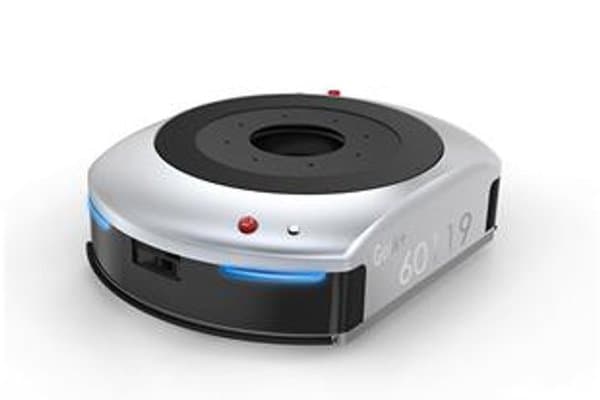
Warehouse automation has become the defining competitive advantage in logistics, e-commerce, and manufacturing. In 2026, the global warehouse automation market is projected to exceed $30 billion, driven by labor shortages, rising customer expectations for same-day delivery, and rapidly maturing robotics technology from Chinese manufacturers that has made automation accessible to operations of every size.
This comprehensive guide covers every aspect of warehouse automation — from the types of robots available and leading manufacturers to implementation planning, cost analysis, and ROI calculations.
What Is Warehouse Automation?
Warehouse automation refers to the use of robots, software, and integrated systems to perform warehouse tasks with minimal human intervention. This includes goods movement, order picking, sorting, packing, palletizing, and inventory management.
Modern warehouse automation goes beyond simple conveyor belts. Today's systems use artificial intelligence, computer vision, and fleet management software to coordinate dozens or hundreds of robots working simultaneously in the same space.
Key Benefits of Warehouse Automation
- Labor cost reduction: 40-70% fewer workers needed for picking and transport tasks
- Throughput increase: 2-4x higher order processing rates
- Accuracy improvement: Error rates drop from 1-3% (manual) to under 0.1%
- Space utilization: Dense storage systems increase capacity by 80-130%
- 24/7 operation: Robots work around the clock with only charging breaks
- Scalability: Add more robots during peak seasons, scale down in slow periods
Types of Warehouse Robots
Warehouse automation encompasses several distinct robot categories, each designed for specific tasks within the fulfillment workflow.
1. Autonomous Mobile Robots (AMRs)
AMRs are the most versatile warehouse robots. They navigate dynamically using LiDAR, cameras, and AI-powered path planning. Unlike AGVs, AMRs can reroute around obstacles, people, and other robots in real time.
Common applications:
- Goods-to-person picking (robot brings shelves to workers)
- Tote and bin transport between zones
- Collaborative picking (robot follows picker, carries items)
- Cross-docking and staging area transport
Price range: $15,000 - $40,000 per unit (FOB China)
2. Automated Guided Vehicles (AGVs)
AGVs follow predetermined paths using floor markers, magnetic strips, or embedded wires. They are simpler and more affordable than AMRs but lack the flexibility to adapt to changing environments.
Common applications:
- Pallet transport in structured environments
- Line-side delivery in manufacturing
- Heavy load movement (up to 10+ tons)
- Point-to-point repetitive transport
Price range: $8,000 - $25,000 per unit (FOB China)
3. Robotic Arms for Warehouse Tasks
Articulated robotic arms handle picking, packing, palletizing, and depalletizing. Modern warehouse arms use AI-powered vision systems to identify and grasp thousands of different SKUs.
Common applications:
- Piece picking from bins or totes
- Case packing and box building
- Palletizing finished orders
- Depalletizing incoming goods
Price range: $20,000 - $100,000 per unit (FOB China)
4. Sorting Systems
Automated sorting systems use fleets of small robots or mechanical sorters to route packages to destination-specific chutes or bins. They are essential in e-commerce fulfillment and parcel logistics.
Common applications:
- Parcel sorting by destination zone
- Order consolidation from multiple pick zones
- Returns processing
- Last-mile delivery hub sorting
Price range: $200,000 - $2,000,000 for complete systems
5. Automated Storage and Retrieval Systems (AS/RS)
AS/RS systems use cube-based storage with robots operating on top of or within dense grid structures. They maximize storage density and enable extremely fast retrieval.
Price range: $500,000 - $5,000,000+ depending on capacity
Leading Chinese Warehouse Robot Manufacturers
China has become the global leader in warehouse robotics, with several manufacturers now deploying systems in 30+ countries.
Geek+
- Founded: 2015 (Beijing)
- Specialty: Goods-to-person AMRs, sorting robots
- Global deployments: 30+ countries, 10,000+ robots deployed
- Key products: P-series picking robots, M-series heavy-load AMRs, S-series sorting robots
- Notable clients: Nike, Decathlon, Walmart (via partners)
Hikrobot
- Founded: 2016 (Hangzhou, Hikvision subsidiary)
- Specialty: AMRs, vision-guided mobile robots
- Key advantage: Leverages Hikvision's world-leading computer vision technology
- Key products: F-series AMRs, latent mobile robots, forklift AGVs
- Price positioning: Typically 10-20% lower than Geek+
Quicktron
- Founded: 2014 (Shanghai)
- Specialty: AMR-based goods-to-person systems
- Backed by: Alibaba Group
- Key advantage: Battle-tested in Alibaba's massive logistics network during Singles' Day
Mushiny
- Founded: 2015 (Shenzhen)
- Specialty: Intelligent warehouse robotics
- Key products: Goods-to-person AMRs, sorting systems
- Notable: Strong presence in Southeast Asia and Middle East markets
Chinese vs Western Manufacturers: Comparison
| Feature | Chinese Manufacturers | Western Manufacturers |
|---|---|---|
| **Representative brands** | Geek+, Hikrobot, Quicktron, Mushiny | Amazon Robotics (Kiva), Locus Robotics, 6 River Systems, Fetch |
| **Price range (AMR)** | $15,000 - $30,000 | $25,000 - $50,000 |
| **Cost savings** | 40-60% lower | Baseline |
| **Technology maturity** | Comparable; some lead in sorting | Established; strong in software |
| **Global support** | Growing; offices in EU, US, Japan | Established global networks |
| **Lead time** | 6-12 weeks | 8-16 weeks |
| **Customization** | Highly flexible | Less flexible, standardized |
| **Software ecosystem** | Rapidly improving | More mature integrations |
| **Annual deployments** | 50,000+ units globally | 30,000+ units globally |
Warehouse Automation Cost Analysis
The total cost of warehouse automation depends on the scale of deployment, types of robots, and infrastructure requirements.
Cost Breakdown by Deployment Scale
| Scale | Warehouse Size | Robot Count | Total Investment | Annual Operating Cost |
|---|---|---|---|---|
| **Small** | 2,000 - 5,000 sqm | 5-15 robots | $150,000 - $500,000 | $30,000 - $60,000 |
| **Medium** | 5,000 - 20,000 sqm | 15-50 robots | $500,000 - $1,500,000 | $60,000 - $150,000 |
| **Large** | 20,000 - 50,000 sqm | 50-200 robots | $1,500,000 - $5,000,000 | $150,000 - $400,000 |
| **Mega** | 50,000+ sqm | 200+ robots | $5,000,000+ | $400,000+ |
Where the Money Goes
- Robots (hardware): 40-50% of total investment
- Software (WMS/WCS/RMS): 15-20%
- Infrastructure (shelving, charging, network): 15-20%
- Installation and commissioning: 10-15%
- Training and integration: 5-10%
Hidden Costs to Budget For
- Floor preparation (flatness requirements for AMRs)
- Network infrastructure (Wi-Fi 6 coverage throughout warehouse)
- Safety systems (emergency stops, fencing for high-speed zones)
- Spare parts inventory (budget 5-10% of hardware cost annually)
- Software licensing fees (some manufacturers charge annual fees)
ROI Calculator: Warehouse Automation
Use this framework to estimate your return on investment.
Step 1: Calculate Current Labor Costs
| Item | Value |
|---|---|
| Number of warehouse workers | ___ |
| Average monthly salary (fully loaded) | $___ |
| Annual labor cost | Workers x Salary x 12 |
Step 2: Estimate Post-Automation Labor
Typical labor reduction percentages:
- Goods-to-person AMR system: 50-70% reduction in pickers
- Sorting robot system: 60-80% reduction in sorters
- Palletizing robots: 80-90% reduction in palletizers
- Mixed automation: 40-60% overall reduction
Step 3: Calculate Payback Period
| Metric | Small Deployment | Medium Deployment | Large Deployment |
|---|---|---|---|
| Investment | $300,000 | $1,000,000 | $3,000,000 |
| Annual labor savings | $300,000 - $500,000 | $800,000 - $1,200,000 | $2,000,000 - $3,500,000 |
| Throughput gain value | $50,000 - $100,000 | $200,000 - $400,000 | $500,000 - $1,000,000 |
| Error reduction savings | $20,000 - $40,000 | $50,000 - $100,000 | $100,000 - $250,000 |
| **Payback period** | **6-10 months** | **8-12 months** | **10-18 months** |
Implementation Guide: From Planning to Go-Live
A structured approach to warehouse automation ensures smooth deployment and faster ROI.
Phase 1: Assessment and Planning (4-6 weeks)
- Analyze current operations — Map workflows, measure throughput, identify bottlenecks
- Define automation goals — Set specific targets for labor reduction, throughput, and accuracy
- Evaluate warehouse readiness — Floor condition, ceiling height, power supply, network
- Request proposals — Contact 2-3 manufacturers for detailed proposals and simulations
- Select manufacturer and solution — Compare proposals on TCO, not just unit price
Phase 2: Design and Procurement (6-10 weeks)
- Detailed system design — Robot count, shelf layout, charging stations, safety zones
- Simulation and validation — Manufacturer runs digital twin simulation of your operations
- WMS integration planning — API mapping, data flow design, testing plan
- Place order — Typically 30-50% deposit, balance before shipping
- Prepare warehouse — Floor work, network installation, infrastructure setup
Phase 3: Installation and Commissioning (4-8 weeks)
- Hardware installation — Shelving, charging stations, safety systems
- Robot deployment — Unpack, configure, and map the warehouse
- Software integration — Connect robot fleet management to your WMS
- Testing — Run test orders, validate accuracy, stress-test peak volumes
- Staff training — Train operators, supervisors, and maintenance personnel
Phase 4: Go-Live and Optimization (2-4 weeks)
- Parallel operations — Run manual and automated processes simultaneously
- Gradual cutover — Shift volume to automated system zone by zone
- Performance monitoring — Track KPIs against targets daily
- Optimization — Adjust shelf placement, robot paths, and pick strategies
Total timeline: 4-7 months from assessment to full production.
Warehouse Automation Trends in 2026
AI-Powered Picking
Machine learning models now enable robotic arms to pick 95%+ of typical warehouse SKUs, including irregular shapes, flexible packaging, and small items. Companies like Geek+ and Hikrobot have integrated AI picking into their AMR systems.
Micro-Fulfillment Centers
Small automated fulfillment centers (500-2,000 sqm) located near urban areas are growing rapidly. These use dense AS/RS systems with AMRs to fulfill grocery and convenience orders within hours.
Robot-as-a-Service (RaaS)
Several Chinese manufacturers now offer RaaS models where you pay per pick or per month instead of buying robots outright. This lowers the barrier to entry and shifts CAPEX to OPEX.
Multi-Robot Orchestration
Advanced fleet management systems now coordinate AMRs, sorting robots, and robotic arms as a unified system, optimizing end-to-end fulfillment rather than individual tasks.
Frequently Asked Questions
What is the minimum warehouse size for automation?
AMR-based systems can work in warehouses as small as 1,500-2,000 sqm. However, the ROI improves significantly with scale. For warehouses under 2,000 sqm, consider simpler solutions like collaborative robots or semi-automated picking carts.
How long does warehouse automation take to implement?
Typical timeline is 4-7 months from initial assessment to full production. Simple AGV deployments can be done in 2-3 months. Complex multi-robot systems with full WMS integration may take 6-9 months.
Will warehouse robots replace all workers?
No. Robots handle repetitive, physically demanding tasks like transport, picking, and sorting. Humans remain essential for exception handling, quality control, maintenance, supervision, and complex decision-making. Most deployments reduce headcount by 40-70%, not eliminate it entirely.
Can I start small and scale up?
Absolutely. AMR systems are inherently scalable. Start with 5-10 robots in one zone, prove the ROI, then expand. Most manufacturers design systems with future expansion in mind.
What maintenance do warehouse robots require?
AMRs and AGVs require minimal maintenance — mainly battery replacement every 2-3 years, wheel replacement annually, and periodic sensor calibration. Budget 5-8% of hardware cost annually for maintenance.
How do Chinese robots compare to Western alternatives in quality?
Top Chinese manufacturers (Geek+, Hikrobot, Quicktron) produce robots that match or exceed Western quality standards. They have deployed tens of thousands of robots across 30+ countries for blue-chip clients including Nike, DHL, and Walmart partners. The quality gap that existed 5 years ago has largely closed.
Next Steps
GrabaRobot connects you with China's leading warehouse automation manufacturers. We help you compare solutions, negotiate pricing, manage quality control, and coordinate shipping and installation.
Ready to start your warehouse automation project? Get personalized recommendations and competitive quotes from verified manufacturers.