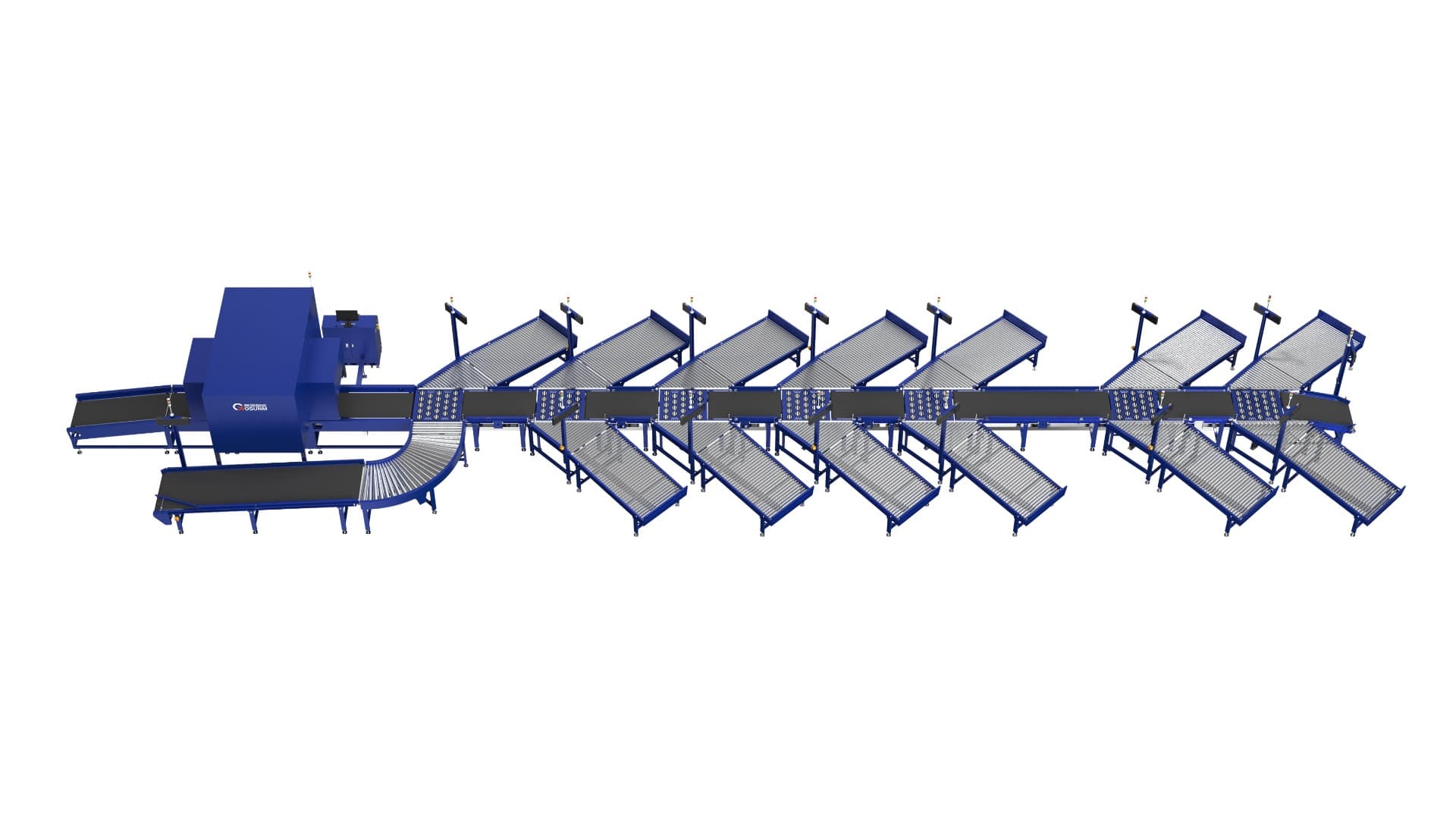
The explosion of e-commerce has created an insatiable demand for faster, more accurate package sorting. In 2026, robotic sorting systems process millions of parcels daily at major logistics hubs worldwide, with Chinese manufacturers leading the technology and offering systems starting from $50,000. Companies like JD.com, Alibaba's Cainiao, and DHL rely on robotic sorting to handle peak volumes that would be impossible with manual labor alone.
This guide covers sorting robot types, leading manufacturers, throughput comparisons, pricing, real-world case studies, and implementation guidance for logistics and e-commerce operations.
What Are Sorting Robots?
Sorting robots are automated systems that identify, route, and deliver packages, parcels, or items to designated destinations (bins, chutes, conveyor lanes, or loading areas). They replace manual sorting operations where workers read labels and physically carry or slide packages to the correct location.
Why Robotic Sorting Matters in 2026
- E-commerce volume: Global parcel volume exceeds 300 billion annually
- Labor shortages: Sorting is physically demanding with high turnover rates (150-200% annually)
- Speed expectations: Same-day and next-day delivery require faster processing
- Peak handling: Singles' Day, Black Friday, and holiday peaks require 3-5x normal capacity
- Accuracy: Manual sorting error rates of 1-3% are unacceptable at scale
Types of Sorting Robot Systems
1. AGV-Based Sorting (Tilt-Tray Robots)
Small autonomous robots (typically 40-60 cm) carry individual parcels across a flat sorting platform. Each robot has a tilting tray that drops the parcel into the correct destination chute.
How it works:
- Parcels are placed on robots at induction stations (manually or by robotic arm)
- Robot scans the barcode and receives destination assignment
- Robot navigates to the correct chute on the sorting floor
- Tilt-tray mechanism drops the parcel into the chute
- Robot returns to induction station for next parcel
Specifications:
- Parcel weight: Up to 8-15 kg per robot
- Robot speed: 1-2 m/s
- Floor size: 200-5,000+ sqm
- Robot count: 50-500+ per system
- Throughput: 10,000-100,000+ parcels/hour (scales with robot count)
Price range: $50,000 - $500,000+ (depends on scale)
Leading manufacturers: Geek+, Libiao Robotics, Mushiny
2. Cross-Belt Sorters
A continuous loop of small conveyor belt carriers that travel on a track. Each carrier has a belt that runs perpendicular to the direction of travel, ejecting parcels to either side at designated chutes.
How it works:
- Parcels are inducted onto moving carriers from conveyor infeeds
- Scanner reads barcode/label and assigns destination
- When carrier reaches the correct chute, the cross-belt activates
- Belt ejects the parcel sideways into the chute
- Carrier continues around the loop for next parcel
Specifications:
- Parcel weight: Up to 30 kg
- System speed: 2-2.5 m/s
- Destinations: 100-500+ chutes
- Throughput: 15,000-40,000+ parcels/hour
Price range: $200,000 - $2,000,000+
Leading manufacturers: Interroll, Beumer, Damon (China), Kengic (China)
3. Robotic Arm Sorting
Industrial or collaborative robot arms equipped with vision systems and suction/gripper tools pick parcels from a conveyor or pile and place them into destination bins or onto destination conveyors.
How it works:
- Vision system identifies parcel, reads label, and determines grasp point
- Robotic arm picks the parcel using vacuum suction or adaptive gripper
- Arm places parcel into designated bin or conveyor lane
- Process repeats at 20-40+ picks per minute per arm
Specifications:
- Parcel weight: Up to 30 kg (per arm capability)
- Pick rate: 20-40 picks/minute per arm
- Destinations: 6-20 per arm (multiple arms for more destinations)
- Vision: 3D cameras with AI-powered recognition
Price range: $80,000 - $300,000 per station
Leading manufacturers: Dorabot, Geek+, XYZ Robotics (China), Covariant, RightHand Robotics (US)
4. Sliding Shoe Sorters
Mechanical sorters using rows of sliding shoes (diverter elements) on a flat conveyor to push parcels to either side at designated points. High speed and proven technology.
Specifications:
- Parcel weight: Up to 50 kg
- Speed: 2.5-3.0 m/s
- Throughput: 10,000-25,000 parcels/hour
- Destinations: 50-200+
Price range: $300,000 - $1,500,000
Throughput Comparison by System Type
| System Type | Throughput (parcels/hr) | Max Parcel Weight | Destinations | Flexibility | Price Range |
|---|---|---|---|---|---|
| AGV-based (tilt-tray) | 10,000 - 100,000+ | 8-15 kg | 100-500+ | Very high | $50,000 - $500,000+ |
| Cross-belt sorter | 15,000 - 40,000+ | 30 kg | 100-500+ | Low (fixed track) | $200,000 - $2,000,000+ |
| Robotic arm | 1,200 - 2,400 per arm | 30 kg | 6-20 per arm | High | $80,000 - $300,000/station |
| Sliding shoe | 10,000 - 25,000 | 50 kg | 50-200+ | Low (fixed track) | $300,000 - $1,500,000 |
Which System to Choose?
- AGV-based sorting: Best for medium-to-high volume e-commerce operations that need flexibility and scalability. Most popular choice for new installations in 2026.
- Cross-belt sorter: Best for established high-volume hub operations requiring consistent throughput with heavier parcels.
- Robotic arm sorting: Best for singulation (separating piled parcels), picking from bulk, or sorting irregular items. Often combined with other systems.
- Sliding shoe: Best for heavy parcel operations and proven reliability requirements.
Leading Chinese Sorting Robot Manufacturers
Geek+ (极智嘉)
- Sorting products: S-series sorting robots, Pop Pick sorting system
- Robot count per system: 50-500+
- Throughput: Up to 100,000 parcels/hour (large installations)
- Global deployments: Used by DHL, Nike, Decathlon logistics partners
- Key advantage: Same platform as their AMR products; unified fleet management
- Price: $2,000-4,000 per sorting robot; $100,000-500,000+ per system
Libiao Robotics (立镖机器人)
- Specialty: AGV-based sorting, one of the pioneers in China
- Notable: Their sorting robots are used in Alibaba's Cainiao logistics network
- Throughput: Systems processing 60,000+ parcels/hour
- Robot count: 300-800 robots per large installation
- Key advantage: Proven at massive scale during Singles' Day
- Price: Competitive; $1,500-3,500 per sorting robot
Dorabot (蓝胖子机器人)
- Headquarters: Shenzhen, China
- Specialty: AI-powered robotic arm sorting and logistics automation
- Key products: DoraPicker (arm-based parcel sorting), DoraSorter
- Vision AI: Advanced 3D vision for handling irregular packages, polybags, and mixed parcels
- Clients: Major logistics companies in Asia and Europe
- Key advantage: Best-in-class AI for handling diverse parcel types
- Price: $80,000-200,000 per robotic arm sorting station
Other Notable Chinese Players
| Company | Specialty | Throughput | Price Range |
|---|---|---|---|
| Mushiny | AGV-based sorting | 40,000+ parcels/hr | $80,000-400,000 |
| Hai Robotics | Combined storage + sorting | Varies | $200,000-1,000,000 |
| Kengic | Cross-belt sorters | 30,000+ parcels/hr | $200,000-1,500,000 |
| XYZ Robotics | Robotic arm picking/sorting | 2,000+ picks/hr/arm | $100,000-250,000 |
Chinese vs Western Sorting Systems
| Feature | Chinese Manufacturers | Western Manufacturers |
|---|---|---|
| **Representative brands** | Geek+, Libiao, Dorabot, Mushiny | Vanderlande, Beumer, Honeywell Intelligrated, Dematic |
| **AGV sorting robot price** | $1,500-4,000/robot | $4,000-8,000/robot |
| **System cost (medium)** | $100,000-500,000 | $250,000-1,000,000 |
| **Technology maturity** | Proven at massive scale (Alibaba, JD.com) | Decades of deployment history |
| **Scalability** | Highly scalable (add more robots) | Fixed infrastructure, less flexible |
| **Lead time** | 8-16 weeks | 12-24 weeks |
| **Innovation speed** | Very fast iteration cycles | Slower, more methodical |
| **Global support** | Expanding | Established |
Pricing by System Scale
| Scale | Description | Robot Count | System Cost (Chinese) | Throughput |
|---|---|---|---|---|
| **Starter** | Small e-commerce warehouse | 50-100 robots | $50,000 - $150,000 | 5,000-10,000 parcels/hr |
| **Medium** | Regional distribution center | 100-300 robots | $150,000 - $400,000 | 10,000-30,000 parcels/hr |
| **Large** | Major logistics hub | 300-500 robots | $400,000 - $800,000 | 30,000-60,000 parcels/hr |
| **Mega** | National sorting center | 500+ robots | $800,000 - $2,000,000+ | 60,000-100,000+ parcels/hr |
Cost Components Breakdown
| Component | Percentage of Total | Description |
|---|---|---|
| Sorting robots | 40-50% | Individual autonomous units |
| Sorting platform | 15-20% | Floor grid, chutes, destination bins |
| Induction stations | 10-15% | Manual or automated parcel loading |
| Software (WCS/WES) | 10-15% | Warehouse control/execution system |
| Installation | 5-10% | Setup, testing, commissioning |
| Training | 2-5% | Operator and maintenance training |
Case Studies
JD.com: Asia's Largest Robotic Sorting Center
JD.com operates one of the world's largest robotic sorting facilities in Kunshan, near Shanghai.
- Facility size: 40,000 sqm
- Sorting robots: 300+ AGV-based sorting robots
- Daily throughput: 200,000+ parcels per day
- Staff reduction: From 500 manual sorters to 60 technicians and supervisors
- Accuracy: 99.99% sorting accuracy
- Investment: Estimated $3-5 million for complete system
- ROI achieved: Under 2 years
Cainiao (Alibaba) Smart Logistics Hub
Alibaba's logistics arm, Cainiao, deploys Libiao sorting robots across its network.
- Peak capacity: During Singles' Day (November 11), Cainiao's robotic sorting systems process over 1 billion parcels in a single week
- Robot deployment: 700+ sorting robots per major hub
- Key achievement: Reduced average sorting time from 5 hours to 1 hour per batch during peak periods
- Technology: AI-powered route optimization adjusts robot paths in real time based on volume patterns
DHL Express: European Deployment
DHL has deployed Geek+ sorting robots at multiple European hubs.
- Application: Small parcel sorting for express delivery
- Robot count: 100+ per facility
- Results: 40% increase in sorting throughput, 50% reduction in sorting labor
- Key benefit: Ability to handle peak volumes (Black Friday, Christmas) without temporary workers
Implementation Guide
Phase 1: Assessment (2-4 weeks)
- Volume analysis: Document daily/peak parcel volumes, parcel sizes, and weight distribution
- Destination mapping: How many sort destinations do you need? (zip codes, routes, carriers)
- Space assessment: Available floor space, ceiling height, power supply
- Integration requirements: WMS/TMS connectivity, barcode/label standards
- Budget definition: Determine investment range based on volume requirements
Phase 2: System Design (4-6 weeks)
- Manufacturer selection: Get proposals from 2-3 suppliers
- Simulation: Manufacturer models your volume patterns and proposes optimal layout
- ROI validation: Confirm payback period meets your financial requirements
- Contract negotiation: Finalize pricing, warranty, SLA terms
Phase 3: Manufacturing and Shipping (6-12 weeks)
- Production: Robots and platform manufactured
- Factory acceptance test (FAT): Verify system performance at manufacturer's facility
- Shipping: Sea freight (4-6 weeks) or split shipment (robots by air, platform by sea)
Phase 4: Installation (3-6 weeks)
- Floor preparation: Level floor, install power and network drops
- Platform installation: Assemble sorting grid, chutes, and destination infrastructure
- Robot deployment: Configure, map, and test individual robots
- Software integration: Connect to WMS/TMS, test barcode scanning pipeline
- Full system test: Run test parcels through complete workflow
Phase 5: Go-Live (2-4 weeks)
- Parallel operation: Run new system alongside existing manual sorting
- Volume ramp-up: Gradually increase volume through robotic system
- Performance tuning: Optimize robot paths, induction rates, and destination assignments
- Full cutover: Switch to 100% robotic sorting
Total timeline: 4-8 months from assessment to full production.
Frequently Asked Questions
What parcel sizes can sorting robots handle?
AGV-based sorting robots typically handle parcels from 15x15x5 cm (minimum) to 60x50x40 cm (maximum), weighing up to 8-15 kg. Cross-belt sorters handle larger and heavier parcels up to 30 kg. Robotic arm sorters can handle irregular items including polybags and tubes.
How do sorting robots read package labels?
Most systems use top-mounted barcode scanners at induction stations. Advanced systems use 6-sided scanning tunnels that read barcodes from any package orientation. AI-powered OCR systems can read handwritten labels and damaged barcodes.
Can sorting robots handle peak volumes like Singles' Day or Black Friday?
Yes — this is a key advantage of AGV-based systems. You can add more robots to increase throughput for peak periods and remove them afterward. Chinese systems are specifically designed and tested for extreme peak events (Alibaba's Singles' Day processes billions of parcels).
What maintenance do sorting robots require?
AGV sorting robots need battery replacement every 2-3 years, wheel replacement annually, and regular cleaning of sensors and charging contacts. Platform maintenance includes chute inspection and floor cleaning. Budget 3-5% of system cost annually for maintenance.
How accurate are robotic sorting systems?
Modern robotic sorting systems achieve 99.95-99.99% accuracy, compared to 97-99% for manual sorting. The improvement in accuracy alone can justify the investment by reducing mis-sorts, customer complaints, and re-delivery costs.
Can I start with a small system and expand later?
Absolutely. AGV-based sorting systems are inherently scalable. Start with 50-100 robots and expand by adding more robots and destination chutes. The floor platform can also be extended modularly. This is a major advantage over fixed mechanical sorters.
Next Steps
GrabaRobot connects logistics and e-commerce companies with China's leading sorting robot manufacturers including Geek+, Libiao Robotics, and Dorabot. We help you evaluate solutions, negotiate pricing, manage quality assurance, and coordinate installation.
Ready to upgrade your sorting operation? Contact us for a free assessment and competitive quotes from verified Chinese manufacturers.