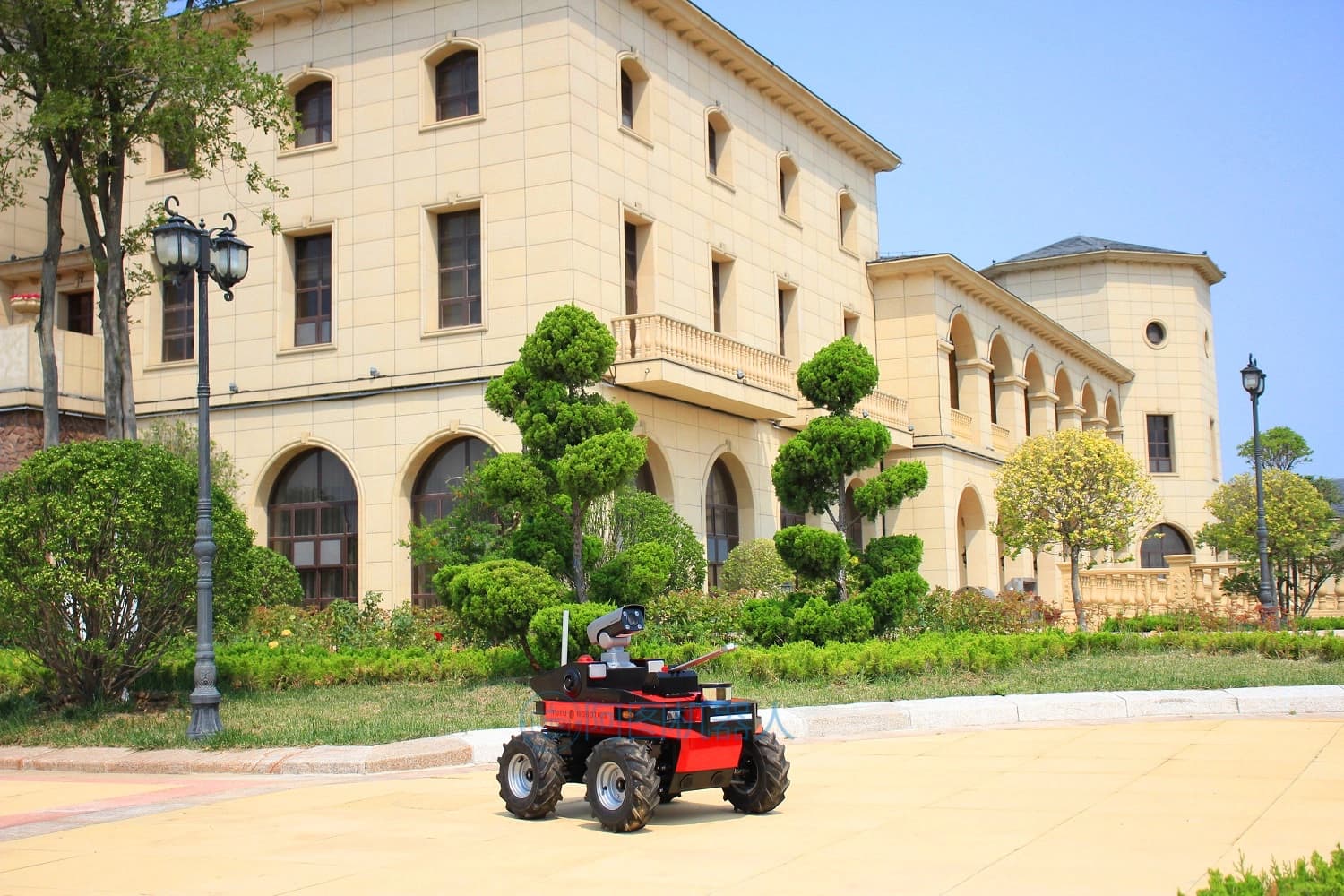
Security patrol robots are transforming how businesses protect their premises. From corporate campuses and warehouses to shopping malls and residential communities, autonomous security robots now provide 24/7 surveillance at a fraction of the cost of human guard teams.
This guide covers everything you need to know about security patrol robot pricing, capabilities, and return on investment in 2026.
What Can Security Patrol Robots Do?
Modern security patrol robots are far more than rolling cameras. They combine multiple sensor systems and AI to deliver comprehensive security coverage:
- 360° Camera Systems: Pan-tilt-zoom (PTZ) cameras with 4K resolution for real-time monitoring
- LiDAR Navigation: Autonomous patrolling along pre-programmed routes without GPS dependency
- Thermal Imaging: Detect intruders, hot spots, and fire hazards in complete darkness
- AI Video Analytics: Automatic detection of unauthorized persons, abandoned objects, perimeter breaches, and unusual behavior
- Two-Way Communication: Built-in speakers and microphones for remote interaction with visitors or intruders
- License Plate Recognition: Automatic logging of vehicles entering and exiting the premises
- Environmental Sensors: Smoke, gas leak, temperature, and humidity monitoring
- Emergency Alerts: Instant notifications to security control rooms with GPS coordinates and live video
Indoor vs. Outdoor Security Robots
Security robots are designed for different environments, and pricing varies significantly between indoor and outdoor models.
Indoor Security Robots
Indoor models are typically smaller, lighter, and more affordable. They patrol hallways, lobbies, and open floor plans in offices, malls, and hospitals.
| Feature | Typical Spec |
|---|---|
| Weight | 30–60 kg |
| Speed | 1–3 km/h |
| Battery Life | 6–10 hours |
| Navigation | LiDAR + cameras |
| Terrain | Flat floors, elevators |
| Price Range | $15,000–$40,000 |
Outdoor Security Robots
Outdoor models are ruggedized with weatherproofing (IP65/IP67), larger batteries, and all-terrain wheels or tracks.
| Feature | Typical Spec |
|---|---|
| Weight | 80–200 kg |
| Speed | 3–8 km/h |
| Battery Life | 8–16 hours |
| Navigation | LiDAR + GPS + RTK |
| Terrain | Pavement, gravel, grass, slopes |
| Price Range | $30,000–$80,000 |
Security Patrol Robot Pricing Breakdown
Prices vary based on capabilities, brand, and whether you source from Chinese manufacturers or Western companies.
Pricing by Tier
| Tier | Price Range | Features | Best For |
|---|---|---|---|
| Entry-Level | $15,000–$25,000 | HD cameras, basic patrol, alerts | Small offices, lobbies |
| Mid-Range | $25,000–$50,000 | 360° PTZ, LiDAR, thermal, AI analytics | Campuses, warehouses |
| Enterprise | $50,000–$80,000 | Full sensor suite, all-terrain, multi-robot fleet management | Large facilities, outdoor campuses |
| Premium/Custom | $80,000–$150,000+ | Military-grade, explosion-proof, specialized environments | Oil & gas, critical infrastructure |
Chinese Manufacturers vs. Knightscope (US)
Knightscope is the most well-known Western security robot brand, but Chinese manufacturers offer comparable or superior features at significantly lower prices.
| Feature | Knightscope K5 | Chinese Mid-Range | Chinese Enterprise |
|---|---|---|---|
| Price | $60,000–$80,000 | $25,000–$40,000 | $45,000–$65,000 |
| Camera | 360° HD | 360° 4K PTZ | 360° 4K PTZ + thermal |
| LiDAR | Yes | Yes | Yes (multi-layer) |
| AI Analytics | Basic | Advanced | Advanced + custom |
| Thermal Imaging | Optional | Included | Included |
| Battery Life | 8 hrs | 8–12 hrs | 12–16 hrs |
| Weatherproofing | IP65 | IP65 | IP67 |
| Fleet Management | Proprietary | Open API | Open API + custom |
| Pricing Model | RaaS ($2,500/mo) | Purchase | Purchase or lease |
Key takeaway: Chinese security robots typically cost 40–60% less than Knightscope while offering comparable or better hardware specifications. Knightscope primarily offers a Robot-as-a-Service (RaaS) model at ~$2,500/month, which adds up to $90,000 over 3 years.
Leading Chinese Security Robot Manufacturers
- Gosuncn (Gaozhun): One of China's largest security robot makers, deployed in airports and government buildings
- UBTECH Robotics: Known for humanoid and patrol robots with advanced AI
- Shenzhen CSR Intelligent Technology: Specializes in outdoor patrol robots for industrial zones
- Hangzhou Guochen Robot: Campus and community patrol robots with fleet management
- Beijing Jingpin Intelligent: Security robots for power substations and critical infrastructure
Features Comparison Table
| Feature | Entry-Level | Mid-Range | Enterprise |
|---|---|---|---|
| HD Camera (1080p+) | Yes | Yes | Yes |
| 4K Camera | No | Yes | Yes |
| PTZ (Pan-Tilt-Zoom) | No | Yes | Yes |
| Thermal Imaging | No | Optional | Yes |
| LiDAR Navigation | Basic 2D | 3D | Multi-layer 3D |
| AI Object Detection | Basic | Advanced | Advanced + custom |
| License Plate Recognition | No | Yes | Yes |
| Face Recognition | No | Optional | Yes |
| Two-Way Audio | Yes | Yes | Yes |
| Environmental Sensors | No | Smoke, temp | Full suite |
| Fleet Management | No | Basic | Advanced |
| Outdoor Rated | No | Some | Yes (IP67) |
| Auto-Charging Dock | Yes | Yes | Yes |
ROI: Security Robot vs. Human Security Guards
The financial case for security patrol robots is compelling, especially when compared to the ongoing cost of human security personnel.
Human Guard Costs (Annual)
| Cost Item | 1 Guard (US) | 24/7 Coverage (4.2 FTE) |
|---|---|---|
| Salary | $35,000–$50,000 | $147,000–$210,000 |
| Benefits & insurance | $8,000–$15,000 | $33,600–$63,000 |
| Training | $1,000–$3,000 | $4,200–$12,600 |
| Uniforms & equipment | $500–$1,000 | $2,100–$4,200 |
| Management overhead | $3,000–$5,000 | $12,600–$21,000 |
| **Total annual** | **$47,500–$74,000** | **$199,500–$310,800** |
Security Robot Costs (Annual, After Purchase)
| Cost Item | Amount |
|---|---|
| Robot purchase (amortized over 5 years) | $6,000–$16,000/year |
| Maintenance & parts | $1,000–$3,000 |
| Cloud/software subscription | $1,200–$3,600 |
| Electricity | $200–$400 |
| Insurance | $500–$1,500 |
| Remote monitoring operator (shared) | $5,000–$10,000 |
| **Total annual** | **$13,900–$34,500** |
5-Year Cost Comparison
| Option | Year 1 | 5-Year Total |
|---|---|---|
| Human guards (24/7) | $200,000–$310,000 | $1,000,000–$1,550,000 |
| 2 Security robots + remote monitoring | $70,000–$130,000 | $170,000–$350,000 |
| **Savings with robots** | **$650,000–$1,200,000** |
Most organizations see a full payback on their security robot investment within 12–18 months.
Beyond Cost Savings
Security robots offer advantages that human guards cannot match:
- Consistency: Robots never get tired, distracted, or call in sick
- Documentation: Every patrol is logged with timestamped video and sensor data
- Coverage: A single robot can patrol a route every 15–30 minutes, 24/7
- Deterrence: The visible presence of a security robot deters criminal activity
- Scalability: Add robots to expand coverage without recruiting and training cycles
Deployment Guide
Successfully deploying security patrol robots requires careful planning.
Step 1: Site Assessment
- Map the patrol area and identify key monitoring points
- Measure pathways (minimum 1.2m width for most robots)
- Identify terrain challenges (slopes, curbs, transitions between surfaces)
- Check for reliable Wi-Fi or 4G/5G coverage throughout the patrol area
- Plan charging station locations (central, covered, accessible)
Step 2: Choose the Right Model
- Small office/lobby: Entry-level indoor robot ($15K–$25K)
- Campus/warehouse: Mid-range with outdoor capability ($25K–$50K)
- Large outdoor facility: Enterprise all-terrain model ($50K–$80K)
- Critical infrastructure: Specialized/custom build ($80K+)
Step 3: Integration
- Connect to existing CCTV and access control systems
- Set up the cloud monitoring dashboard
- Configure patrol routes, schedules, and alert rules
- Train security staff on the monitoring interface and manual override
Step 4: Phased Rollout
- Start with 1–2 robots in a defined area
- Monitor performance and optimize routes for 2–4 weeks
- Expand to additional zones and add robots as needed
- Consider fleet management software for 3+ robots
Frequently Asked Questions
How long do security patrol robots last?
With proper maintenance, most security robots have a service life of 5–8 years. Battery replacement (every 2–3 years, $1,000–$3,000) is the primary recurring hardware cost.
Can security robots work in rain and snow?
Outdoor models rated IP65 or higher can operate in rain, dust, and moderate snow. Some enterprise models with IP67 rating can withstand heavy rain and even temporary water submersion.
Do security robots replace human guards entirely?
No. The ideal deployment is a hybrid model where robots handle routine patrols and monitoring, while a smaller team of human guards responds to alerts and handles situations requiring human judgment. Most organizations reduce their guard force by 50–70% rather than eliminating it entirely.
What happens if someone attacks or tips over the robot?
Security robots are equipped with tamper detection sensors that trigger immediate alerts with video. Many models weigh 80–200 kg and have a low center of gravity, making them difficult to tip. Some include loud alarm sirens to deter interference.
Can I integrate the robot with my existing security system?
Yes. Most Chinese security robots offer open APIs and support integration with popular VMS (Video Management Systems), access control platforms, and alarm systems. Confirm compatibility with your specific systems before purchasing.
How do I buy a security robot from China?
GrabaRobot connects you directly with verified Chinese security robot manufacturers. We handle supplier vetting, negotiation support, quality inspection, and shipping logistics so you can focus on deploying the technology.