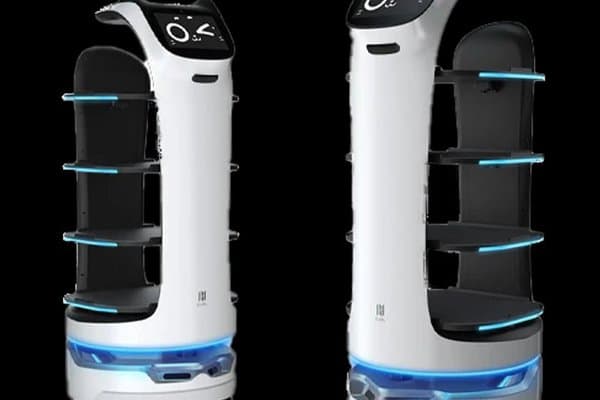
Robot waiters are no longer a novelty — they're a proven solution for restaurants struggling with labor shortages, rising wages, and the need for consistent service. In 2026, tens of thousands of robot waiters operate in restaurants across 60+ countries, with the vast majority manufactured in China.
This guide covers how robot waiters work, the best models from Chinese manufacturers, real pricing, ROI calculations, customer experience considerations, and everything you need to know before buying one.
How Robot Waiters Work
A robot waiter is an autonomous mobile robot designed to transport food, drinks, and dishes between the kitchen and dining tables. Here's the typical workflow:
- Kitchen staff loads food onto the robot's trays (usually 2–4 trays)
- Staff selects the destination table on the robot's touchscreen or via a linked POS system
- The robot navigates autonomously to the table using LiDAR, cameras, and a pre-scanned map of the restaurant
- The robot arrives and announces delivery via voice prompt or screen display
- Guests or staff unload the food from the trays
- The robot returns to the kitchen or proceeds to the next delivery
What Robot Waiters Can Do
- Deliver food from kitchen to table (primary function)
- Deliver drinks and appetizers
- Bus dirty dishes back to the kitchen (some models)
- Display promotions and special menus on screen
- Sing happy birthday and interact with guests
- Navigate around obstacles and people autonomously
What Robot Waiters Cannot Do
- Take orders (no natural language order-taking yet in production models)
- Serve individual plates to specific guests (they deliver to the table, not to the person)
- Handle stairs or significant elevation changes
- Replace the human element of hospitality
Market Leaders: Best Robot Waiter Models
Pudu BellaBot — The Global Bestseller
The BellaBot is the most widely deployed restaurant robot in the world. Its cat-like face with expressive LED eyes makes it instantly recognizable and a hit on social media.
Specs:
- Trays: 4 (removable)
- Payload: 40 kg total (10 kg per tray)
- Battery: 10 hours / 2.5-hour charge
- Speed: Up to 1.2 m/s
- Navigation: LiDAR + depth camera
- Special features: Cat expressions, touch-responsive ears, voice interaction
Why restaurants choose it: Proven reliability (70,000+ units deployed), strong brand recognition, excellent customer reactions, wide global support network.
FOB Price: $4,000–$6,000
Keenon T8 — The Premium Choice
Keenon's T8 is the go-to for restaurants prioritizing smooth, quiet operation and premium design.
Specs:
- Trays: 4
- Payload: 40 kg total
- Battery: 12 hours / 3-hour charge
- Speed: Up to 1.2 m/s
- Navigation: LiDAR + 3D camera + ultrasonic
- Special features: Ultra-smooth movement, quiet motor, elegant design
Why restaurants choose it: Superior navigation in complex layouts, quieter operation, premium aesthetic for upscale dining.
FOB Price: $4,500–$6,500
Keenon T5 — The Budget Option
A compact, affordable model ideal for smaller restaurants and cafes.
Specs:
- Trays: 3
- Payload: 30 kg total
- Battery: 10 hours
- Speed: Up to 1.0 m/s
- Navigation: LiDAR + camera
FOB Price: $3,000–$4,500
OrionStar Lucki — Best Value
The most affordable entry point for restaurants wanting to try robot waiters.
Specs:
- Trays: 4
- Payload: 30 kg total
- Battery: 8 hours
- Speed: Up to 1.0 m/s
- Navigation: LiDAR
FOB Price: $3,000–$5,000
Bear Robotics Servi — The US-Designed Alternative
Designed in the US (manufactured partially in Asia), the Servi is popular in North America.
Specs:
- Trays: 3
- Payload: 40 kg
- Battery: 10 hours
- Navigation: LiDAR + camera
- Special features: Smooth turns, US-based support
FOB Price: $15,000–$18,000 (significantly higher than Chinese models)
Price Comparison Table
| Model | Brand | Trays | Payload | Battery | FOB Price | Landed (US) |
|---|---|---|---|---|---|---|
| BellaBot | Pudu | 4 | 40 kg | 10 hrs | $4,000–$6,000 | $5,500–$7,500 |
| KettyBot | Pudu | 2+screen | 30 kg | 12 hrs | $3,500–$5,500 | $5,000–$7,000 |
| HolaBot | Pudu | 4 (enclosed) | 60 kg | 10 hrs | $5,000–$7,000 | $6,500–$8,500 |
| T8 | Keenon | 4 | 40 kg | 12 hrs | $4,500–$6,500 | $6,000–$8,000 |
| T5 | Keenon | 3 | 30 kg | 10 hrs | $3,000–$4,500 | $4,500–$6,000 |
| Lucki | OrionStar | 4 | 30 kg | 8 hrs | $3,000–$5,000 | $4,500–$6,500 |
| Servi | Bear Robotics | 3 | 40 kg | 10 hrs | $15,000–$18,000 | $15,000–$18,000 |
Key takeaway: Chinese-made robot waiters cost 60–75% less than US-designed alternatives with comparable performance.
ROI Calculator: How Much Does a Robot Waiter Save?
Let's walk through a detailed ROI analysis for a typical restaurant.
Restaurant Profile
- Type: Casual dining
- Seats: 100
- Operating hours: 11 AM–10 PM (11 hours)
- Current servers: 6 per shift
- Average server wage: $15/hour + tips (US market)
Labor Savings
A robot waiter doesn't replace a server — it takes over the repetitive carrying task, allowing you to operate with fewer servers while maintaining the same service level.
Conservative scenario: Reduce 1 server per shift
| Calculation | Amount |
|---|---|
| Server hourly cost (wage + benefits) | $18/hour |
| Hours per shift | 8 |
| Shifts per week | 6 |
| Weekly savings | $864 |
| **Annual labor savings** | **$44,928** |
More conservative: Reduce 1 part-time server
| Calculation | Amount |
|---|---|
| Part-time server annual cost | $25,000–$30,000 |
| **Annual labor savings** | **$25,000–$30,000** |
Efficiency Gains
| Benefit | Estimated Annual Value |
|---|---|
| Faster delivery → higher table turnover (5–10%) | $8,000–$20,000 |
| Reduced food spillage and breakage | $500–$1,500 |
| Consistent service quality (no bad days) | Hard to quantify |
| **Total efficiency gains** | **$8,500–$21,500** |
Marketing and Revenue Impact
| Benefit | Estimated Annual Value |
|---|---|
| Social media buzz and free publicity | $3,000–$10,000 |
| Novelty-driven foot traffic (first 6 months) | $5,000–$15,000 |
| Higher Google/Yelp ratings | Indirect but significant |
| **Total marketing value** | **$8,000–$25,000** |
Total Annual Benefit
| Scenario | Annual Benefit |
|---|---|
| Conservative | $41,500 |
| Moderate | $62,000 |
| Optimistic | $91,428 |
Investment and Payback
| Item | Cost |
|---|---|
| Robot (Pudu BellaBot, landed US) | $6,500 |
| Annual operating cost | $800 |
| **Year 1 net benefit (conservative)** | **$34,200** |
| **Payback period** | **2 months** |
Even using the most conservative estimates, a robot waiter pays for itself within 3 months in the US market.
ROI by Market
| Market | Annual Labor Savings | Payback Period |
|---|---|---|
| United States | $25,000–$45,000 | 2–3 months |
| United Kingdom | $20,000–$35,000 | 2–4 months |
| UAE / Gulf States | $12,000–$20,000 | 4–7 months |
| Australia | $25,000–$40,000 | 2–4 months |
| Southeast Asia | $5,000–$10,000 | 8–14 months |
Customer Experience Impact
Does a robot waiter improve or hurt the dining experience? The data is clear.
Positive Reactions
- 85%+ of diners rate the robot experience positively
- Families with children are the most enthusiastic demographic
- Social media sharing drives organic marketing
- Repeat visit intent increases by 15–20% in the first 6 months
Customer Concerns
- Some older diners prefer human service (offer both options)
- Fine dining environments may not suit playful robots (choose models with subtler designs)
- Novelty effect fades after 6 months, but operational benefits remain permanent
Best Practices for Customer Experience
- Frame the robot as an assistant, not a replacement: "Our robot helper delivers your food so your server can focus on taking care of you."
- Let guests interact: BellaBot's cat ears are designed to be pet. Encourage it.
- Use for special moments: Program birthday songs and special occasion messages
- Keep human servers visible: The robot delivers, humans connect
Setup Requirements
Before buying a robot waiter, verify your restaurant meets these requirements:
Space Requirements
| Requirement | Minimum | Recommended |
|---|---|---|
| Aisle width | 80 cm (31 in) | 100 cm (39 in) |
| Kitchen doorway | 80 cm (31 in) | 90 cm (35 in) |
| Floor surface | Flat, hard floor | Flat tile, wood, or concrete |
| Maximum ramp grade | 5 degrees | Flat preferred |
| Charging station space | 60 x 60 cm | 80 x 80 cm (against wall) |
Infrastructure Requirements
- Wi-Fi: Stable 2.4 GHz or 5 GHz network covering dining area and kitchen
- Power outlet: One outlet near the charging station
- Clear sightlines: No hanging decorations below 1.8 m in robot pathways
Setup Process
- Map the restaurant (robot scans the space with LiDAR) — 30–60 minutes
- Set table positions and kitchen pickup point — 15–30 minutes
- Define routes and zones — 15 minutes
- Test runs — 30 minutes
- Staff training — 1–2 hours
Total setup time: Half a day.
Frequently Asked Questions
How many robot waiters does my restaurant need?
One robot handles a restaurant of up to 100 seats. For 100–200 seats, two robots are recommended. Very large venues (200+ seats) may need three or more.
Do robot waiters work with my existing POS?
Many robot waiters can integrate with popular POS systems via API. However, most restaurants simply use the robot's built-in touchscreen for table selection — no POS integration needed.
What if a customer blocks the robot's path?
The robot will pause, announce itself via voice, and wait. If the path remains blocked for a set period, it will reroute or alert staff. Robots are designed for crowded environments and handle obstacles well.
Can robot waiters carry soup or drinks without spilling?
Yes. Anti-vibration trays and smooth acceleration/deceleration minimize spilling. Models like the Keenon T8 are especially noted for smooth movement. However, extremely full bowls of soup should be placed on the lower tray for maximum stability.
What's the warranty?
Most Chinese manufacturers offer a 1-year warranty covering parts and software. Extended warranties (2–3 years) are available for an additional fee. Pudu and Keenon also have authorized service partners in many countries.
How long does the battery last?
8–12 hours depending on the model, which covers a full restaurant shift. Charging takes 2–3 hours. Most restaurants charge overnight or during off-peak hours.
Ready to Add a Robot Waiter to Your Restaurant?
GrabaRobot helps restaurant owners source robot waiters directly from verified Chinese manufacturers at the best prices. We handle everything from model selection to delivery.