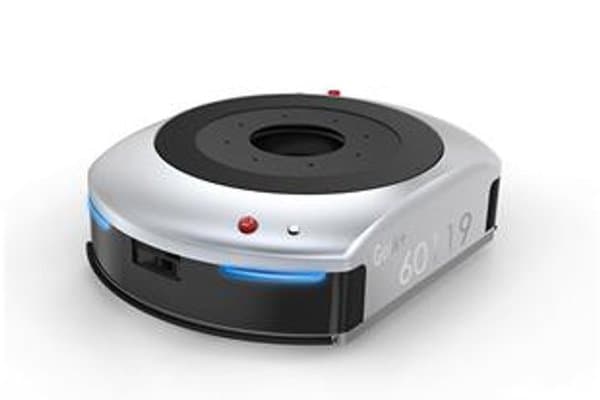
Importing robots from China can save you 30–60% compared to buying from Western manufacturers or local distributors. But the process involves customs regulations, shipping logistics, compliance certifications, and payment risks that can trip up first-time importers.
This guide walks you through every step of importing robots from China in 2026 — from finding the right supplier to clearing customs in your home country.
Step-by-Step Robot Import Process
Here's the complete workflow, from first contact to delivery:
Step 1: Find and Verify a Supplier
Your supplier choice is the single most important decision in the entire import process. Options include:
- Direct from manufacturer: Best prices, but usually requires larger minimum order quantities (MOQs). Examples: Unitree, UBTECH, Pudu Robotics.
- Sourcing platforms: Platforms like GrabaRobot aggregate verified manufacturers and handle communication, quality verification, and logistics.
- Trade shows: Canton Fair, World Robot Conference (Beijing), and CES Asia are excellent for meeting suppliers face-to-face.
- Alibaba/Made-in-China.com: Large selection but requires careful verification. Look for Gold Suppliers with Trade Assurance.
Verification checklist:
- Business license (营业执照) — request a copy and verify through China's National Enterprise Credit Information Publicity System
- Factory audit report (if available)
- Export license for robotics equipment
- Customer references from international buyers
- Product certifications (CE, FCC, UL as applicable)
Step 2: Request Samples
Never place a large order without testing first.
- Consumer robots (under $5,000): Order 1–2 sample units at full price. Most manufacturers will credit the sample cost against your production order.
- Industrial robots ($5,000+): Request a factory visit and live demonstration. If visiting isn't possible, ask for video demonstrations and reference customer contacts.
- Budget for samples: Expect to spend $1,000–$10,000 on samples depending on the robot type. This is an essential investment.
Step 3: Negotiate Terms
Key negotiation points:
- Unit price: Always negotiate. First quoted price is typically 10–20% above the final price.
- MOQ: Minimum order quantity. Push for lower MOQ on first orders; manufacturers often flex for new customers.
- Lead time: Standard is 15–45 days depending on robot complexity and customization.
- Payment terms: See the Payment Methods section below.
- Warranty: Push for 12–18 months on mechanical components.
- Incoterms: FOB (Free on Board) is standard. EXW is cheaper but you handle everything from the factory door.
Step 4: Place Your Order
Once terms are agreed:
- Sign a purchase contract (in English and Chinese)
- Pay the deposit (typically 30% T/T)
- Confirm production schedule and milestones
- Arrange pre-shipment inspection (highly recommended for first orders)
Step 5: Pre-Shipment Inspection
Before the robots leave the factory, conduct an inspection:
- Self-inspection: If you have staff in China, visit the factory.
- Third-party inspection: Companies like SGS, Bureau Veritas, or QIMA can inspect on your behalf ($300–$800 per inspection).
- Check: Functionality, packaging quality, labeling, CE/FCC marks, quantity, and cosmetic condition.
Step 6: Ship the Robots
See the Shipping Methods section below for detailed cost and timeline comparisons.
Step 7: Clear Customs
See the Customs Duties section below for HS codes and duty rates.
Step 8: Receive and Verify
- Inspect all units upon arrival
- Test functionality before signing off with the freight company
- Document any damage immediately and file claims within 48 hours
Shipping Methods: Cost & Timeline Comparison
| Method | Cost (per kg) | Transit Time | Best For | Max Weight |
|---|---|---|---|---|
| Express (DHL/FedEx/UPS) | $6 – $12/kg | 3–7 days | Samples, small consumer robots | Up to 300 kg |
| Air Freight | $3 – $7/kg | 5–10 days | Medium shipments, urgent orders | Up to 5,000 kg |
| Sea Freight (FCL) | $0.15 – $0.40/kg | 20–40 days | Large orders, heavy industrial robots | Full container |
| Sea Freight (LCL) | $0.30 – $0.80/kg | 25–45 days | Medium orders not filling a container | Shared container |
| Rail Freight (China-Europe) | $1 – $3/kg | 15–20 days | Europe-bound shipments | Container loads |
Shipping Cost Examples
| Robot Type | Weight | Express | Air Freight | Sea Freight |
|---|---|---|---|---|
| Consumer robot dog (Unitree Go2) | 15 kg | $120–$180 | $60–$100 | N/A (too small) |
| Delivery robot (Pudu) | 55 kg | $400–$660 | $200–$385 | $20–$50 |
| Cleaning robot (Gaussian) | 120 kg | $900–$1,440 | $400–$840 | $30–$80 |
| Warehouse AGV | 250 kg | N/A | $800–$1,750 | $50–$150 |
| Industrial robot arm | 500 kg | N/A | $1,500–$3,500 | $100–$250 |
| Welding robot cell | 2,000 kg | N/A | N/A | $300–$800 |
Shipping Tips
- For single consumer robots: Use express shipping. The convenience is worth the premium.
- For 5–20 units of medium-sized robots: Air freight offers the best balance of cost and speed.
- For bulk orders or heavy industrial robots: Sea freight (FCL if possible) is the only economical option.
- For European buyers: Rail freight via the China-Europe Railway Express is an excellent middle ground.
- Always insure your shipment: Robot shipments are high-value. Insurance costs 0.3–0.5% of declared value.
Customs Duties by Robot Type
Customs classification depends on the robot's function. Here are the most common HS codes and duty rates:
United States
| Robot Type | HS Code | Duty Rate | Notes |
|---|---|---|---|
| Industrial robot arms | 8479.50.00 | 2.5% | Includes welding, painting, palletizing robots |
| Warehouse/logistics robots | 8428.90.00 | Free | AGVs, sorting robots |
| Cleaning robots | 8479.89.98 | 2.5% | Commercial floor scrubbers, pool robots |
| Delivery robots | 8709.19.00 | Free | Self-propelled, not fitted with lifting equipment |
| Drones (under 250g) | 8806.21.00 | Free | Consumer drones |
| Drones (over 250g) | 8806.22.00 | Free | Commercial/agricultural drones |
| Educational/companion robots | 8479.89.98 | 2.5% | Or 9503.00.00 (toys) at 0% |
| Medical robots | 9018.90.00 | Free | Requires FDA clearance |
Important: Section 301 tariffs may apply an additional 25% on certain Chinese robotics products. Check the latest USTR exclusion list before importing.
European Union
| Robot Type | CN Code | Duty Rate | Notes |
|---|---|---|---|
| Industrial robots | 8479.50.00 | 2.7% | Standard rate |
| Warehouse robots | 8428.90.00 | 0% | Free under ITA |
| Service robots | 8479.89.97 | 1.7% | General service robots |
| Drones | 8806.22.00 | 0% | Under Information Technology Agreement |
VAT (20% average) applies on top of duty in EU countries, calculated on CIF value + duty.
Other Major Markets
| Country | General Robot Duty | Notes |
|---|---|---|
| UK | 2.5% + 20% VAT | Post-Brexit independent tariff |
| Australia | 0–5% + 10% GST | Many robots duty-free under China-Australia FTA |
| Japan | 0% | Free under RCEP |
| South Korea | 0–8% | Varies by category |
| India | 7.5–10% + 18% GST | Higher barriers |
Compliance Requirements
Robots sold in different markets require different certifications. Ensure your supplier provides these before shipment.
CE Marking (Europe)
- What it covers: Safety, electromagnetic compatibility (EMC), and machinery directives.
- Required for: All robots sold in the EU, UK, Norway, Switzerland, and Turkey.
- Key directives: Machinery Directive 2006/42/EC, EMC Directive 2014/30/EU, Low Voltage Directive 2014/35/EU.
- Cost: $3,000–$15,000 per robot model for testing and certification.
- Timeline: 4–8 weeks for testing and documentation.
- Tip: Most major Chinese robot manufacturers (Unitree, Pudu, Gaussian) already have CE certification for their main models.
FCC Certification (United States)
- What it covers: Radio frequency emissions and electromagnetic interference.
- Required for: Any robot with wireless communication (Wi-Fi, Bluetooth, 4G/5G, radio control).
- Cost: $2,000–$8,000 per model.
- Timeline: 3–6 weeks.
- Tip: Check if the manufacturer already has FCC certification. Many Chinese brands have obtained it for US market sales.
UL Certification (United States)
- What it covers: Electrical safety, battery safety, and fire hazard prevention.
- Required: Not legally mandatory in most states, but often required by insurance companies, retailers, and enterprise buyers.
- Key standards: UL 1740 (industrial robots), UL 3100 (service robots).
- Cost: $10,000–$50,000 per model.
- Timeline: 8–16 weeks.
Additional Certifications
| Certification | Market | Applies To | Typical Cost |
|---|---|---|---|
| RoHS | EU, UK | All electronics | $1,000–$3,000 |
| REACH | EU | Chemical substances | $2,000–$5,000 |
| IP Rating (IP54/IP67) | Global | Outdoor robots | $2,000–$5,000 |
| ATEX/IECEx | EU/Global | Explosion-proof robots | $15,000–$30,000 |
| FDA 510(k) | US | Medical robots | $50,000–$200,000+ |
Payment Methods
| Method | Security | Cost | Speed | Best For |
|---|---|---|---|---|
| T/T (Bank Transfer) | Low-Medium | 0.1–0.5% bank fee | 1–3 days | Established relationships, large orders |
| Letter of Credit (L/C) | High | 1–3% of order value | 5–15 days setup | Large orders ($50,000+), new suppliers |
| Alibaba Trade Assurance | High | Free (built into Alibaba) | Instant | Alibaba suppliers, small-medium orders |
| PayPal | High | 3–5% fee | Instant | Small orders, samples |
| Western Union | Low | $20–$50 flat fee | 1 day | Avoid for business transactions |
Recommended Payment Structure
- First order: 30% deposit via T/T, 70% balance before shipment (or against copy of Bill of Lading).
- Repeat orders with trusted suppliers: 30/70 T/T or even 0/100 on 30-day net terms.
- Orders over $50,000 with new suppliers: Use a Letter of Credit for maximum protection.
- Samples and small orders: PayPal or Trade Assurance for buyer protection.
Never pay 100% upfront to a new supplier. If they insist, it's a red flag.
Common Mistakes to Avoid
1. Skipping Supplier Verification
Not all Chinese robot "manufacturers" are actually manufacturers. Some are trading companies that mark up prices 20–40% and have no quality control. Always verify the business license and ideally visit the factory.
2. Ignoring Compliance Requirements
Importing a robot without CE or FCC certification can result in your shipment being held at customs, fined, or destroyed. Verify certifications before placing your order, not after.
3. Underestimating Total Landed Cost
Your total cost includes: unit price + shipping + insurance + customs duty + VAT/GST + customs broker fees + inland delivery. Many first-time importers forget about duties and VAT, which can add 20–30% to the unit price in Europe.
4. Choosing the Wrong Shipping Method
Express shipping a 200 kg industrial robot will cost 10x more than sea freight. Conversely, waiting 40 days for sea freight on a single sample is wasteful. Match your shipping method to order size and urgency.
5. Not Getting a Pre-Shipment Inspection
Once robots leave China, returns are extremely expensive and time-consuming. A $500 third-party inspection can save you $50,000 in defective product headaches.
6. Paying 100% Upfront
This removes all leverage if something goes wrong. Always structure payments with a deposit and balance upon satisfactory inspection.
7. Ignoring After-Sales Support
Chinese manufacturers are improving but international after-sales support is still their weakest area. Negotiate warranty terms, spare parts pricing, and remote technical support access before purchasing.
8. Not Planning for Spare Parts
Order spare parts (batteries, sensors, wheels/treads, chargers) with your initial order. Ordering individual spare parts later from China involves disproportionately high shipping costs.
Frequently Asked Questions
Do I need a license to import robots from China?
In most countries, you don't need a special import license for commercial or service robots. However, you may need an importer registration (e.g., US CBP importer number) and the robots must comply with local safety standards. Military-grade robots or robots with certain AI capabilities may require export control licenses.
How long does it take to import robots from China?
From first contact to delivery: 6–12 weeks typically. Breakdown: supplier verification (1–2 weeks), sampling (2–3 weeks), production (2–4 weeks), shipping (1–5 weeks depending on method), customs clearance (2–5 days).
What's the minimum order quantity?
It varies by manufacturer and robot type. Consumer robots like Unitree Go2 can be ordered in single units. Industrial robots typically have MOQs of 1–5 units. Custom robots may require 10–50 unit minimum.
Can I return robots if they're defective?
Returning physical goods to China is costly and complicated. The better approach is: (1) thorough pre-shipment inspection, (2) clear warranty terms in your contract, and (3) negotiate replacement or repair terms rather than returns.
Are Section 301 tariffs still in effect for Chinese robots?
As of early 2026, Section 301 tariffs of 25% apply to many Chinese products including certain robotics categories. However, exclusions exist for specific HS codes. Check the latest USTR list or consult a customs broker for your specific robot category.
Should I use a freight forwarder?
For your first import, yes. A good freight forwarder handles shipping booking, customs documentation, and delivery coordination for a reasonable fee ($200–$500 for standard shipments). Once you're experienced, you can manage logistics directly.
Ready to Import Robots from China?
GrabaRobot simplifies the entire import process. We connect you with verified Chinese robot manufacturers, handle quality verification, and coordinate shipping and logistics.