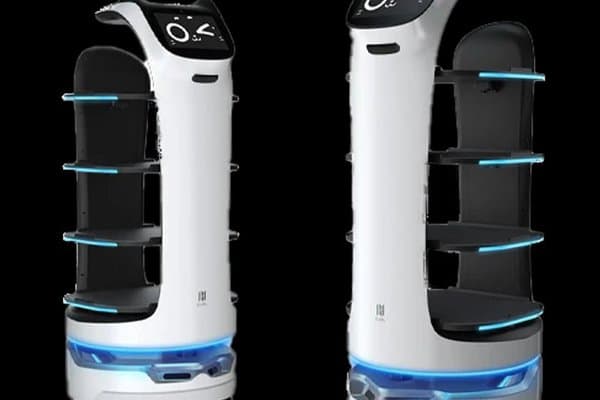
Food delivery robots have moved from futuristic concept to everyday reality. In 2026, thousands of restaurants, campuses, and logistics companies worldwide rely on autonomous robots to deliver meals — both indoors and outdoors. Whether you're looking for a robot waiter for your restaurant or an autonomous sidewalk bot for last-mile food delivery, Chinese manufacturers offer the most competitive options on the market.
This guide covers everything you need to know about food delivery robots: the two main categories, leading Chinese brands, model specs, pricing, ROI, and how to get started.
Food Delivery Robot Market Overview
The global food delivery robot market is projected to exceed $2.8 billion by 2028, growing at a CAGR of over 20%. Three forces are driving this growth:
- Labor shortages: The restaurant and logistics industries face chronic staffing problems, especially for repetitive delivery tasks
- Falling hardware costs: LiDAR sensors, cameras, and compute modules from Chinese suppliers have dropped 40–60% in price since 2022
- Consumer acceptance: Over 75% of consumers now report positive reactions to robot delivery, up from 50% in 2022
China dominates manufacturing, producing more than 70% of the world's commercial food delivery robots. Companies like Pudu Robotics, Keenon, and OrionStar have shipped over 100,000 units globally.
Indoor vs. Outdoor Food Delivery Robots
Food delivery robots fall into two distinct categories, each with different technology requirements, price points, and use cases.
Indoor Food Delivery Robots (Restaurant Robots)
Indoor robots operate inside controlled environments — restaurants, hotels, hospitals, and office buildings. They navigate using LiDAR, cameras, and pre-mapped routes.
Key characteristics:
- Navigation: LiDAR + camera SLAM in mapped indoor spaces
- Speed: 0.5–1.2 m/s (walking pace)
- Payload: 10–40 kg across 2–4 trays
- Battery life: 8–12 hours per charge
- Price range: $3,500–$15,000
Best for: Restaurants, hotel room service, hospital meal delivery, corporate cafeterias
Outdoor Food Delivery Robots (Last-Mile Robots)
Outdoor robots operate on sidewalks and pathways, delivering food from restaurants or dark kitchens to customers' doors. They require more sophisticated navigation, weatherproofing, and regulatory compliance.
Key characteristics:
- Navigation: GPS + LiDAR + computer vision + HD mapping
- Speed: 3–6 km/h (some up to 20 km/h on roads)
- Payload: 10–30 kg (insulated compartments)
- Range: 3–8 km per trip
- Price range: $15,000–$50,000+
Best for: Campus food delivery, neighborhood delivery services, dark kitchen logistics
Top Chinese Food Delivery Robot Brands
Here are the leading Chinese manufacturers you should know about.
Pudu Robotics
Founded in 2016 in Shenzhen, Pudu is the world's largest commercial service robot manufacturer by volume. They have shipped over 70,000 units to 60+ countries.
Key models:
- BellaBot: The iconic cat-faced delivery robot. 4 trays, 40 kg capacity, interactive expressions. Best seller globally.
- KettyBot: A versatile model combining delivery with an advertising screen. Popular in retail and restaurants.
- HolaBot: Designed for bussing (clearing dishes). Summoned via a call button.
- FlashBot: High-capacity model for large venues and hotel room service.
Keenon Robotics
Founded in 2010 in Shanghai, Keenon is one of the pioneers in commercial delivery robots, particularly strong in the hotel and restaurant segments.
Key models:
- T8: Flagship restaurant delivery robot. Smooth navigation, 4 trays, elegant design.
- T5: Compact model for smaller restaurants. 3 trays, budget-friendly.
- W3: Hotel-focused delivery robot with enclosed cabin for room service.
- G2: Large-capacity model for hospitals and large commercial spaces.
OrionStar
Backed by Cheetah Mobile, OrionStar offers competitive pricing and solid performance. Growing fast in Southeast Asia and the Middle East.
Key models:
- Lucki: Budget-friendly restaurant delivery robot. Good entry point for small restaurants.
- Mini: Compact model for tight spaces and cafes.
Food Delivery Robot Specs Comparison
| Model | Brand | Trays | Payload | Battery | Speed | Price (FOB) |
|---|---|---|---|---|---|---|
| BellaBot | Pudu | 4 | 40 kg | 10 hrs | 1.2 m/s | $4,000–$6,000 |
| KettyBot | Pudu | 2+screen | 30 kg | 12 hrs | 1.0 m/s | $3,500–$5,500 |
| HolaBot | Pudu | 4 (enclosed) | 60 kg | 10 hrs | 1.2 m/s | $5,000–$7,000 |
| FlashBot | Pudu | Cabin | 30 kg | 12 hrs | 1.0 m/s | $6,000–$9,000 |
| T8 | Keenon | 4 | 40 kg | 12 hrs | 1.2 m/s | $4,500–$6,500 |
| T5 | Keenon | 3 | 30 kg | 10 hrs | 1.0 m/s | $3,000–$4,500 |
| W3 | Keenon | Cabin | 15 kg | 10 hrs | 1.0 m/s | $5,000–$7,000 |
| Lucki | OrionStar | 4 | 30 kg | 8 hrs | 1.0 m/s | $3,000–$5,000 |
Outdoor Food Delivery Robot Options
For last-mile outdoor food delivery, the landscape is different. Chinese companies are emerging alongside Western competitors.
| Manufacturer | Origin | Type | Payload | Range | Price Estimate |
|---|---|---|---|---|---|
| Neolix | China | Road vehicle | 100 kg | 100 km | $25,000–$40,000 |
| White Rhino | China | Sidewalk bot | 30 kg | 8 km | $15,000–$25,000 |
| HaiRobotics (KiwiBot partner) | China | Sidewalk bot | 20 kg | 5 km | $12,000–$20,000 |
| Starship Technologies | Estonia | Sidewalk bot | 10 kg | 6 km | $5,500 (unit cost) |
| Nuro | US | Road vehicle | 190 kg | 30 km | $50,000+ |
Chinese outdoor delivery robots offer significant cost advantages — typically 40–60% less than Western equivalents.
Pricing Breakdown: What You'll Actually Pay
Indoor Restaurant Robot (Example: Pudu BellaBot to US)
| Cost Item | Amount |
|---|---|
| Robot FOB price | $5,000 |
| Sea freight (LCL) | $300–$500 |
| Import duty (HS 8428.90) | $0–$250 |
| Customs broker | $150–$300 |
| Last-mile delivery | $100–$200 |
| **Total landed cost** | **$5,550–$6,250** |
Outdoor Delivery Robot (Example: Neolix to US)
| Cost Item | Amount |
|---|---|
| Robot FOB price | $30,000 |
| Sea freight (FCL shared) | $1,500–$2,500 |
| Import duty | $1,500–$3,000 |
| Customs & compliance | $500–$1,000 |
| Local delivery + setup | $500–$1,000 |
| **Total landed cost** | **$34,000–$37,500** |
ROI Calculation for Restaurants
Here's a realistic ROI scenario for a mid-sized restaurant (80–120 seats) deploying one indoor food delivery robot.
Annual Savings
| Category | Annual Value |
|---|---|
| Labor savings (1 part-time server) | $25,000–$35,000 |
| Reduced breakage/spillage | $500–$1,000 |
| Increased table turnover (10%) | $5,000–$15,000 |
| Marketing value (social media buzz) | $2,000–$5,000 |
| **Total annual benefit** | **$32,500–$56,000** |
Annual Costs
| Category | Annual Cost |
|---|---|
| Robot depreciation (3-year) | $1,850–$2,100 |
| Electricity | $50 |
| Maintenance | $200–$500 |
| Software (if applicable) | $0–$600 |
| **Total annual cost** | **$2,100–$3,250** |
Net ROI
- Year 1 net benefit: $29,250–$52,750
- Payback period: 1.5–3 months (US market), 6–10 months (Southeast Asia)
- 3-year ROI: 400%–800%
Even in lower-wage markets, indoor food delivery robots deliver strong ROI within the first year.
How to Deploy a Food Delivery Robot in Your Restaurant
Follow these steps for a smooth deployment:
Step 1: Space Assessment
- Measure aisle widths — minimum 80 cm (31 inches) for most robots
- Identify the route from kitchen to dining area
- Check floor surface — flat, hard floors work best
- Note any obstacles: stairs, ramps, narrow doorways
Step 2: Choose the Right Model
- Small restaurant (under 50 seats): Keenon T5 or OrionStar Lucki
- Medium restaurant (50–120 seats): Pudu BellaBot or Keenon T8
- Large venue (120+ seats): Consider 2 BellaBots or FlashBot
- Bussing focus: Pudu HolaBot
Step 3: Map and Configure
- Most robots require initial map scanning (robot walks the space with LiDAR)
- Set table positions, kitchen pickup point, and charging station
- Configure multi-table routes for efficiency
- Takes 1–2 hours for initial setup
Step 4: Staff Training
- Train staff on loading, unloading, and basic troubleshooting
- Establish clear roles — robot delivers, humans serve and interact
- Practice emergency stop procedures
- Most staff adapt within 1–2 days
Step 5: Soft Launch
- Run the robot during off-peak hours first
- Gather customer and staff feedback
- Optimize routes and table assignments
- Go full-time after 1–2 weeks of testing
Tips for Buying from Chinese Manufacturers
- Request video demos: Ask the manufacturer for video of the robot operating in a similar environment
- Negotiate MOQ: Single-unit orders are possible but more expensive. Ordering 3–5 units gets better pricing.
- Clarify warranty terms: Most Chinese manufacturers offer 1-year warranty on parts. Ask about international warranty support.
- Ask about local support: Pudu and Keenon have authorized distributors in many countries. Check if local support is available.
- Consider spare parts: Order extra wheels, trays, and a spare battery upfront
Frequently Asked Questions
How long do food delivery robots last?
Most commercial food delivery robots have a lifespan of 3–5 years with proper maintenance. Battery replacement may be needed after 2–3 years ($200–$400).
Can food delivery robots work with my POS system?
Many models support integration with popular POS systems. Pudu and Keenon offer APIs for custom integration. Some third-party integrators specialize in connecting robots to restaurant management systems.
Do I need Wi-Fi for the robot to work?
Yes, most robots require Wi-Fi for initial setup and map management. However, they can navigate using onboard sensors even if Wi-Fi drops temporarily.
How many deliveries can a robot make per day?
A typical indoor food delivery robot makes 200–400 deliveries per day in a busy restaurant. That's roughly one delivery every 2–3 minutes during peak hours.
Are food delivery robots safe around children?
Yes. Commercial delivery robots have multiple safety sensors (LiDAR, depth cameras, bumper sensors) and will stop immediately if they detect an obstacle. They move at walking speed and are designed for crowded environments.
What happens if the robot breaks down?
Most issues can be resolved remotely via the manufacturer's support team. Common problems (wheel replacement, sensor cleaning) can be handled by staff with basic training. Major repairs may require shipping the unit back or having a technician visit.
Ready to Add a Food Delivery Robot to Your Business?
GrabaRobot connects you directly with verified Chinese manufacturers. We help you compare models, negotiate pricing, and manage the import process from factory to your door.