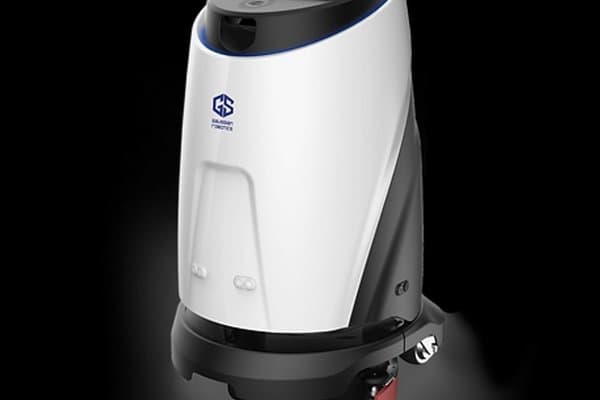
The commercial cleaning robot market is booming. Valued at over $4 billion in 2025, the industry is projected to grow at 18% annually through 2030 as labor shortages, rising wages, and hygiene standards drive adoption. For facility managers evaluating autonomous cleaning solutions, one question dominates every conversation: how much does a commercial cleaning robot cost?
This guide provides a comprehensive price breakdown for commercial cleaning robots in 2026, compares leading manufacturers, and calculates the real-world ROI you can expect.
Why Commercial Cleaning Robots Are Booming
Several factors are accelerating adoption of commercial cleaning robots worldwide.
Labor Shortages Are Intensifying
The cleaning industry faces chronic staffing challenges. In the US, the janitorial turnover rate exceeds 200% annually. In Europe and Asia, aging populations are shrinking the available workforce. Robots provide a reliable, consistent alternative that works 24/7 without calling in sick.
Post-Pandemic Hygiene Standards
COVID-19 permanently raised cleanliness expectations in public spaces. Airports, hospitals, and shopping malls now require documented, verifiable cleaning schedules. Autonomous robots with cloud reporting deliver the transparency that facility managers and regulators demand.
Technology Has Matured
Modern commercial cleaning robots use LiDAR, 3D cameras, and AI to navigate complex environments safely. They can operate alongside pedestrians, avoid obstacles, and adapt to changing layouts. The technology is no longer experimental — it is proven and deployable at scale.
Chinese Manufacturers Have Driven Prices Down
Perhaps the biggest catalyst for adoption is price. Chinese manufacturers like Gausium and Gaussian Robotics now produce commercial cleaning robots at 40–60% lower cost than Western competitors, making autonomous cleaning accessible to a much broader range of facilities.
Price Breakdown by Venue Type
Commercial cleaning robot prices vary significantly depending on the venue size, floor type, and cleaning requirements. Below is a detailed breakdown by venue type.
Warehouse and Factory Cleaning Robots
Warehouses and factories typically feature large, open floor plans with concrete or epoxy surfaces. Cleaning requirements include dust, debris, tire marks, and occasional spills.
| Model Category | Price Range (FOB China) | Cleaning Capacity | Best For |
|---|---|---|---|
| Mid-size scrubber (Gausium Scrubber 50) | $12,000 – $18,000 | 2,000 – 3,000 sqm/hr | Small warehouses, workshops |
| Large scrubber (Gausium Scrubber 75) | $20,000 – $35,000 | 3,000 – 5,000 sqm/hr | Large warehouses, distribution centers |
| Industrial sweeper-scrubber combo | $25,000 – $45,000 | 4,000 – 8,000 sqm/hr | Manufacturing plants, logistics hubs |
Landed cost estimate (US): Add $1,500 – $3,000 for shipping, $600 – $1,500 for import duties (2.5% for robots), and $500 – $1,000 for installation and commissioning.
Shopping Mall Cleaning Robots
Malls require robots that can navigate crowded public spaces during operating hours. Noise levels, appearance, and pedestrian safety are critical factors.
| Model Category | Price Range (FOB China) | Cleaning Capacity | Best For |
|---|---|---|---|
| Compact public-area scrubber | $10,000 – $16,000 | 1,500 – 2,500 sqm/hr | Small malls, retail stores |
| Mid-size mall scrubber | $16,000 – $28,000 | 2,500 – 4,000 sqm/hr | Medium malls, department stores |
| Large mall scrubber with UV disinfection | $28,000 – $45,000 | 3,500 – 6,000 sqm/hr | Large malls, mega complexes |
Key considerations: Mall robots need low noise operation (under 65 dB), sleek design, and advanced pedestrian avoidance. Gausium and Gaussian Robotics both offer mall-specific models with these features.
Airport Cleaning Robots
Airports are among the most demanding environments for cleaning robots. They operate 24/7, have massive floor areas, and require cleaning around passengers, luggage carts, and other obstacles.
| Model Category | Price Range (FOB China) | Cleaning Capacity | Best For |
|---|---|---|---|
| Terminal scrubber | $20,000 – $35,000 | 3,000 – 5,000 sqm/hr | Departure halls, arrivals |
| Multi-zone fleet (3–5 units) | $60,000 – $150,000 | 10,000+ sqm/hr | Full terminal coverage |
| Outdoor sweeper (runway aprons, parking) | $25,000 – $50,000 | 5,000 – 10,000 sqm/hr | Outdoor airport areas |
Key considerations: Airport deployments typically involve fleet management software, integration with airport operations systems, and 24/7 remote monitoring. Gausium has deployed cleaning robot fleets in over 50 airports globally.
Hospital Cleaning Robots
Hospitals demand the highest hygiene standards. Cleaning robots for healthcare settings often include UV-C disinfection modules, HEPA filtration, and chemical-resistant components.
| Model Category | Price Range (FOB China) | Cleaning Capacity | Best For |
|---|---|---|---|
| Corridor scrubber with UV-C | $15,000 – $25,000 | 1,500 – 3,000 sqm/hr | Hospital corridors, lobbies |
| Operating room disinfection robot | $20,000 – $40,000 | Room-based | ORs, ICUs, patient rooms |
| Multi-function hospital fleet | $50,000 – $120,000 | Full facility | Large hospitals |
Key considerations: Hospital robots must meet medical-grade hygiene certifications. Look for models with antimicrobial materials, sealed water systems, and compatibility with hospital-grade cleaning chemicals.
Top Chinese Manufacturers vs Western Brands
Chinese Manufacturers
Gausium (formerly Gaussian Robotics) — Shanghai, China
- World's largest commercial cleaning robot manufacturer by volume
- Products deployed in 40+ countries across airports, malls, and hospitals
- Key models: Scrubber 50 ($12,000–$18,000), Scrubber 75 ($20,000–$35,000), Vacuum 40 ($8,000–$14,000)
- Strengths: Proven technology, competitive pricing, strong global service network
Gaussian Robotics — Shenzhen, China
- Major manufacturer of autonomous cleaning and disinfection robots
- Focus on healthcare, hospitality, and commercial real estate
- Key models: Ecobot Scrub 75 ($18,000–$30,000), Ecobot Sweep 90 ($22,000–$38,000)
- Strengths: Healthcare specialization, UV disinfection integration
Pudu Robotics — Shenzhen, China
- Known for delivery robots, expanding into commercial cleaning
- Key models: CC1 Multi-function Cleaner ($8,000–$15,000)
- Strengths: Compact design, multi-function capability, strong brand in hospitality
Western Manufacturers
Tennant Company — Minneapolis, USA
- Legacy cleaning equipment manufacturer, now offering autonomous models
- Key models: T7AMR ($40,000–$60,000), T16AMR ($55,000–$80,000)
- Strengths: Established dealer network, proven in industrial environments
Nilfisk — Brondby, Denmark
- European cleaning equipment leader with autonomous robot line
- Key models: Liberty SC50 ($35,000–$55,000), Liberty SC60 ($45,000–$70,000)
- Strengths: Strong European distribution, industrial-grade build
Avidbots — Kitchener, Canada
- Pure-play cleaning robot company focused on commercial spaces
- Key models: Neo 2 ($30,000–$50,000)
- Strengths: Strong AI navigation, popular in North American retail
Detailed Specs and Pricing Comparison Table
| Specification | Gausium Scrubber 75 | Tennant T7AMR | Nilfisk Liberty SC60 | Avidbots Neo 2 |
|---|---|---|---|---|
| Price (FOB/List) | $22,000 – $35,000 | $45,000 – $60,000 | $50,000 – $70,000 | $35,000 – $50,000 |
| Cleaning width | 75 cm | 71 cm | 60 cm | 76 cm |
| Cleaning capacity | 3,500 sqm/hr | 3,200 sqm/hr | 2,800 sqm/hr | 3,000 sqm/hr |
| Water tank (clean) | 80 L | 75 L | 60 L | 100 L |
| Battery life | 4–5 hours | 3–4 hours | 3–4 hours | 4–5 hours |
| Navigation | LiDAR + 3D camera | LiDAR | LiDAR | LiDAR + camera |
| Noise level | 62 dB | 67 dB | 65 dB | 63 dB |
| Fleet management | Cloud dashboard | BrainOS app | Nilfisk Track | Avidbots Command Center |
| Warranty | 2 years | 1 year | 1 year | 2 years |
| Origin | China | USA | Denmark | Canada |
Key takeaway: The Gausium Scrubber 75 delivers comparable or superior specs to Western alternatives at roughly half the price.
ROI Calculation: Labor Cost Savings
The primary financial justification for commercial cleaning robots is labor cost reduction. Here is a detailed ROI model for three different deployment scenarios.
Scenario 1: Shopping Mall (US)
| Item | Amount |
|---|---|
| Floor area | 15,000 sqm |
| Robots needed | 2x Gausium Scrubber 75 |
| Total robot cost (landed) | $60,000 |
| Annual operating cost | $6,000 |
| Cleaning staff replaced | 3 full-time (night shift) |
| Annual labor savings | $105,000 – $135,000 |
| **Year 1 net savings** | **$39,000 – $69,000** |
| **Payback period** | **6 – 8 months** |
Scenario 2: Warehouse (Europe)
| Item | Amount |
|---|---|
| Floor area | 25,000 sqm |
| Robots needed | 2x industrial sweeper-scrubber |
| Total robot cost (landed) | $75,000 |
| Annual operating cost | $8,000 |
| Cleaning staff replaced | 2 full-time |
| Annual labor savings | $80,000 – $100,000 |
| **Year 1 net savings** | **$0 – $17,000** |
| **Payback period** | **10 – 12 months** |
Scenario 3: Hospital (Middle East)
| Item | Amount |
|---|---|
| Floor area | 8,000 sqm |
| Robots needed | 2x hospital scrubber with UV-C |
| Total robot cost (landed) | $55,000 |
| Annual operating cost | $5,000 |
| Cleaning staff replaced | 2 full-time |
| Annual labor savings | $40,000 – $55,000 |
| **Year 1 net savings** | **Breakeven to $5,000** |
| **Payback period** | **12 – 18 months** |
Note: These calculations only capture direct labor savings. Additional benefits include reduced slip-and-fall claims, consistent cleaning quality, lower chemical usage, and the ability to reallocate staff to higher-value tasks.
Deployment Guide: From Purchase to Operation
Successfully deploying commercial cleaning robots requires careful planning. Follow this step-by-step guide.
Step 1: Site Assessment (Week 1–2)
- Map floor areas, surface types, and obstacle density
- Identify charging station locations with water and power access
- Document traffic patterns and peak hours
- Determine the number of robots needed based on cleaning capacity and shift requirements
Step 2: Vendor Selection (Week 2–4)
- Request quotes from 2–3 manufacturers
- Evaluate specs against your site requirements
- Check references from similar venue deployments
- Negotiate warranty, training, and after-sales support terms
Step 3: Procurement and Shipping (Week 4–10)
- Place order and confirm delivery timeline
- Arrange international shipping (sea freight: 4–6 weeks, air freight: 5–10 days)
- Handle customs clearance and import documentation
- Prepare charging infrastructure at the deployment site
Step 4: Installation and Mapping (Week 10–11)
- Unbox and inspect robots upon arrival
- Map the facility using the robot's navigation system
- Define cleaning zones, no-go areas, and charging routes
- Configure cleaning schedules and parameters
Step 5: Training and Handover (Week 11–12)
- Train operations staff on daily robot management
- Establish maintenance routines (brush replacement, filter cleaning, water system flushing)
- Set up remote monitoring dashboards
- Run supervised cleaning cycles to validate performance
Step 6: Full Deployment (Week 12+)
- Transition to autonomous operation
- Monitor performance metrics (cleaning coverage, runtime, issue reports)
- Optimize cleaning routes and schedules based on data
- Scale the fleet as needed
Frequently Asked Questions
How much does a commercial cleaning robot cost?
Prices range from $8,000 for a compact vacuum robot to $80,000 for a large industrial scrubber-sweeper. Chinese brands like Gausium offer mid-size commercial scrubbers starting at $12,000–$18,000 FOB, while Western equivalents from Tennant or Nilfisk start at $35,000–$60,000.
Are Chinese commercial cleaning robots reliable?
Yes. Gausium robots are deployed in over 40 countries including major airports and hospital chains. Chinese manufacturers have invested heavily in quality control and global after-sales networks. Many offer 2-year warranties and remote diagnostics.
How many cleaning robots do I need for my facility?
A general rule of thumb: one mid-size scrubber (cleaning width 50–75 cm) covers 2,000–5,000 sqm per hour. For a 10,000 sqm mall cleaned overnight (8-hour shift), one large scrubber may suffice. For 24/7 facilities, plan for 2–3 units to allow for charging rotation.
Can cleaning robots work in crowded spaces?
Modern commercial cleaning robots are designed for crowded environments. They use LiDAR, 3D cameras, and ultrasonic sensors to detect and avoid pedestrians, shopping carts, and other obstacles in real time. Most models slow down or reroute when encountering crowds.
What are the ongoing maintenance costs?
Expect $2,000–$5,000 per year per robot for consumables (brushes, squeegees, filters) and routine maintenance. Software subscriptions for fleet management may add $1,000–$3,000 annually. Total operating costs typically run 5–10% of the purchase price per year.
Is leasing available?
Yes. Many distributors and manufacturers offer Robot-as-a-Service (RaaS) leasing programs starting at $800–$2,000 per month per unit. RaaS typically includes maintenance, support, and software updates, making it a lower-risk option for first-time buyers.
Get Commercial Cleaning Robot Pricing
GrabaRobot works directly with China's top commercial cleaning robot manufacturers. We provide factory-direct pricing, handle logistics, and coordinate after-sales support for buyers worldwide.
Tell us about your facility and we will provide a customized quote with pricing, delivery timeline, and deployment plan.