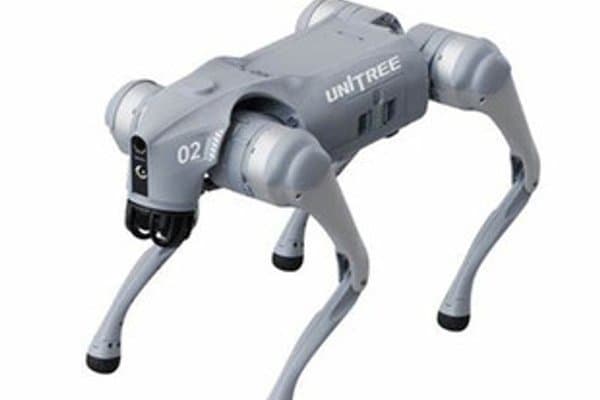
China has become the undisputed leader in the robot dog (quadruped robot) market. From consumer pets to industrial inspection platforms, Chinese manufacturers now produce roughly 80% of the world's robot dogs — and they're doing it at prices that have reshaped the entire industry.
This guide provides a comprehensive comparison of every major Chinese robot dog brand, model-by-model specs, and a step-by-step process for buying one from China in 2026.
Why China Dominates the Robot Dog Market
China's dominance in robot dogs isn't accidental. Several structural advantages have converged:
- Manufacturing ecosystem: Shenzhen and the Pearl River Delta provide unmatched access to servo motors, sensors, batteries, and PCB manufacturing — all critical robot dog components.
- Government support: China's "Made in China 2025" and subsequent robotics policies have directed billions in subsidies toward robotics R&D and manufacturing.
- Talent pipeline: Chinese universities graduate over 300,000 robotics and AI engineers annually, creating a deep talent pool.
- Aggressive pricing: Companies like Unitree deliberately price below cost initially to capture market share, a strategy enabled by venture capital backing.
- Vertical integration: Chinese manufacturers often own or closely control their supply chain, from actuator production to final assembly.
The result is that Chinese robot dogs now cost 30–70% less than Western equivalents while matching or exceeding them in specifications.
Major Chinese Robot Dog Brands
Unitree Robotics (宇树科技)
Headquarters: Hangzhou, China
Founded: 2016
Specialization: Consumer and professional quadruped robots
Notable achievement: Made the first robot dog available under $2,000
Unitree is the market share leader globally in commercial robot dogs. They've sold tens of thousands of units across 50+ countries and are known for aggressive pricing and rapid iteration.
Deep Robotics (绝影)
Headquarters: Hangzhou, China
Founded: 2017
Specialization: Industrial and research quadruped robots
Notable achievement: First Chinese robot dog deployed in power grid inspection at scale
Deep Robotics focuses more on the professional and industrial segment. Their robots are used by State Grid Corporation of China, PetroChina, and other large enterprises for hazardous environment inspection.
Xiaomi (小米)
Headquarters: Beijing, China
Founded: 1970 (robotics division: 2021)
Specialization: Consumer companion robot dogs
Notable achievement: CyberDog brought mainstream consumer awareness to robot dogs
Xiaomi entered the robot dog market with the CyberDog and CyberDog 2, targeting tech enthusiasts and consumers who want a futuristic pet experience.
Complete Model Comparison: Unitree vs Deep Robotics vs Xiaomi
Consumer Tier ($1,600 – $3,500)
| Spec | Unitree Go2 Air | Unitree Go2 Pro | Xiaomi CyberDog 2 |
|---|---|---|---|
| Price | ~$1,600 | ~$2,500 | ~$1,800 – $3,000 |
| Weight | 15 kg | 15 kg | 8.9 kg |
| Max Speed | 3.5 m/s | 3.5 m/s | 3.5 m/s |
| Battery Life | ~1 hour | ~1.5 hours | ~1.5 hours |
| Payload | 3 kg | 3 kg | 3 kg |
| LiDAR | No | Yes | No |
| AI Processor | — | NVIDIA Jetson | NVIDIA Jetson Orin |
| SDK Access | Limited | Yes | Yes |
| Voice Interaction | No | Yes | Yes |
| 4G Connectivity | No | Yes | No |
| Best For | Hobbyists, entry-level | Developers, educators | Consumers, smart home |
Verdict: The Unitree Go2 Pro offers the best balance of features and price for most buyers. The Xiaomi CyberDog 2 is lighter and more polished for home use but less developer-friendly. The Go2 Air is the cheapest entry point but lacks key features like LiDAR.
Education & Research Tier ($2,500 – $8,000)
| Spec | Unitree Go2 EDU | Deep Robotics Lite3 |
|---|---|---|
| Price | ~$2,800 | ~$2,500 – $4,000 |
| Weight | 15 kg | 10 kg |
| Max Speed | 3.5 m/s | 3.0 m/s |
| Battery Life | ~1.5 hours | ~1 hour |
| Payload | 3 kg | 5 kg |
| ROS Support | Yes | Yes (ROS 1 & 2) |
| SDK | Full SDK access | Full open platform |
| SLAM | Yes | Yes |
| Target | University labs, STEM | Academic research, R&D |
Verdict: The Deep Robotics Lite3 is purpose-built for research with full ROS support and a lighter frame that's easier to transport between labs. The Unitree Go2 EDU is a better all-rounder that can double as a demo or consumer unit.
Industrial Tier ($15,000 – $100,000+)
| Spec | Unitree B2 | Deep Robotics X30 |
|---|---|---|
| Price | $30,000 – $60,000 | $50,000 – $100,000+ |
| Weight | 60 kg | 80 kg |
| Max Speed | 6.0 m/s | 3.5 m/s |
| Battery Life | 4 hours | 4–6 hours |
| Payload | 40 kg | 40 kg |
| IP Rating | IP67 | IP67 |
| Explosion-proof | Optional | Optional |
| Thermal Imaging | Optional | Standard |
| Gas Detection | Optional | Optional |
| LiDAR SLAM | Yes | Yes |
| 5G Connectivity | Optional | Standard |
| Autonomous Navigation | Yes | Yes |
| Best For | Security, general industrial | Power grid, oil & gas, mining |
Verdict: The Unitree B2 is faster and more versatile for general industrial use. The Deep Robotics X30 is the heavy-duty choice for extreme environments — it's the default in Chinese power grid and petrochemical inspection. Choose the B2 for speed and flexibility; choose the X30 for ruggedness and specialized inspection.
Chinese Robot Dogs vs Boston Dynamics Spot
The inevitable comparison. Here's how Chinese robot dogs stack up against the industry benchmark:
| Feature | Boston Dynamics Spot | Unitree B2 | Deep Robotics X30 |
|---|---|---|---|
| Base Price | $74,500 | $30,000 – $60,000 | $50,000 – $100,000 |
| Weight | 32 kg | 60 kg | 80 kg |
| Payload | 14 kg | 40 kg | 40 kg |
| Battery Life | 90 min | 4 hours | 4–6 hours |
| Max Speed | 1.6 m/s | 6.0 m/s | 3.5 m/s |
| IP Rating | IP54 | IP67 | IP67 |
| Autonomy | Excellent | Good | Good |
| Software Ecosystem | Mature, large developer community | Growing | Specialized |
| Global Support | Extensive | Limited outside China | Minimal outside China |
| Explosion-proof Option | No (third-party) | Yes | Yes |
Key Takeaways:
- Chinese robot dogs are significantly cheaper — the Unitree B2 starts at less than half the price of Spot.
- Chinese models have better hardware specs — longer battery life, higher payload, faster speed, better IP ratings.
- Boston Dynamics Spot has a superior software ecosystem — more mature autonomy software, larger developer community, better documentation.
- Support and availability differ significantly — Spot has global sales and support infrastructure; Chinese brands are still building theirs.
- For buyers outside North America and Europe, Chinese robot dogs offer dramatically better value.
Pricing Tiers: What You'll Pay
| Tier | Price Range | Models | Use Cases |
|---|---|---|---|
| Entry Consumer | $1,600 – $2,000 | Unitree Go2 Air, Xiaomi CyberDog 2 (base) | Entertainment, basic STEM |
| Pro Consumer | $2,000 – $3,500 | Unitree Go2 Pro, Xiaomi CyberDog 2 (Pro) | Developers, content creators |
| Education | $2,500 – $5,000 | Unitree Go2 EDU, Deep Robotics Lite3 | Universities, research labs |
| Professional | $15,000 – $35,000 | Unitree B2 (base) | Security patrol, light industrial |
| Industrial | $35,000 – $70,000 | Unitree B2 (full), Deep Robotics X30 (base) | Factory inspection, outdoor patrol |
| Enterprise | $70,000 – $150,000+ | Deep Robotics X30 (full config), custom builds | Oil & gas, mining, power grid |
Step-by-Step Buying Guide: How to Buy a Chinese Robot Dog
Step 1: Define Your Use Case
Before contacting manufacturers, clearly define:
- What will the robot dog do? (Inspection, security, research, entertainment)
- What environment will it operate in? (Indoor, outdoor, hazardous)
- What sensors do you need? (LiDAR, thermal, gas detection)
- How many units do you need?
- What's your budget?
Step 2: Choose the Right Model
Use the comparison tables above to narrow down to 1–2 models. Key decision factors:
- Budget under $3,000: Unitree Go2 Pro or Xiaomi CyberDog 2
- Academic research: Deep Robotics Lite3 or Unitree Go2 EDU
- Commercial/industrial: Unitree B2 or Deep Robotics X30
Step 3: Contact the Manufacturer or a Verified Sourcing Agent
You have two options:
- Contact the manufacturer directly — works well for large orders (5+ units) or enterprise customers.
- Use a sourcing platform like GrabaRobot — ideal for smaller orders, international buyers, or if you need help with shipping and compliance.
Step 4: Request a Quote and Samples
- Always request a formal quotation with full specs, lead time, and payment terms.
- For orders over $10,000, request a sample unit or arrange a factory visit.
- Negotiate — Chinese manufacturers expect it. You can typically get 5–15% off list price.
Step 5: Handle Shipping and Customs
- Consumer models (under 15 kg): Express shipping (DHL/FedEx) works well. 5–7 days delivery.
- Industrial models: Sea freight is more economical. 20–35 days to most destinations.
- Customs duties: Vary by country. In the US, robot dogs typically fall under HS code 8479.50 (industrial robots) or 9503.00 (toy robots for consumer models). Duties range from 0–6.5%.
- Compliance: Ensure the model has CE marking (Europe) or FCC certification (US) before purchasing.
Step 6: After-Sales Support
- Confirm warranty terms (typically 1 year for parts, 6 months for battery).
- Ask about spare parts availability and cost.
- For industrial models, negotiate a service-level agreement (SLA) for maintenance.
Frequently Asked Questions
Are Chinese robot dogs good quality?
Yes. Major brands like Unitree and Deep Robotics produce high-quality robot dogs that are used by Fortune 500 companies and government agencies worldwide. Unitree in particular has sold thousands of units globally with strong reliability records.
Can I buy a Chinese robot dog from outside China?
Absolutely. Unitree sells directly to international customers through their website, and platforms like GrabaRobot help international buyers source any Chinese robot dog with shipping and compliance support.
What's the cheapest Chinese robot dog?
The Unitree Go2 Air starts at approximately $1,600, making it the most affordable quadruped robot on the market. The Xiaomi CyberDog 2 base model is also available around $1,800.
How does Unitree compare to Boston Dynamics?
Unitree offers significantly lower prices and comparable or better hardware specs (battery life, speed, payload). Boston Dynamics Spot has a more mature software ecosystem and better global support. For most applications outside North America and Europe, Unitree offers dramatically better value.
Do Chinese robot dogs work with ROS?
Yes. Both Unitree (Go2 EDU and above) and Deep Robotics (Lite3 and above) support ROS 1 and ROS 2, making them suitable for research and custom application development.
Can a Chinese robot dog be used for security patrol?
Yes. The Unitree B2 and Deep Robotics X30 are both used for security patrol applications. They can be equipped with cameras, thermal imaging, and autonomous patrol route programming.
What warranty do Chinese robot dogs come with?
Most manufacturers offer a 1-year warranty on mechanical and electronic components, with 6 months on batteries. Extended warranties and service agreements are available for enterprise customers.
Ready to Buy a Chinese Robot Dog?
GrabaRobot connects you directly with verified Chinese robot dog manufacturers. Compare models from Unitree, Deep Robotics, Xiaomi, and more — all in one place.