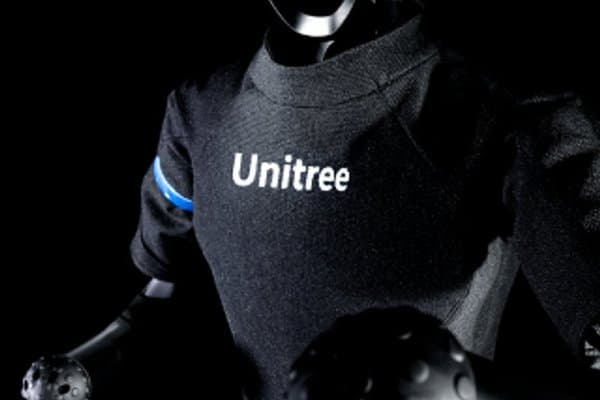
China has emerged as the global leader in humanoid robot development and commercialization. While companies like Tesla and Boston Dynamics grab headlines, Chinese manufacturers are quietly shipping humanoid robots to customers worldwide — at prices significantly lower than Western counterparts.
This guide covers every major Chinese humanoid robot manufacturer, their models, specifications, pricing, and how to purchase them for your business or research needs.
Why China Leads in Humanoid Robotics
China's dominance in humanoid robotics stems from several converging advantages:
Government investment: The Chinese government has designated humanoid robotics as a strategic national priority. The Ministry of Industry and Information Technology (MIIT) released a dedicated humanoid robot development plan in late 2023, targeting mass production readiness by 2025. Provincial governments in Shenzhen, Shanghai, Beijing, and Hangzhou offer subsidies of up to $1.5M per humanoid robotics company.
Component supply chain: China manufactures the majority of the world's electric motors, LiDAR sensors, cameras, batteries, and custom silicon — all critical components for humanoid robots. This vertical integration drives costs down 30–50% compared to Western manufacturing.
Talent pool: China graduates over 1.5 million engineering students annually. Top robotics labs at Tsinghua, Zhejiang University, Harbin Institute of Technology, and HKUST feed directly into the humanoid robotics industry.
Competitive pressure: Over 30 Chinese companies are actively developing humanoid robots, creating fierce competition that drives rapid innovation and aggressive pricing.
Complete List of Chinese Humanoid Robot Manufacturers
Tier 1: Commercially Available Humanoid Robots
These companies are actively selling humanoid robots to external customers.
#### UBTECH Robotics
Headquarters: Shenzhen
Founded: 2012
Funding: $2B+ (largest among Chinese humanoid companies)
Public/Private: Listed on Hong Kong Stock Exchange (HKEx: 9880)
| Model | Height | Weight | DOF | Speed | Price | Target Market |
|---|---|---|---|---|---|---|
| Walker X | 130 cm | 63 kg | 41 | 3 km/h | $100,000+ | Exhibition, hospitality, education |
| Walker S | 170 cm | 60 kg | 42 | 4 km/h | $80,000–$120,000 | Industrial, smart manufacturing |
| Walker S1 | 170 cm | 60 kg | 44 | 4.5 km/h | $90,000–$130,000 | Industrial, service |
| Yanshee | 37 cm | 2.7 kg | 17 | — | $1,500–$2,500 | Education, STEM |
UBTECH is the most commercially mature Chinese humanoid company. Their Walker series has been deployed at:
- Foxconn factories for smart manufacturing
- Saudi Arabia's NEOM project
- China Expo events and government showcases
- Multiple universities for research
UBTECH's key strength is industrial deployment — the Walker S has been tested in NIO (electric vehicle) factories for quality inspection tasks.
#### Fourier Intelligence
Headquarters: Shanghai
Founded: 2015
Funding: $200M+
Background: Rehabilitation robotics
| Model | Height | Weight | DOF | Speed | Price | Target Market |
|---|---|---|---|---|---|---|
| GR-1 | 165 cm | 55 kg | 40+ | 5 km/h | $50,000–$80,000 | Research, rehabilitation |
| GR-2 | 175 cm | 58 kg | 53 | 5 km/h | $70,000–$100,000 | General purpose |
Fourier's medical robotics background gives them unique advantages in:
- Safe human interaction: Force-feedback joint control prevents injury during close contact
- Rehabilitation applications: The GR-1 can assist with physical therapy exercises
- Manipulation precision: High-resolution torque sensors in every joint
The GR-1 is particularly popular with research institutions because of its open SDK, ROS 2 compatibility, and modular architecture that allows custom sensor integration.
#### Unitree Robotics
Headquarters: Hangzhou
Founded: 2016
Funding: $200M+
Known For: Affordable robot dogs
| Model | Height | Weight | DOF | Speed | Price | Target Market |
|---|---|---|---|---|---|---|
| H1 | 180 cm | 47 kg | 20+ | 3.3 m/s | $90,000+ | Research, locomotion |
| G1 | 127 cm | 35 kg | 23–43 | 2 m/s | $16,000–$30,000 | Education, development |
Unitree made headlines when the H1 became the first full-size humanoid to run at 3.3 m/s (7.4 mph), making it the fastest humanoid robot in the world. The G1, launched in 2024 at just $16,000, is the most affordable humanoid robot globally and has become hugely popular as a development platform.
Unitree's strengths:
- Unmatched locomotion performance
- Most aggressive pricing in the industry
- Proven manufacturing at scale (from robot dog business)
- Large developer community
Unitree's limitations:
- Manipulation capabilities lag behind UBTECH and Fourier
- Smaller developer ecosystem compared to ROS-native platforms
#### Agibot (Shanghai Zhiyuan Robotics)
Headquarters: Shanghai
Founded: 2023
Backed By: Zhipu AI (Chinese AI unicorn)
Funding: $100M+
| Model | Height | Weight | DOF | Price | Target Market |
|---|---|---|---|---|---|
| A2 | 170 cm | 65 kg | 46+ | $80,000–$120,000 | Industrial, general purpose |
Agibot is one of the newest entrants but has attracted massive attention due to its AI-first approach. Their A2 humanoid features:
- End-to-end AI control (no traditional motion planning)
- Dexterous hands with 12 DOF each
- Sim-to-real transfer learning
- Integration with large language models for instruction following
Tier 2: Pre-Commercial / Limited Availability
These companies have demonstrated working humanoid prototypes and are in early commercialization.
#### Galbot (General Autonomy)
Headquarters: Shenzhen
Founded: 2023
Focus: Wheeled humanoid for practical tasks
Galbot takes a pragmatic approach with a wheeled lower body (instead of legs), focusing on upper body manipulation. This design is cheaper, more reliable, and better suited for indoor tasks like warehouse work and home assistance. Estimated pricing: $30,000–$60,000.
#### Robot Era
Headquarters: Beijing
Founded: 2023
Affiliation: Tsinghua University spin-off
Robot Era's XBot-L is a research-grade humanoid focusing on whole-body manipulation and locomotion. Currently available to select research partners.
#### LimX Dynamics
Headquarters: Shenzhen
Founded: 2022
Focus: Dynamic locomotion
LimX is developing humanoids with exceptional terrain handling capability, including outdoor walking on uneven surfaces. Their CL-1 humanoid has demonstrated impressive blind walking on rough terrain.
#### Leju Robotics (CloudWalk Technology subsidiary)
Headquarters: Shenzhen
Focus: Full-size general-purpose humanoid
Leju Robotics has developed the KUAVO humanoid and has partnerships with several Chinese automotive manufacturers for factory deployment testing.
Price Comparison: All Chinese Humanoid Robots
| Manufacturer | Model | Price Range | Availability | Primary Use Case |
|---|---|---|---|---|
| Unitree | G1 | $16,000–$30,000 | Available now | Education, development |
| Galbot | G1 | $30,000–$60,000 | Pre-order | Indoor service, warehouse |
| Fourier | GR-1 | $50,000–$80,000 | Available (limited) | Research, rehabilitation |
| Fourier | GR-2 | $70,000–$100,000 | Available (limited) | General purpose |
| UBTECH | Walker S | $80,000–$120,000 | Available | Industrial, service |
| Agibot | A2 | $80,000–$120,000 | Limited availability | Industrial, general |
| Unitree | H1 | $90,000+ | Available (limited) | Research, locomotion |
| UBTECH | Walker S1 | $90,000–$130,000 | Available | Industrial, service |
| UBTECH | Walker X | $100,000+ | Available | Exhibition, hospitality |
Price Trends
Humanoid robot prices are declining rapidly:
- 2023: Cheapest humanoid was ~$90,000 (Unitree H1)
- 2024: Unitree G1 launched at $16,000
- 2025: Multiple options under $100,000
- 2026: Expect 2–3 more options under $30,000
Industry analysts predict that general-purpose humanoid robots will reach the $10,000–$15,000 range by 2028, driven by Chinese manufacturing scale.
Detailed Specifications Comparison
| Feature | UBTECH Walker X | Fourier GR-1 | Unitree H1 | Unitree G1 | Agibot A2 |
|---|---|---|---|---|---|
| **Height** | 130 cm | 165 cm | 180 cm | 127 cm | 170 cm |
| **Weight** | 63 kg | 55 kg | 47 kg | 35 kg | 65 kg |
| **DOF** | 41 | 40+ | 20+ | 23–43 | 46+ |
| **Max Speed** | 3 km/h | 5 km/h | 12 km/h | 7.2 km/h | 5 km/h |
| **Payload (hands)** | 5 kg | 5 kg | N/A* | 3 kg | 5 kg |
| **Battery Life** | 2–3 hrs | 2–3 hrs | 2 hrs | 1–2 hrs | 2–3 hrs |
| **Hand DOF** | 6 per hand | 6 per hand | Basic | 6 per hand | 12 per hand |
| **SDK** | Proprietary | Open (ROS 2) | Unitree SDK | Unitree SDK | Open |
| **Stair Climbing** | Yes | Yes | Yes | Limited | Yes |
| **IP Rating** | IP54 | IP54 | N/A | N/A | IP54 |
*Unitree H1 focuses on locomotion; manipulation accessories sold separately.
Applications for Chinese Humanoid Robots
Education & Research (Largest Current Market)
Humanoid robots are essential tools for:
- University robotics programs: Teaching locomotion, manipulation, AI, and control theory
- AI research labs: Training embodied AI models with real-world interaction
- K-12 STEM education: Smaller models like UBTECH Yanshee teach programming
Best choices: Unitree G1 (budget), Fourier GR-1 (research-grade)
Healthcare & Rehabilitation
Fourier Intelligence leads this application area:
- Assisting physical therapists with repetitive exercises
- Providing mobility support for elderly patients
- Delivering medications and supplies in hospitals
- Companionship and mental health support
Best choice: Fourier GR-1 / GR-2
Hospitality & Reception
Humanoid robots create memorable experiences in:
- Hotel lobbies (greeting guests, providing information)
- Corporate offices (visitor check-in, wayfinding)
- Exhibition halls (guided tours, product demonstrations)
- Retail stores (customer engagement, product recommendations)
Best choice: UBTECH Walker X / Walker S
Industrial & Manufacturing
The fastest-growing application, still in early stages:
- Quality inspection on production lines
- Light assembly and material handling
- Logistics in human-designed factory layouts
- Maintenance assistance in hazardous areas
Best choices: UBTECH Walker S1, Agibot A2
Security & Surveillance
Humanoid robots for security patrol offer:
- 24/7 autonomous monitoring
- Human-like presence as a deterrent
- Integration with existing security systems
- Access to spaces designed for humans
Best choice: Unitree H1 (speed advantage for patrol)
How to Buy a Chinese Humanoid Robot
Step 1: Define Your Requirements
Before contacting manufacturers, clarify:
- Primary application: What will the robot do? (Research, service, industrial)
- Environment: Indoor, outdoor, or both?
- Manipulation needs: Does it need to pick up and handle objects?
- Budget: Including shipping, customs, installation, and training
- Timeline: When do you need the robot delivered?
- Volume: Single unit or fleet deployment?
Step 2: Request Quotes
Contact manufacturers directly or use GrabaRobot to get comparative quotes. When requesting quotes, ask about:
- Base unit price vs. fully configured price
- Warranty terms and duration
- Shipping method and cost (air vs. sea)
- Training and installation support
- Software licensing (one-time vs. subscription)
- Spare parts availability and pricing
Step 3: Evaluate and Compare
Key evaluation criteria:
- Hardware maturity: How many units have been deployed? Where?
- Software ecosystem: SDK quality, documentation, community support
- After-sales support: Response time, local service partners, remote diagnostics
- Upgrade path: Can you upgrade software/hardware as new versions release?
- Certifications: CE, FCC, and local safety certifications for your market
Step 4: Negotiate Terms
Common payment structures:
- Standard: 30% deposit, 70% before shipping
- Institutional: Letter of credit or net-30/net-60 for universities
- Volume: Discounts of 10–25% for orders of 3+ units
Step 5: Shipping and Customs
Humanoid robots typically ship via:
- Air freight: 5–10 days, higher cost ($2,000–$5,000), best for single units
- Sea freight: 25–40 days, lower cost ($1,000–$3,000), best for bulk orders
Import duties vary by country. Most humanoid robots classify under HS code 8479.50 (industrial robots) or 9503.00 (for education/toy classification), with duties ranging from 0% to 8% in most markets.
Frequently Asked Questions
What is the cheapest Chinese humanoid robot?
The Unitree G1 is the most affordable at $16,000–$30,000 depending on configuration. The base model includes basic locomotion and manipulation capabilities, while higher-tier configurations add more degrees of freedom and advanced sensors.
Are Chinese humanoid robots safe to work around?
Yes, commercially available Chinese humanoid robots include safety features like force-limited joints, collision detection, emergency stop functions, and speed limiting in human-proximity mode. Fourier's robots are particularly strong in this area due to their medical robotics background. All models targeting commercial deployment have undergone safety certification.
How do Chinese humanoid robots compare to Boston Dynamics Atlas?
Boston Dynamics Atlas is a research platform not available for commercial sale. Chinese humanoids like the Unitree H1 approach Atlas in locomotion performance. The key difference: you can actually buy Chinese humanoid robots, while Atlas remains a demonstration platform. For practical commercial deployment, Chinese manufacturers are 2–3 years ahead in availability.
Can Chinese humanoid robots understand and follow instructions?
Modern Chinese humanoid robots integrate with large language models (LLMs) for natural language instruction following. Agibot's A2 and UBTECH's Walker S both feature LLM integration for voice commands and task planning. However, fully autonomous "do any task" capability is still years away for all humanoid robots, including Tesla Optimus.
What warranty do Chinese humanoid robots come with?
Most manufacturers offer 1-year warranty on hardware and 1-year of software updates. Extended warranties (2–3 years) are typically available for additional cost. UBTECH, as a publicly listed company, has the most structured warranty and support program.
How long does it take to receive a humanoid robot from China?
For in-stock models: 2–4 weeks including shipping. For custom configurations or new production runs: 8–16 weeks. The Unitree G1 and UBTECH Walker X have the shortest lead times due to larger production volumes.
Start Your Humanoid Robot Journey
The humanoid robot market is moving fast. Whether you're a university building a robotics program, a hospital exploring rehabilitation robots, or an enterprise piloting humanoid automation, Chinese manufacturers offer the most accessible entry point in 2026.