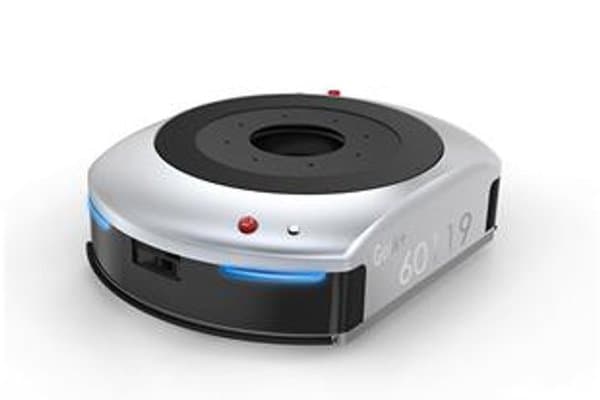
Autonomous Mobile Robots (AMRs) have become the backbone of modern warehouse and factory automation. Unlike their simpler AGV predecessors, AMRs navigate dynamically using LiDAR, cameras, and AI-powered path planning — no floor markers or magnetic strips required. In 2026, AMR prices range from $15,000 to $80,000 depending on payload capacity, navigation technology, and application, with Chinese manufacturers offering the most competitive pricing globally.
This guide breaks down AMR pricing, compares leading manufacturers, and provides a complete ROI framework to evaluate your investment.
What Is an AMR (Autonomous Mobile Robot)?
An AMR is a mobile robot that can understand and navigate its environment without being confined to a fixed path. Using a combination of sensors (LiDAR, depth cameras, ultrasonic), onboard computing, and sophisticated software, AMRs create maps of their environment and plan optimal paths in real time.
Key AMR Capabilities
- Dynamic navigation: Avoids obstacles, people, and other robots automatically
- Map-based operation: Creates and updates facility maps using SLAM technology
- Fleet coordination: Multiple AMRs work together through centralized fleet management
- Easy deployment: No infrastructure modifications needed (no tracks, wires, or markers)
- Scalable: Add or remove robots as demand changes
- Self-charging: Automatically returns to charging station when battery is low
AMR vs AGV: Key Differences
Understanding the difference between AMRs and AGVs is critical for making the right purchasing decision.
| Feature | AMR | AGV |
|---|---|---|
| **Navigation** | Free-roaming, SLAM-based | Fixed path (magnetic strips, wires, QR codes) |
| **Obstacle handling** | Autonomously reroutes | Stops and waits (or requires manual intervention) |
| **Infrastructure needed** | None | Floor markers, tracks, or embedded guides |
| **Deployment time** | Days to weeks | Weeks to months |
| **Flexibility** | High — routes change dynamically | Low — path changes require physical modifications |
| **Price per unit** | $15,000 - $80,000 | $8,000 - $25,000 |
| **Best for** | Dynamic environments, mixed traffic | Structured environments, repetitive routes |
| **Scalability** | Easy — add robots to the fleet | Moderate — may need new paths |
| **Maintenance** | Sensor calibration, software updates | Track maintenance, sensor cleaning |
| **Intelligence** | AI-powered decision making | Simple programmed logic |
When to Choose AMR Over AGV
- Your warehouse layout changes frequently
- Humans and robots share the same aisles
- You need to scale fleet size seasonally
- Multiple pickup/dropoff points change over time
- You want rapid deployment without floor modifications
When AGV Is Sufficient
- Fixed, repetitive point-to-point transport
- Dedicated robot-only corridors
- Budget is primary concern and routes are stable
- Heavy loads (10+ tons) on fixed paths
AMR Robot Price Breakdown
AMR pricing varies significantly based on payload capacity, application type, and manufacturer origin.
Price by Payload Capacity
| Payload Capacity | Chinese Manufacturers (FOB) | Western Manufacturers | Typical Application |
|---|---|---|---|
| Light (up to 100 kg) | $15,000 - $25,000 | $25,000 - $40,000 | Tote/bin transport, goods-to-person |
| Medium (100-300 kg) | $20,000 - $35,000 | $35,000 - $55,000 | Shelf transport, pallet jack |
| Heavy (300-1,000 kg) | $30,000 - $50,000 | $45,000 - $70,000 | Pallet transport, manufacturing |
| Extra Heavy (1,000+ kg) | $40,000 - $80,000 | $60,000 - $100,000+ | Heavy manufacturing, automotive |
Price by Application Type
| Application | Robot Type | Price Range (Chinese) | System Cost (10 robots) |
|---|---|---|---|
| Goods-to-person picking | Shelf-lifting AMR | $15,000 - $25,000/unit | $250,000 - $400,000 |
| Tote transport | Conveyor-top AMR | $18,000 - $30,000/unit | $280,000 - $450,000 |
| Pallet transport | Fork-lift AMR | $30,000 - $50,000/unit | $400,000 - $650,000 |
| Collaborative picking | Follow-me AMR | $12,000 - $20,000/unit | $180,000 - $300,000 |
| Sorting | Sorting AMR | $3,000 - $8,000/unit | $150,000 - $400,000 (50+ units) |
Additional Cost Components
The per-unit robot price is only part of the total investment:
| Component | Cost Range | Notes |
|---|---|---|
| Fleet management software | $20,000 - $80,000 | One-time license or annual subscription |
| Shelving/racks (goods-to-person) | $500 - $2,000 per shelf unit | 2-5 shelves per robot needed |
| Charging stations | $3,000 - $8,000 each | 1 station per 5-8 robots |
| Network infrastructure | $10,000 - $50,000 | Wi-Fi 6 coverage, switches |
| WMS integration | $15,000 - $50,000 | API development, testing |
| Installation & commissioning | $20,000 - $100,000 | On-site setup by manufacturer team |
| Training | $5,000 - $15,000 | Operator, supervisor, maintenance |
Leading AMR Manufacturers: Detailed Comparison
Chinese AMR Manufacturers
#### Geek+ (极智嘉)
- Headquarters: Beijing, China
- Founded: 2015
- Global presence: 30+ countries, offices in US, EU, Japan, Korea
- Total deployments: 10,000+ robots worldwide
- Key products:
- P-series: Goods-to-person shelf-lifting AMR (500-1,000 kg payload)
- M-series: Heavy-load transport AMR (up to 2,000 kg)
- C-series: Collaborative picking AMR
- S-series: Sorting AMR
- Software: GEEK+ Robot Management System (RMS)
- Price positioning: Mid-range among Chinese manufacturers
- Strengths: Largest global AMR fleet, proven reliability, strong R&D
#### Hikrobot (海康机器人)
- Headquarters: Hangzhou, China
- Founded: 2016 (subsidiary of Hikvision)
- Key products:
- F-series: Latent mobile AMR for goods-to-person
- Forklift AMR: Autonomous pallet transport
- Conveyor-top AMR: Tote and bin transport
- Software: Hikrobot iWMS + Robot Control System (RCS)
- Price positioning: Typically 10-20% below Geek+
- Strengths: Backed by Hikvision (world's largest vision company), strong in computer vision AI, competitive pricing
#### Quicktron (快仓)
- Headquarters: Shanghai, China
- Founded: 2014
- Backed by: Alibaba Group
- Key products: QuickBin (goods-to-person), QuickPick (collaborative picking)
- Strengths: Battle-tested during Alibaba Singles' Day (world's largest shopping event), strong sorting systems
- Price positioning: Competitive, especially for large-volume deployments
#### ForwardX Robotics (灵动科技)
- Headquarters: Beijing, China
- Founded: 2016
- Specialty: Vision-based AMRs (uses cameras instead of LiDAR as primary sensor)
- Key products: Flex series (various payload capacities)
- Strengths: Lower hardware cost due to camera-based navigation, strong AI team
- Price positioning: Among the most affordable AMRs available
Western AMR Manufacturers
| Manufacturer | Headquarters | Price Range | Key Strength |
|---|---|---|---|
| Locus Robotics | USA | $35,000 - $50,000 | Collaborative picking, RaaS model |
| 6 River Systems (Shopify) | USA | $30,000 - $45,000 | E-commerce integration |
| Fetch Robotics (Zebra) | USA | $30,000 - $60,000 | Enterprise software platform |
| MiR (Teradyne) | Denmark | $25,000 - $70,000 | Manufacturing/industrial focus |
| OTTO Motors | Canada | $40,000 - $80,000 | Heavy-duty industrial AMRs |
AMR Specifications Comparison Table
| Specification | Geek+ P800 | Hikrobot F1-1000 | Quicktron QB600 | Locus Origin | MiR250 |
|---|---|---|---|---|---|
| **Payload** | 1,000 kg | 1,000 kg | 600 kg | 270 kg | 250 kg |
| **Speed** | 1.5 m/s | 1.5 m/s | 1.5 m/s | 1.4 m/s | 2.0 m/s |
| **Navigation** | LiDAR + QR | LiDAR + Vision | LiDAR + QR | LiDAR + 3D Camera | LiDAR |
| **Battery life** | 8-10 hrs | 8-10 hrs | 8 hrs | 8-14 hrs | 8-13 hrs |
| **Charging time** | 1.5 hrs | 1.5 hrs | 1.5 hrs | 1 hr (fast) | 1 hr |
| **Dimensions** | 900x700mm | 900x700mm | 800x600mm | 610x460mm | 580x480mm |
| **Price (est.)** | $20,000-25,000 | $18,000-22,000 | $18,000-22,000 | $35,000-45,000 | $30,000-40,000 |
| **Origin** | China | China | China | USA | Denmark |
AMR Deployment Scenarios
Scenario 1: E-Commerce Fulfillment Center
- Warehouse size: 10,000 sqm
- Orders per day: 5,000-10,000
- Solution: 30 Geek+ P-series AMRs with goods-to-person picking
- Investment: ~$800,000 (robots + shelving + software + installation)
- Labor replaced: 35 pickers reduced to 12
- Annual savings: ~$960,000
- Payback period: ~10 months
Scenario 2: Manufacturing Line-Side Delivery
- Facility size: 5,000 sqm
- Delivery points: 20 workstations
- Solution: 8 Hikrobot forklift AMRs for pallet transport
- Investment: ~$350,000
- Labor replaced: 6 forklift operators reduced to 1 supervisor
- Annual savings: ~$300,000
- Payback period: ~14 months
Scenario 3: Small Warehouse Starter Deployment
- Warehouse size: 2,000 sqm
- Orders per day: 500-1,000
- Solution: 5 ForwardX AMRs with collaborative picking
- Investment: ~$120,000
- Labor replaced: 5 pickers reduced to 3
- Annual savings: ~$100,000
- Payback period: ~15 months
ROI Calculation Framework
Direct Cost Savings
| Cost Category | Manual Operation | With AMRs | Savings |
|---|---|---|---|
| Labor (picking) | $15,000/month per worker | 50-70% fewer workers | 50-70% |
| Error correction | 1-3% order error rate | <0.1% error rate | 90%+ |
| Overtime/temp workers | Peak season surcharges | Robots scale instantly | 30-50% |
| Workers' compensation | Injury claims from heavy lifting | Minimal physical strain | 60-80% |
Indirect Benefits
- Throughput increase: 2-3x more orders processed per shift
- Space optimization: Dense storage frees 20-40% floor space
- Data and visibility: Real-time inventory accuracy and analytics
- Customer satisfaction: Faster, more accurate order fulfillment
- Recruitment savings: Reduced hiring difficulty in tight labor markets
Typical Payback Timeline
| Fleet Size | Total Investment | Monthly Net Savings | Payback |
|---|---|---|---|
| 5-10 AMRs | $100,000-250,000 | $10,000-25,000 | 10-18 months |
| 10-30 AMRs | $250,000-800,000 | $25,000-80,000 | 8-14 months |
| 30-100 AMRs | $800,000-2,500,000 | $80,000-250,000 | 8-12 months |
| 100+ AMRs | $2,500,000+ | $250,000+ | 8-12 months |
How to Buy AMRs from China
Step 1: Define Requirements
Before contacting manufacturers, document:
- Warehouse dimensions and layout
- Current daily order volume and peak volumes
- Payload requirements (what are you moving?)
- Floor conditions (flatness, surface type)
- Integration requirements (WMS, ERP)
Step 2: Request Proposals
Contact 2-3 manufacturers with your requirements. Expect:
- Recommended robot model and fleet size
- System architecture diagram
- Simulation results showing expected throughput
- Detailed pricing breakdown
- Implementation timeline
Step 3: Evaluate and Negotiate
- Compare on total cost of ownership (TCO), not just unit price
- Ask for reference customers in your industry
- Negotiate volume discounts for larger fleets
- Clarify warranty terms (typically 1-2 years)
- Understand ongoing software licensing costs
Step 4: Order and Deploy
- Lead time: 6-12 weeks from order to delivery
- Shipping: Sea freight (4-6 weeks) or air freight (1 week) for urgent needs
- Installation: Manufacturer sends team for on-site commissioning
Frequently Asked Questions
How long do AMR batteries last?
Most AMRs use lithium-ion batteries that provide 8-12 hours of operation per charge. Battery lifespan is typically 2-3 years (1,000-2,000 charge cycles) before replacement is needed. Replacement batteries cost $1,000-3,000.
Can AMRs work in cold storage?
Yes, but with limitations. Standard AMRs operate in 0-40°C. Cold storage versions rated for -25°C are available from manufacturers like Geek+ and Hikrobot at a 20-30% price premium.
Do AMRs need Wi-Fi?
Yes. AMRs require reliable Wi-Fi coverage (Wi-Fi 5 minimum, Wi-Fi 6 recommended) for fleet coordination and real-time task assignment. Budget $10,000-50,000 for proper wireless infrastructure.
What happens when an AMR encounters an obstacle?
The AMR stops, recalculates a path around the obstacle, and continues its mission. If no alternative path is available, it alerts the fleet management system and waits for the obstruction to clear.
Can I mix AMR brands in one warehouse?
Technically possible but not recommended. Each manufacturer uses proprietary fleet management software. Mixing brands creates coordination challenges. Stick with one primary AMR supplier per facility.
What is the typical lifespan of an AMR?
Well-maintained AMRs last 7-10 years. Major maintenance items include battery replacement (every 2-3 years), wheel replacement (annually), and occasional sensor replacement.
Next Steps
GrabaRobot partners with leading AMR manufacturers including Geek+, Hikrobot, Quicktron, and ForwardX. We provide competitive quotes, facilitate factory visits, and manage the entire procurement process.
Need help choosing the right AMR for your operation? Our team provides free consultations and can arrange manufacturer demos.